7 Signs Your Septic Tank Needs Pumping Before the Repair Bill Gets Ugly
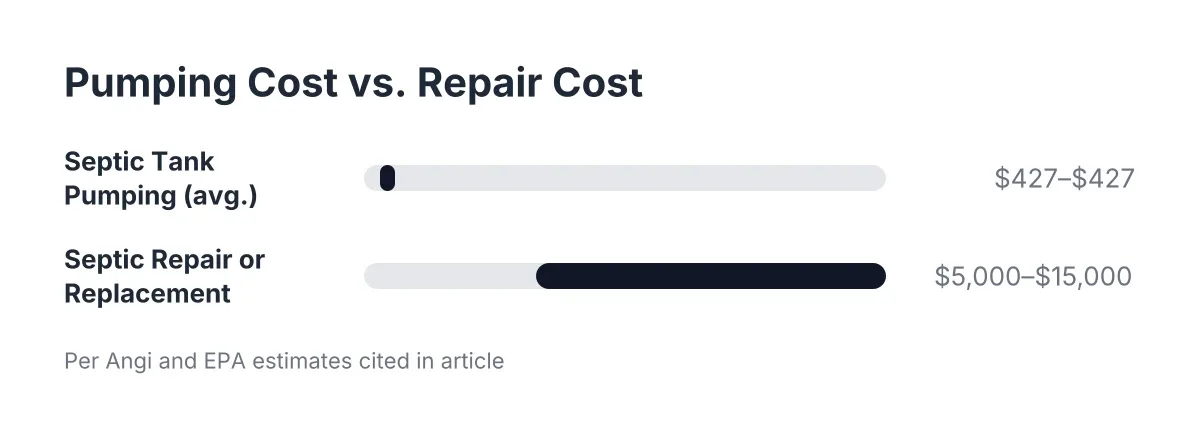
Catching the signs your septic tank needs pumping early is the difference between a routine pumping visit and a repair bill that runs into five figures. According to Angi data, septic tank pumping averages $427, while the EPA estimates septic repair or replacement typically runs $5,000 to $15,000. That gap is the whole argument for paying attention. Whether you manage a rental in Hesperia, run a restaurant with a grease trap, or keep an RV for High Desert trips, the warning signs below show up the same way, and ignoring them costs the same either way.
The catch with septic warning signs is that by the time you can see or smell one, the problem has already started. A tank does not send a reminder. Solids build up quietly for years, and then one Saturday a tenant calls about a smell or a toilet that will not flush. So treat this list as a checklist, not a curiosity. If even one item sounds familiar, the system is telling you something.
1. Drains That Gurgle or Run Slow in Every Room
Slow or gurgling drains are usually the first sign a septic tank needs to be pumped. When the tank fills with solids, wastewater has nowhere to go, so air gets pushed back up the pipes. That is the gurgle you hear in a sink or toilet after a flush.
The key detail is where it happens. One slow bathroom sink is probably a hair clog, a plumbing issue, not a septic one. But when the kitchen sink, the shower, and the toilet all drain slowly at the same time, the bottleneck is downstream of all of them. For a landlord who is not on-site, this is the question to ask a tenant on the phone: is it one drain or every drain? The answer tells you whether to call a plumber or a septic crew.
2. Sewage Smell in the Yard, the Building, or Near the Tank Lids
A strong sewage odor outdoors is one of the clearest signs your septic tank is backed up or overfull. Gases that should stay sealed in the tank escape when the liquid level rises too high, or when wastewater starts surfacing in the soil above the tank or drain field.
Indoors, a sewer smell near floor drains or bathrooms points the same direction. For a restaurant operator, this one carries extra weight; a health inspector will notice a sewage or grease odor before you do, and a citation turns a scheduled grease trap pumping into an emergency one. Odor is also the complaint tenants report most, because they do not have to understand septic systems to know something smells wrong.
3. Wet Soil or Standing Water Over the Tank or Drain Field
Pooling water or soggy ground above your septic system, when it has not rained, means wastewater is escaping instead of draining. This is one of the signs your septic tank is leaking or so full that the drain field cannot keep up. In Hesperia's dry climate, an unexplained green, lush patch of grass over the drain field is the same signal; the vegetation is feeding on effluent that should be filtering through soil.
Take this one seriously. Surfacing sewage is a health hazard, and if the drain field itself is saturating, you are moving from pumping territory toward repair territory. Pumping the tank promptly can take pressure off a stressed drain field; waiting can finish it off.
4. Sewage Backing Up Into the Lowest Drains First
Backups start at the lowest point in the building, usually a ground-floor shower, tub, or floor drain. If dark water or sewage appears there after you run laundry or flush upstairs, the tank or the line feeding it is blocked. According to the Washington State Department of Health, a clogged inlet baffle is a common cause of septic backups and one of the first things to check when a line into the tank is blocked.
This is the sign that has crossed from warning into emergency. At this stage you need emergency septic pumping, not a note on the calendar. For example, suppose a Hesperia landlord gets a Sunday call that the rental's hall bathroom tub has gray water rising in it. In that scenario, the smart move is to tell tenants to stop running water entirely, then get a pump truck out, because every flush adds to what ends up on the floor.
5. You Cannot Remember the Last Pumping, or There Is No Record at All
No pumping history is a warning sign by itself, even with no symptoms yet. Septic tanks need periodic pumping no matter how long the system has run without trouble; solids settle and accumulate regardless of how well everything seems to work. According to Penn State Extension, an active family of four generally needs the tank pumped every two to three years, and the EPA recommends a professional inspection at least once every three years.
This matters most when you take over a property. Say you inherit management of a rental on septic and the file has no service records. You do not know the tank size, the location, or the sludge level, so the clock might already be past zero. A pumping visit with an inspection resets that clock and gives you a written record, which also helps with habitability questions and compliance files for non-residential properties.
6. Water Use Went Up, and the System Is Straining to Keep Pace
A septic system sized for a couple can struggle when a family of five moves in, and the strain shows up as more frequent slow drains and shorter intervals between problems. Occupancy drives how fast solids build, so a change in who uses the building changes how often the tank needs service.
Hidden water waste does the same damage. According to the U.S. Environmental Protection Agency, a single leaky or running toilet can push as much as 200 gallons of extra water per day into a septic system. Therefore, if a rental's water bill jumps and the drains slow down in the same month, fix the toilet and check the tank; the two problems feed each other.
7. Grease Traps and Holding Tanks Give Shorter Warnings Than House Tanks
Commercial grease traps and RV holding tanks fail faster and with less notice than a residential septic tank. A grease trap that is past due shows up as slow floor drains in the kitchen, a rancid smell near the three-compartment sink, or a flagged line item on a health inspection. An RV or cabin holding tank simply reads full and then overflows; there is no drain field to buy you time.
As a result, these systems run on schedules, not symptoms. If you operate a restaurant or manage an RV out of Hesperia, the practical move is a standing pumping interval so the first warning never arrives. Waiting for signs that work on a 1,000-gallon residential tank does not translate to a 50-gallon trap under a commercial sink.
What the Signs Your Septic Tank Needs Pumping Actually Cost You
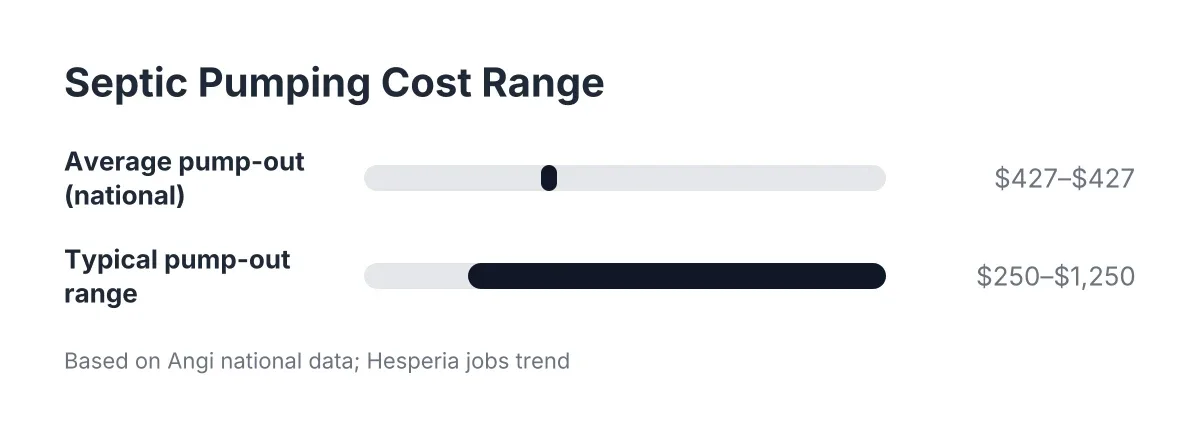
Ignoring these warning signs turns a few hundred dollars of pumping into thousands of dollars of repair. The septic tank cost math is lopsided: Angi puts average pumping at $427, with a typical range of $250 to $1,250 depending on tank size and location, while the EPA puts repair or replacement at $5,000 to $15,000. A tank that backs up into a building can also add cleanup, flooring, and, for landlords, a dispute with tenants over habitability.
Timing changes the price too. A scheduled pumping visit on a Tuesday costs less than a backup response on a holiday weekend, and an exposed, easy-to-find tank costs less to service than a buried mystery. A few ways to keep the visit on the cheap end:
- Locate and uncover the tank lid before the crew arrives, since digging out access is a common extra charge. If you do not know where the tank is, septic tank locating is a service on its own.
- Keep a written service history with dates and tank condition notes, so every future visit starts from knowledge instead of guesswork.
- If you are already paying for a service call, consider pumping rather than an inspection-only visit; the prices often land close together, and pumping resets the tank while an inspection only diagnoses it.
- Put recurring systems, grease traps, holding tanks, and rentals, on a calendar interval instead of waiting for a symptom.
One honest caveat: pumping is not a cure for everything. If the drain field is saturated, the baffles are damaged, or sewage keeps surfacing after the tank is emptied, you need a professional inspection to find the real fault, and some of those repairs genuinely cost what the EPA numbers suggest. The point of watching for the signs your septic tank needs to be pumped is to act while pumping is still the fix, because that window is the cheapest one you will ever get.
If you need your septic tank serviced, Hesperia Septic can help.
Prefer to talk it through? Call (760) 249-7872 — a quick call is usually the fastest way to get a straight answer for your situation.