Septic System Backup Repair Costs in Hesperia: What to Expect and How to Avoid Them
When sewage is backing up into your tub or pooling in the yard, the first question after "who do I call" is "what is this going to cost me." This guide walks you through septic backup repair cost and what you will likely pay in 2026, how to tell a fair quote from a padded one, and what to do right now to keep the damage and the bill from growing. The short version: most backups in Hesperia end with a pump-out, not a five-figure repair. Here is how to handle it in order.
Step 1: Stop Adding Water to the System
Before you call anyone, cut the water going down your drains. Every flush, shower, and load of laundry pushes more wastewater into a tank that has nowhere to put it. That is what forces sewage back up through the lowest drain in the house.
Turn off the washing machine and dishwasher. Ask everyone in the house to stop flushing. If a toilet is running, shut its supply valve at the wall; according to the U.S. Environmental Protection Agency, a single leaky or running toilet can add as much as 200 gallons of extra water per day into a septic system. That alone can turn a slow backup into standing sewage overnight.
This step costs nothing and it directly protects your floors, your drain field, and your final bill.
Step 2: Figure Out If It Is the Septic System or the House Plumbing
Next, do a quick check so you call the right professional. A septic backup and a plumbing clog can look identical from inside the house, but they get fixed by different people at different prices.
Signs it is the septic system:
- Sewage or gray water coming up in the lowest drains, usually a tub, shower, or floor drain
- A wet, soggy, or smelly patch of yard over the tank or drain field
- A septic alarm going off, if your system has one
- Every drain in the house is slow or backing up, not just one
Signs it is house plumbing: one fixture is clogged while everything else drains fine. In that case a plumber is the right call. For anything that looks septic, call a septic service first. They can diagnose the tank, the baffles, and the drain field, which a general plumber usually cannot. Many Hesperia homeowners lose a day and a service fee calling a plumber who then says they do not really do septic.
Step 3: Call for Emergency Septic Pumping and Ask These Questions
Once it looks like a septic backup, call a local septic crew and ask for emergency septic pumping. Before you commit, ask three questions on the phone:
- What is the base price for the pump-out, and what could add to it?
- Is there a separate after-hours or emergency fee, and how much?
- Do you charge extra for digging to find or uncover the tank lid?
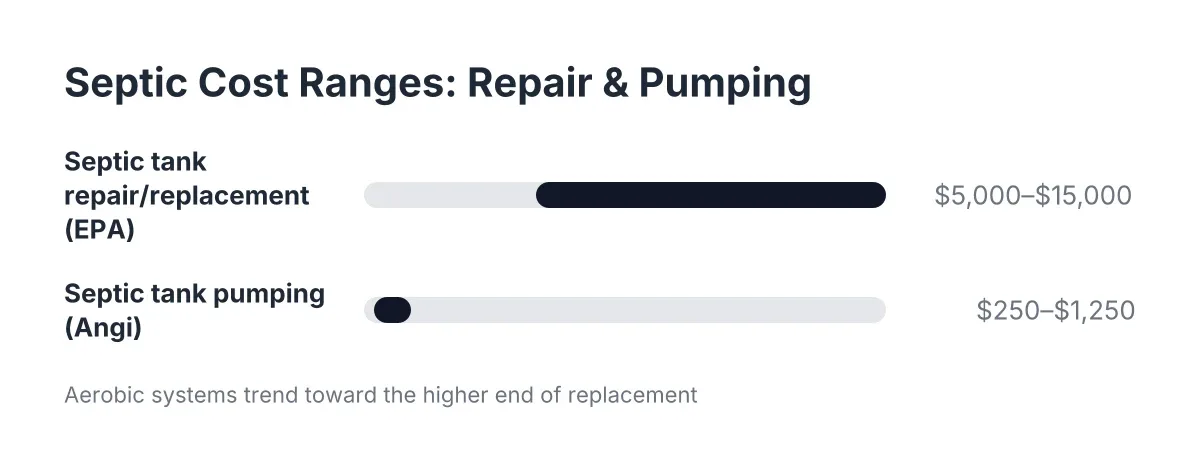
A straight answer to all three is the mark of an honest operator. According to Angi, septic tank pumping averages $427 nationwide, ranging from $250 to $1,250 or more depending on tank size and location. Emergency or after-hours service usually adds to that. A smaller 500 gallon septic tank generally costs less to pump than a larger one because the truck hauls away less waste.
For example, suppose a homeowner in Hesperia has sewage coming up in the hall bathroom on a Saturday evening. A typical crew pumps the tank, checks the inlet baffle, and has the drains flowing again that day. In that scenario, the total lands in the hundreds, not the thousands, even with an after-hours charge. That is the most common outcome of a backup call.
Step 4: Understanding the Cost of Septic Backup Repair by Tier
Septic system backup repair costs fall into three tiers, and knowing which tier you are in is how you judge any quote. Most backups sit in the first tier: the tank is full because it went too long between pump-outs, and pumping alone fixes it. That is the hundreds range described above, and it is the outcome to hope for.
The second tier is a component repair. A common example is a clogged or broken inlet baffle; according to the Washington State Department of Health, a clogged inlet baffle is a common cause of septic backups and one of the first things to check on a blocked line. Baffle work, a broken line between the house and tank, or a damaged lid usually costs more than a pump-out but far less than major work. As an illustrative estimate, think low hundreds to a couple thousand depending on digging and parts.
The third tier is the one everyone fears: drain field failure or full system replacement. The EPA estimates septic tank repair or replacement typically costs between $5,000 and $15,000, far more than routine pumping. However, a backup alone does not mean you are in this tier. If the drains work fine after pumping and stay that way, the drain field is probably doing its job.
Step 5: Verify the Diagnosis Before Agreeing to Major Work
If a technician says you need drain field work or a new system, slow down and verify before signing anything. This is where the fear of a padded septic tank cost either comes true or gets put to rest.
Ask the crew to show you what they found. A conventional system has two main parts, the tank and the drain field, according to the U.S. Environmental Protection Agency, and a real problem in either one is visible or testable. A failed drain field shows itself: water flows back into the tank from the outlet, the field stays soggy, or drains back up again within days of a fresh pump-out.
Reasonable checks before approving big-ticket work:
- Was the tank pumped first, and did the problem return afterward?
- Did they inspect the inlet and outlet baffles and the line from the house?
- Can they show you standing water or backflow at the outlet side?
- Did you get an itemized written estimate separating labor, materials, and equipment?
A quote that jumps straight to replacement without pumping and inspecting first deserves a second opinion. That said, if a system has failed, delaying real repair only spreads sewage and raises the eventual cost, so verification should take days, not months. Soil conditions, tank access, and county permitting all affect Hesperia repair pricing, so a firm number requires someone on site.
Step 6: Prevent the Next Backup With Scheduled Pumping
After the crisis passes, the cheapest repair is the one you never need. Nearly all emergency backup calls trace back to a tank that went years past its service interval, letting sludge and scum build until solids pushed into the lines or the drain field.
The prevention plan is short:
- Get on a pumping schedule. Penn State Extension notes that for an active family of four, pumping every two to three years is generally advisable.
- Have the system inspected. The U.S. Environmental Protection Agency recommends a professional inspection at least once every three years.
- Fix running toilets and dripping fixtures fast; extra water is the quiet killer of drain fields.
- Keep grease, wipes, and food solids out of the drains. This goes double for commercial kitchens, where a grease trap on a regular pump-out schedule prevents both backups and health code trouble.
- Skip additive products sold as a substitute for pumping. If additives fail to clear a buildup, the endgame can be replacing the system entirely.
Do the math on this trade. A pump-out every few years costs hundreds. A replacement runs $5,000 to $15,000 by EPA estimates, and you carry that whole bill yourself; there is no city sewer department to absorb it. More than one in five U.S. households depend on septic or small cluster systems, according to the U.S. Environmental Protection Agency, and the ones that avoid emergencies are the ones on a schedule.
Step 7: Keep Records So Future Service Costs Less
Finally, write down what happened. Note the date of the pump-out, where the tank and lids are, what the crew found, and what they recommended. If the crew had to locate the tank this time, mark the spot or sketch it; skipping the locating step next time saves money on every future visit.
These records also matter if you ever sell. Buyers and inspectors ask for septic service history, and a documented, regularly pumped system is worth more than a mystery in the yard. For an RV park or restaurant owner, the same log doubles as your compliance record for holding tank or grease trap service.
A backup at 8pm feels like a disaster, and standing sewage is nothing to shrug off. But most Hesperia backups end with a same-day pump-out in the hundreds of dollars, a checked baffle, and a homeowner who now knows exactly what their system needs. Follow the steps in order, ask for itemized pricing, and the scary quote almost never materializes.
If you need your septic tank serviced, Hesperia Septic can help.
Prefer to talk it through? Call (760) 249-7872 — a quick call is usually the fastest way to get a straight answer for your situation.