RV Holding Tank Pumping in Hesperia: How Often to Pump and What the Service Covers
If you keep an RV parked at your home or on a rental property in Hesperia, rv holding tank pumping is one of those chores that is easy to put off until it becomes a smelly, urgent problem. The tank fills faster than most people expect, especially when a trailer houses a tenant, a family member, or a guest for weeks at a time. This guide walks through how often holding tanks need pumping, what a full service includes, how it differs from a quick dump-station visit, and how to set up a schedule you never have to think about.
The goal here is simple. You should finish this article knowing exactly what you are paying for when a truck shows up, how to time service so you never deal with an overflow, and what questions to ask before you book.
Why RV Holding Tanks Fill Faster Than Septic Tanks
A holding tank is not a septic system. A septic tank treats wastewater on site and sends liquid out to a drain field, while a holding tank just stores everything until someone hauls it away. Nothing drains out. Nothing breaks down enough to matter. Every gallon that goes in stays in until it gets pumped.
That difference changes the math on frequency. A home septic tank might go years between pump-outs. An RV holding tank in regular use can fill in days or weeks. According to the U.S. Environmental Protection Agency, in a septic tank solid sludge settles to the bottom while grease and scum float to the top, forming distinct layers as wastewater sits. The same layering happens inside an RV holding tank, just in a much smaller space, which is why odors and clogs show up fast when a tank sits too long.
In addition, holding tanks cannot legally be dumped on the ground or into a storm drain. The waste has to be hauled by a licensed septic pumper who transports it to a treatment facility. The New Hampshire Department of Environmental Services notes that pumped septic waste is trucked to a sewage treatment plant for disposal rather than processed on site, and holding tank waste follows the same path. That is why this is a scheduled service, not a DIY job.
How Often Does an RV Holding Tank Need Pumping?
An RV holding tank in full-time use typically needs pumping every one to two weeks, while a tank used only on weekends may stretch to several weeks or a month. The honest answer depends on three things: tank size, how many people use it, and whether gray water and black water share capacity. There is no single interval that fits every rig.
Here is how to think through your own situation:
- Full-time occupancy. Suppose a Hesperia landlord has a tenant living in a travel trailer on a rural parcel. With one or two people using the tank daily for the toilet, shower, and sink, that tank can fill within a week or two. Scheduled service every week or every other week keeps it from becoming an emergency.
- Weekend or seasonal use. An RV used for occasional trips or guest stays fills slower. Pumping after each heavy-use stretch, or on a monthly check, usually works.
- Stored RVs. A parked rig with waste sitting in the tank should be pumped before storage. Waste left to sit through a High Desert summer bakes into a hardened layer that is much harder to remove later.
The decision rule mirrors home septic maintenance. Pump too rarely and solids build up, odors escape, and the tank can overflow. Pump more often than needed and you waste money. Watch your fill gauge for the first month or two of regular use, note how fast it climbs, and set your schedule off that real-world data rather than a guess.
One caution on gauges: RV tank sensors foul easily, and a sensor coated in residue can read full when the tank is half empty, or empty when it is nearly full. If the gauge disagrees with your usage math, trust the math.
What a Mobile RV Holding Tank Pumping Service Includes
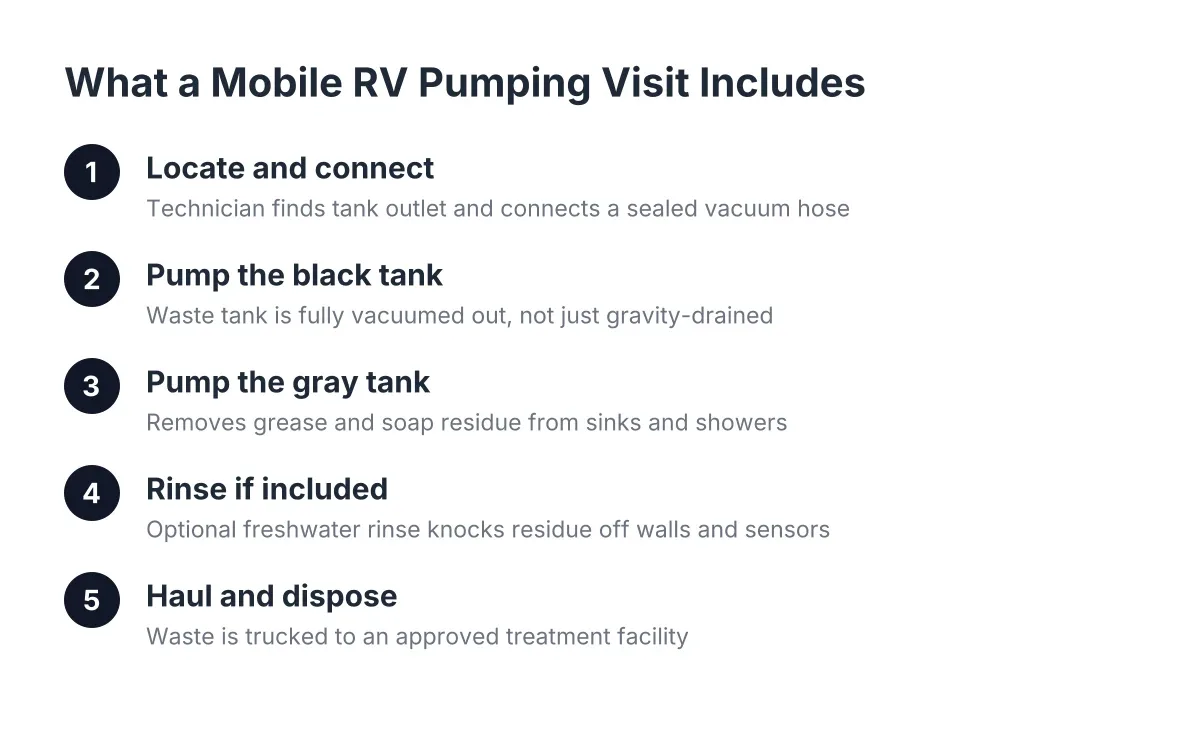
A professional rv holding tank pumping visit covers more than opening a valve. A septic service truck carries a vacuum pump and a storage tank, and a typical crew can both pump the tank contents and clean up the work area in one stop. When the truck arrives at your Hesperia property, here is the general scope of work you should expect:
- Locate and connect. The technician finds your tank's outlet, connects a vacuum hose, and confirms the connection is sealed before anything flows.
- Pump the black tank. The waste tank gets vacuumed out completely, not just drained by gravity the way a dump station works. Vacuum extraction pulls out heavier material that gravity leaves behind.
- Pump the gray tank. Gray water from sinks and showers carries grease and soap residue. Pumping it prevents buildup and odor in the lines.
- Rinse if included. Some services add a freshwater rinse of the tank interior to knock loose residue off the walls and sensors. Ask whether rinsing is part of the base visit or an add-on, because this varies by provider.
- Haul and dispose. The waste leaves in the truck and goes to an approved treatment facility. You should never be left wondering where it went.
What usually costs extra: deep tank cleaning with a pressure wand to restore fouled sensors, clearing a clogged outlet valve, or dealing with a compacted tank that has not been serviced in months. If your tank has been neglected, say so when you book. A crew that shows up expecting a routine pump-out and finds a solidified tank will either charge more or need a second visit.
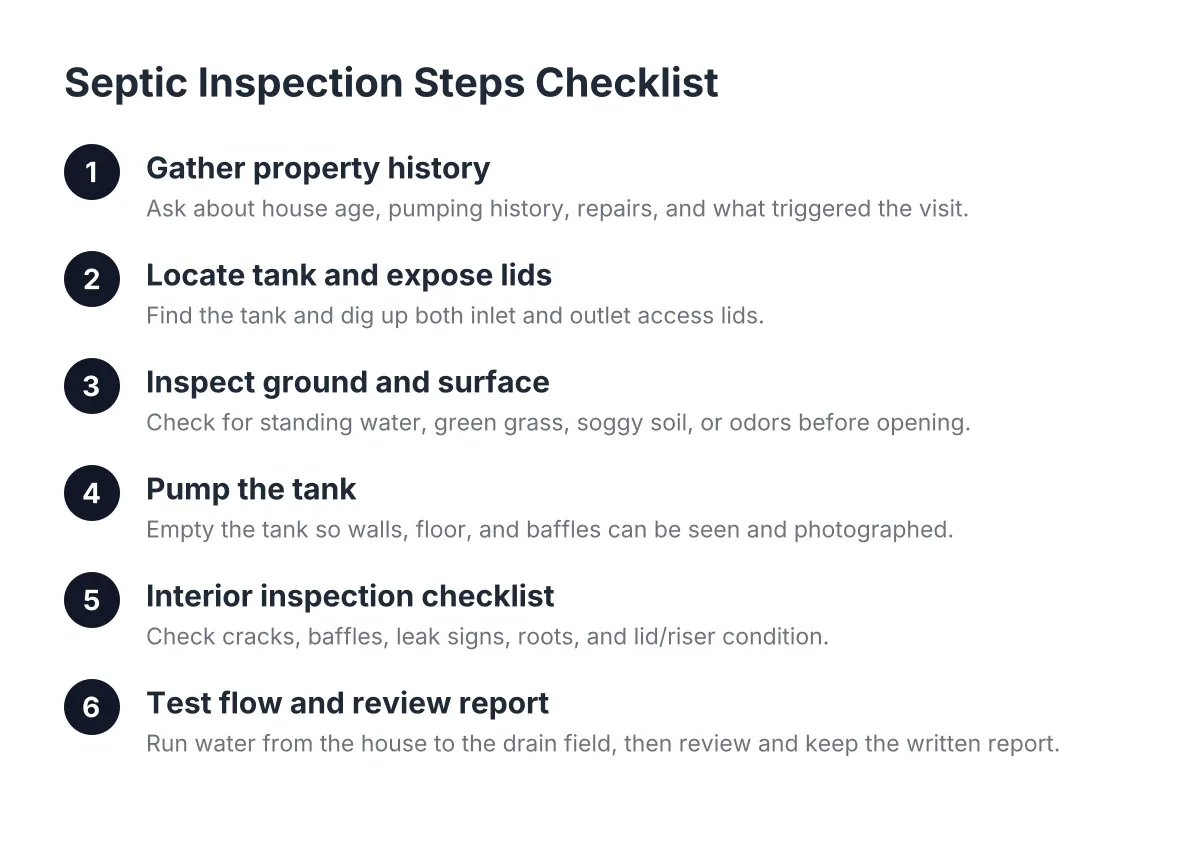
The same logic applies to your home system, by the way. Routine septic tank pumping removes liquid and solids, while a full septic tank cleaning goes further, removing the settled sludge layer, the floating scum layer, and rinsing the tank interior so the whole volume is working again. If you are already scheduling an RV pump-out, it is worth asking the same crew when your house tank was last serviced.
Dump Station vs. On-Site Pumping: When Each Makes Sense
Driving to a dump station works fine for a roadworthy RV and an owner willing to handle the hoses. It is the cheapest option, and for occasional travelers it is usually all you need. On-site pumping earns its cost when any of these apply:
- The RV is parked long-term, set up on blocks, or occupied by a tenant and not practical to move.
- You own rental property and do not want tenants handling sewage hoses, for liability and sanitation reasons.
- The tank is overfull or the valve is suspect, and moving the rig risks a spill.
- You manage multiple units and want one scheduled visit instead of coordinating trips.
For a small landlord, the math usually favors scheduled service. Say you own three rental properties around Hesperia and one includes a trailer pad with a long-term occupant. A missed pump-out there does not just smell bad; it can mean a tenant complaint, a habitability issue, and cleanup costs. A standing service date removes the problem from your plate and gives you a paper trail of invoices showing the property was maintained, which matters if a dispute ever comes up.
There are limits to what on-site service solves, however. If a holding tank leaks, a valve has failed, or waste has already spilled on the ground, pumping alone will not fix it. Those situations call for a repair professional, and a reputable pumping crew will tell you that rather than just emptying the tank and leaving the underlying problem.
What RV Holding Tank Pumping Costs in 2026
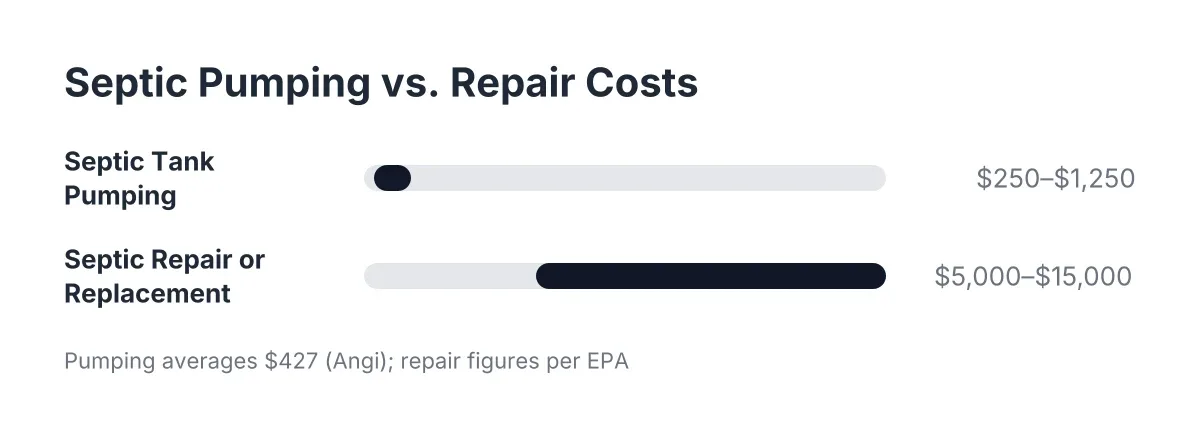
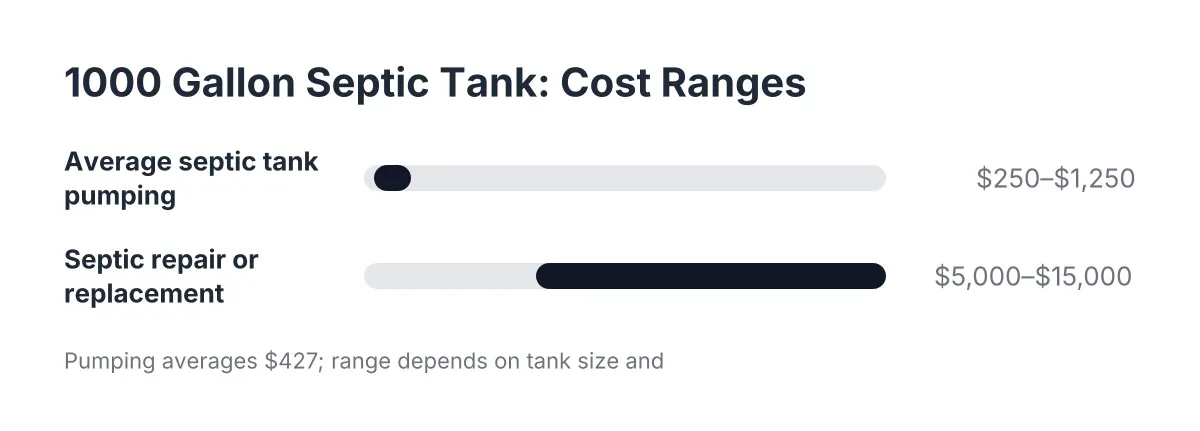
Costs for holding tank service depend on tank size, access, and how far the truck travels, so any figure here is an estimate rather than a quote. As a reference point for the broader category, Angi reports that septic tank pumping averages $427, with a range from $250 to $1,250 or more depending on tank size and location. RV holding tanks are far smaller than home septic tanks, so a routine RV pump-out generally lands toward the lower end of what septic work costs, though mobile service and travel time factor in.
Three things push the price up:
- Access. A tank the truck can park next to costs less to service than one requiring long hose runs across a property.
- Condition. A neglected tank with hardened solids takes more time and may need a cleaning wand or extra water.
- Frequency. Some providers offer better per-visit terms for a recurring schedule than for one-off emergency calls. Ask.
The cost comparison that matters most is against doing nothing. An overflowing holding tank on a rental property can mean contaminated soil, an unrentable unit, and cleanup bills that dwarf years of scheduled pumping. For home septic systems, the EPA estimates repair or replacement runs $5,000 to $15,000, far more than routine pumping. Holding tanks are cheaper to replace than full septic systems, but the pattern holds: maintenance is the cheap option.
Turnaround for the visit itself is short. A routine pump-out on an accessible tank is typically done within the hour, including setup and cleanup. Booking lead time varies by season and demand, so if you have a hard deadline like a tenant move-in, schedule ahead rather than calling the day of.
Keeping the Tank Healthy Between Pump-Outs
Pumping handles what is in the tank. What you put in it between visits determines how smoothly those visits go. A few habits make a measurable difference:
- Use plenty of water with every flush. Holding tank clogs almost always trace back to too many solids and too little liquid.
- Stick to RV-safe toilet paper, and keep wipes, paper towels, and feminine products out entirely, even ones labeled flushable.
- Keep the black tank valve closed until pump-out day. Leaving it open lets liquid drain off and solids pile into a mound at the outlet, one of the most common clog causes.
- Add a tank treatment suited to your climate. Hesperia's summer heat accelerates odor, so warm-weather formulas matter here.
- After each pump-out, add a few gallons of fresh water to the empty black tank so solids never land on a dry floor.
For landlords, put these rules in writing for any tenant living in an RV on your property. A one-page sheet taped inside a cabinet prevents most of the problems that turn a routine pump-out into a service call.
Also think about the hardware. If an RV sits on a pad long-term, inspect the outlet valve and hose connections every few months for cracks and drips. A five-dollar gasket caught early beats a contaminated pad caught late.
Building a Maintenance Schedule You Don't Have to Think About
The whole point of scheduled service is removing the mental load. You do not want to track fill levels across properties or wait for a tenant text that starts with "something smells." Here is a simple way to set it up:
- Establish a baseline. Pump the tank, then track how long it takes to reach about two-thirds full under normal use. That is your interval.
- Set the recurring date. Book service at that interval, with a small buffer. If the tank hits two-thirds in three weeks, schedule every two to three weeks, not monthly.
- Bundle where it makes sense. If the same property has a home septic system, align inspections with the EPA guideline of a professional septic inspection at least every three years, and ask the pumper to look things over while on site. For a busy household, Penn State Extension notes that pumping the house tank every two to three years is generally advisable for a family of four.
- Keep the invoices. For rental properties, dated service records show the system was maintained. That documentation has real value at lease turnover, during a sale, or in a tenant dispute.
- Adjust seasonally. If occupancy changes, winter guests arrive, or a unit sits vacant, update the schedule instead of letting it run on autopilot.
Searching for rv holding tank pumping near me every time the tank fills is the hard way to do this. One phone call to set a standing schedule with a local crew is the easy way, and it is the version of maintenance that never turns into an emergency.
Choosing a Local Provider in the High Desert
Not every outfit that pumps septic tanks handles RV and holding tank work, and not every mobile RV service operates in the High Desert. Before you book, ask three questions:
- Do you service RV and holding tanks directly, or only residential septic? You want a crew whose truck and hoses are set up for the job, not an improvised visit.
- Where does the waste go? A legitimate answer names disposal at an approved treatment facility. Vague answers are a red flag, because illegal dumping liability can land on the property owner.
- What does the base visit include, and what costs extra? Get clear on whether rinsing, long hose runs, or a second tank change the price before the truck rolls.
A fair quote names the service scope, flags the things that could add cost, and does not require you to commit sight unseen to vague "additional work." Be wary of anyone who diagnoses expensive problems over the phone without seeing the tank, and equally wary of a price so low it cannot cover legal disposal.
Local matters here for a practical reason. Hesperia and the surrounding High Desert have a lot of rural parcels, long driveways, sandy soil, and properties where an RV pad sits well off the road. A crew that works this area daily knows how to position a truck on a dirt drive and reach a tank that a company dispatching from down the hill might call inaccessible. If you have been typing septic clean out near me or holding tank service into a search bar and getting national call centers, narrow it to operators actually based in the area.
Get Your Holding Tank on a Schedule
A holding tank is the simplest part of any wastewater setup to manage, because the service is predictable. Know your interval, book recurring visits, follow a few usage habits between pump-outs, and the tank never becomes a story you tell at a dinner party.
If you have an RV, trailer, or holding tank in Hesperia or the surrounding High Desert that is due for service, or you are not sure when it was last pumped, reach out to a local septic crew to get an estimate and a date on the calendar. One scheduled visit now beats an overflow call later, whether it is your own backyard rig or a tenant-occupied trailer on a rental parcel.
If you need your septic tank serviced, Hesperia Septic can help.
Prefer to talk it through? Call (760) 249-7872 — a quick call is usually the fastest way to get a straight answer for your situation.