1000 Gallon Septic Tank Pumping: How Often, What It Costs, and What Cleaning Adds
If you own a rental or small commercial property in Hesperia, odds are good the system under the yard is a 1000 gallon septic tank. It is the workhorse size for a standard home or small rental unit, and it is usually the tank in question when a tenant calls about a smell or a slow drain. The problem for a landlord is that most of what you find online about this tank size is product listings and sales pages, not answers. This guide covers the questions that actually matter when you are the one paying the invoice: how often a 1000 gallon tank needs pumping, what a pump-out costs, and what a full septic tank cleaning includes that a basic pump does not.
That last distinction matters more than most property owners realize. A quick pump-out and a true cleaning are not the same job, and the gap between them is where a lot of billing confusion, repeat visits, and avoidable drain field damage lives.
Why the 1000 Gallon Septic Tank Is the One You Probably Own
Septic tanks come in a range of sizes, but the 1000 gallon size is the common standard for a typical three-bedroom home. In many areas, it is the smallest size local rules allow for a full-time residence. If you bought a rental in Hesperia or the surrounding High Desert and the records do not say otherwise, a 1000 gallon tank is a reasonable working assumption until a crew confirms it.
Shapes and materials vary. According to the International Code Council, septic tank shapes and configurations differ by region; some areas use rectangular concrete tanks while others use circular designs. Around here you will see 1000 gallon septic tank concrete installations alongside newer plastic tanks. Concrete is heavy and durable. Plastic is lighter and easier to set, but either way the maintenance logic is the same: solids build up, and they have to come out.
Here is how the system works, in plain terms. According to the US EPA, a typical residential septic system has two main components: a tank that clarifies wastewater and a drain field that disperses the clarified liquid into the soil. A single pipe carries everything from the house drains to the tank. Solids settle to the bottom as sludge, grease and lighter material float to the top as scum, and the liquid in the middle flows out to the drain field.
The tank does not destroy the solids. It stores them. Pumping is how they leave the property, and skipping it is how a 1000 gallon tank turns into a drain field problem that costs real money.
How Often a 1000 Gallon Septic Tank Needs Pumping
A 1000 gallon septic tank serving an active household generally needs pumping every two to three years. According to Penn State Extension, pumping every two to three years is advisable for an active family of four because of the higher volume of solids and liquid the household produces. Lighter use stretches that interval; heavy use shortens it.
Two things drive the real number for your property:
- Occupancy. A couple in a two-bedroom rental sends far less to the tank than a family of five in the same house. More people means more solids, which means a shorter pumping interval.
- What goes down the drain. Garbage disposals, grease, wipes, and heavy laundry loads all accelerate sludge buildup. With tenants, you do not control this, which is a strong argument for erring on the shorter side of the interval.
There is a balance here. Pumping too rarely lets solids build until they wash into the drain field. Pumping more often than the tank needs just spends money without benefit. For most landlords with standard occupancy, a two-to-three-year schedule per unit is the sensible default, adjusted after a crew actually opens the tank and reports how full it was.
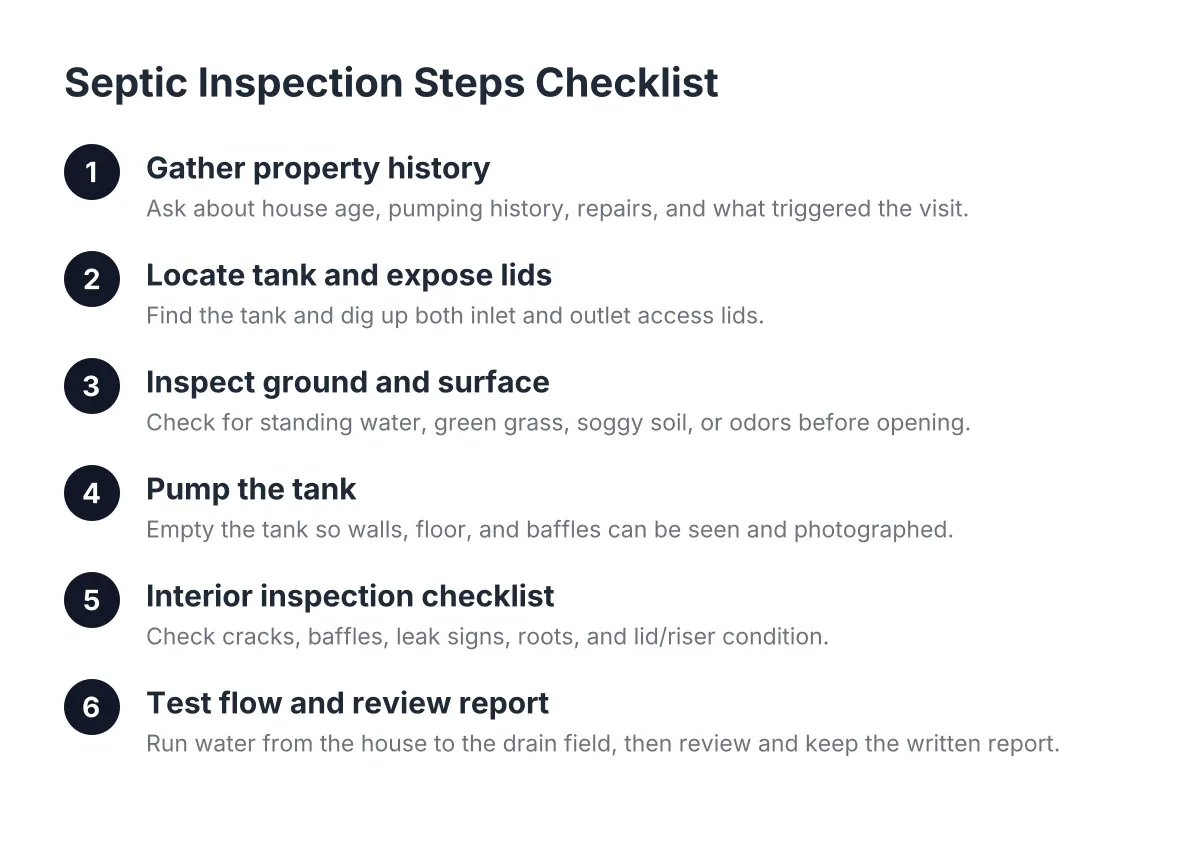
Inspections belong on the calendar too. The U.S. Environmental Protection Agency recommends a professional inspection at least once every three years for the average household, and once a year for alternative systems with pumps, float switches, or other mechanical parts. In practice, since opening and inspecting a tank costs close to what pumping costs, many owners simply have the tank pumped and inspected in the same visit. One truck roll, both jobs done.
One honest caveat: these intervals are general guidance, not a substitute for a professional looking at your specific tank. Sludge depth, tank condition, and drain field health vary property to property, and only an opened tank tells the truth.
What Pumping a 1000 Gallon Septic Tank Costs
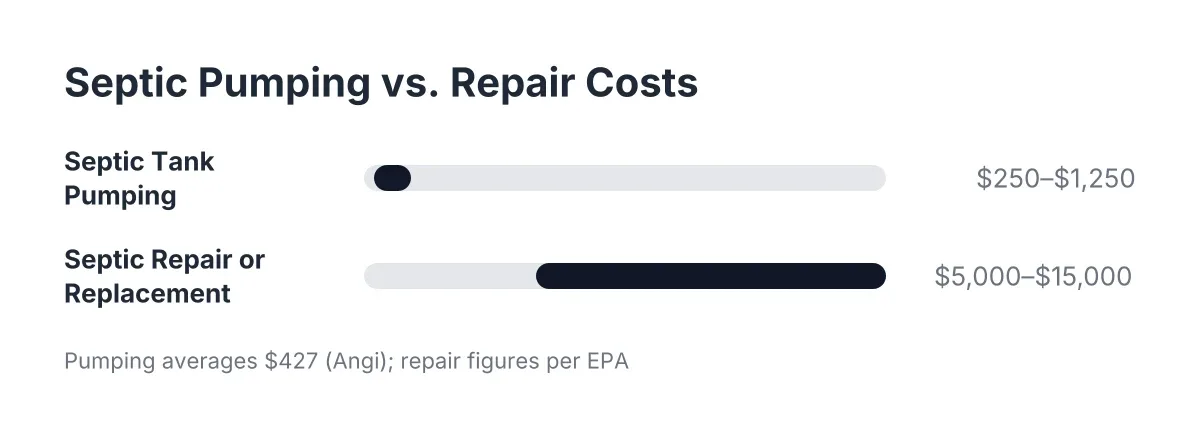
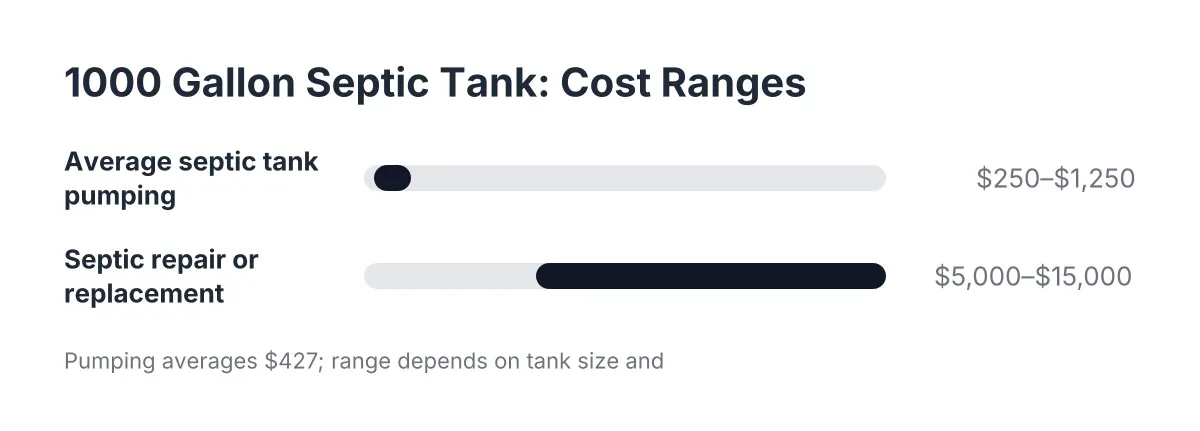
Septic tank pumping averages $427 according to Angi data, with a range of $250 to $1,250 or more depending on tank size and location. A 1000 gallon tank sits in the middle of the residential size range, so for budgeting purposes, most routine pump-outs on a tank this size land in the lower-to-middle portion of that range. Treat that as a planning estimate, not a quote; access, condition, and what the crew finds all move the number.
Several factors push a specific job up or down:
- Access and lid depth. A tank with risers at grade is a straightforward job. A tank buried under two feet of High Desert soil with no visible lids takes digging, and sometimes septic tank locating service, before the hose ever goes in.
- How full the tank is. A tank that went five or more years between services carries compacted sludge that takes longer to remove than a tank on a regular schedule.
- Pump-out versus full cleaning. Removing liquid is fast. Breaking up and removing the sludge and scum layers is the longer, more thorough job, which the next section covers.
- Emergency timing. A scheduled visit costs less than an after-hours call for a septic backup flooding a tenant's bathroom.
Now put that number next to the cost of neglect. The EPA estimates septic repair or replacement typically runs $5,000 to $15,000, far more than routine pumping. For a landlord, that math is the whole argument. A few hundred dollars every two to three years per unit protects against a five-figure repair, plus a vacant unit while the yard gets excavated. As of 2026, no part of that equation favors waiting for a problem.
For context on the install side, the cost of a 1000 gallon septic tank itself, concrete or plastic, is a separate conversation from service, and installation involves its own permitting and licensing. According to the New Hampshire Department of Environmental Services, licensed septic installation requires certification beyond a pumping operation, including exams on soil types, percolation rates, and system design. If you are pricing a new tank for a property, that is a different project with a different crew and budget.
Pumping Versus Cleaning: What You Are Actually Paying For
Here is the distinction that confuses more property owners than anything else in septic service. "Pumping" and "cleaning" get used interchangeably on invoices and in search results, but they describe different depths of the same job.
What a basic pump-out includes
A basic pump-out removes the liquid contents of the tank, along with whatever solids come up easily with the vacuum. The crew locates and opens the access lid, drops the hose, and draws down the tank. On a well-maintained 1000 gallon tank, this often handles most of the material. It is the faster, cheaper visit, and for a tank on a regular schedule it may be all the tank needs.
The limitation is what it leaves behind. Sludge at the bottom of a neglected tank compacts into a dense layer the vacuum alone will not lift. The scum mat on top can be thick enough to hold its shape. A pump-out that removes the liquid and leaves those layers has emptied the tank without actually resetting it.
What a full septic tank cleaning adds
A full septic tank cleaning targets everything: the liquid, the floating scum layer, and the settled sludge at the bottom. The crew breaks up the compacted material, often by backflushing liquid into the tank to stir the solids into a slurry the vacuum can remove. On a 1000 gallon tank that has gone years without service, this is the difference between a half-done job and a tank restored to full working capacity.
A thorough cleaning visit also gives the crew a clear look at the tank interior once it is empty. That means checking the baffles that keep solids from escaping to the drain field, looking for cracks or root intrusion, and confirming the inlet and outlet are sound. On a concrete tank, that interior check matters; corrosion and baffle damage hide under the waterline until the tank is emptied.
Everything that leaves your tank goes somewhere accountable. According to the New Hampshire Department of Environmental Services, waste pumped from residential tanks is trucked to a sewage treatment plant for disposal rather than processed on-site. For a landlord keeping records for habitability or compliance purposes, a legitimate service invoice documenting the pump-out is worth keeping on file for each property.
Which one does your property need
If the tank has been serviced on schedule, a standard pump-out usually suffices. If you just bought the property, the service history is unknown, or the tank has gone five or more years without attention, ask for a full cleaning with sludge removal and an interior check. The extra time on the first visit buys you a true baseline, and future visits can be routine.
A Landlord Scenario: The Rental You Just Took Over
Suppose you close on a three-bedroom rental in Hesperia in March. The seller's disclosure says "septic" and nothing else. No pumping receipts, no tank location, no record of size. Six weeks after tenants move in, they text you about a sewage smell near the back patio. You live an hour away and cannot be on-site.
In that scenario, the first visit does three jobs at once. The crew locates the tank, which may mean probing or tracing the line from the house, since lids on older High Desert properties are often buried with no markers. They confirm the size, most likely a 1000 gallon tank for a house that age and size. Then they pump it, and because the history is unknown, a full cleaning with sludge removal makes sense so you know exactly what condition the tank is in.
What you get out of it is more than an empty tank. You get the tank's location documented for next time, a read on the baffles and tank condition, an honest answer on whether the smell was a full tank or something further along like a drain field issue, and a service record that starts your file on the property. From there, the unit goes on a two-to-three-year schedule and stops being a surprise.
Compare that to the alternative: ignoring the smell, getting a backup complaint in July, and dealing with an emergency pump-out plus a cleanup inside the unit. Same tank, different invoice, and now an unhappy tenant on top of it.
When to Call a Crew and When You Can Wait
Some septic issues give you time to schedule. Others do not. Knowing the difference keeps a manageable service call from turning into a habitability problem at a rental you cannot reach quickly.
Call for service promptly if you or a tenant notice:
- Sewage odors inside the unit or near the tank and drain field
- Slow drains throughout the house, not just one fixture
- Gurgling from toilets or drains when water runs elsewhere
- Wet, soggy, or unusually green patches of yard over the system
- Any sewage backing up into tubs, showers, or floor drains
That last one is a call-now situation, not a schedule-next-week situation. Backups are a health issue for tenants and a liability issue for you.
As for do-it-yourself work, keep your scope narrow. A property owner can reasonably keep records, watch what goes down drains through lease terms and tenant communication, and keep the tank lids accessible. Opening a septic tank is not a DIY job. The gases inside a tank are dangerous, the lids are heavy, and an open tank is a fall hazard. Pumping, cleaning, and inspection belong with a professional crew, full stop. Additives sold as a substitute for pumping do not remove solids from the tank; regular pumping does, and no product on a store shelf changes that.
What to Ask Before You Hire a Septic Service in Hesperia
Hiring from a distance is normal for a landlord, and a few direct questions sort serious operators from thin listing pages fast. Before you book, ask:
- Is this a pump-out or a full cleaning, and does it include sludge and scum removal? You now know the difference; make the company state which one they are quoting.
- What happens if the lids are buried or the tank location is unknown? A crew that handles septic tank locating and digging as part of the visit saves you a second appointment.
- Will I get documentation? You need an invoice showing the service date and work performed for your property file, and proper disposal of the waste is a given with a legitimate operation.
A fair quote names the expected scope, flags the things that could change the price, such as deep lids or a heavily neglected tank, and does not make you guess what "service" means. Be wary of any price that seems disconnected from the work; a rock-bottom pump-out that leaves the sludge layer behind is not a bargain, it is a deferred problem.
Local fit matters too. A Hesperia-based septic crew knows the soil, the common tank types in the area, and what buried lids look like on High Desert properties. For an owner managing one to five rentals here, one local crew that handles pumping, cleaning, inspection, and emergency backup response means one phone number for every septic situation across your properties, without you standing in the yard for any of it.
Put the Tank on a Schedule and Stop Thinking About It
The whole point of understanding your 1000 gallon septic tank is to make it boring. Confirm the size and location on the first visit. Get a full cleaning if the history is unknown. Then set a pumping interval, every two to three years for a typical occupied rental, and let the calendar do the remembering.
The owners who get burned are the ones who treat septic as a problem to react to instead of a line item to plan for. The tank fills either way. Additionally, the only choice you actually have is whether it gets emptied on your schedule for a few hundred dollars, or on the tank's schedule with a tenant on the phone and a mess in the yard.
If you own septic-served property in Hesperia or the surrounding High Desert and the service history is a question mark, get a local septic crew out to open the tank, confirm what you have, and give you a straight answer on what it needs. One visit turns an unknown into a schedule, and a schedule is the cheapest septic system insurance there is.
If you need your septic tank serviced, Hesperia Septic can help.
Prefer to talk it through? Call (760) 249-7872 — a quick call is usually the fastest way to get a straight answer for your situation.