How to Locate Your Septic Tank Without Records: DIY Methods That Work
Plenty of High Desert homes changed hands with no septic paperwork at all. If you just bought a place in Hesperia, or you have owned yours for years and never needed to dig, you may have no idea where the tank sits. The good news is you can locate septic tank yourself with a few simple methods and tools, no records required. This guide walks through the process step by step, then covers when it makes sense to bring in a locating crew instead.
Missing records are common on older High Desert properties. Some homes here were built decades before counties kept consistent septic permits on file. Others have records that show a tank exists but not where it was buried. Either way, you cannot schedule septic tank pumping, pass a pre-sale inspection, or plan a remodel until someone finds the lid.
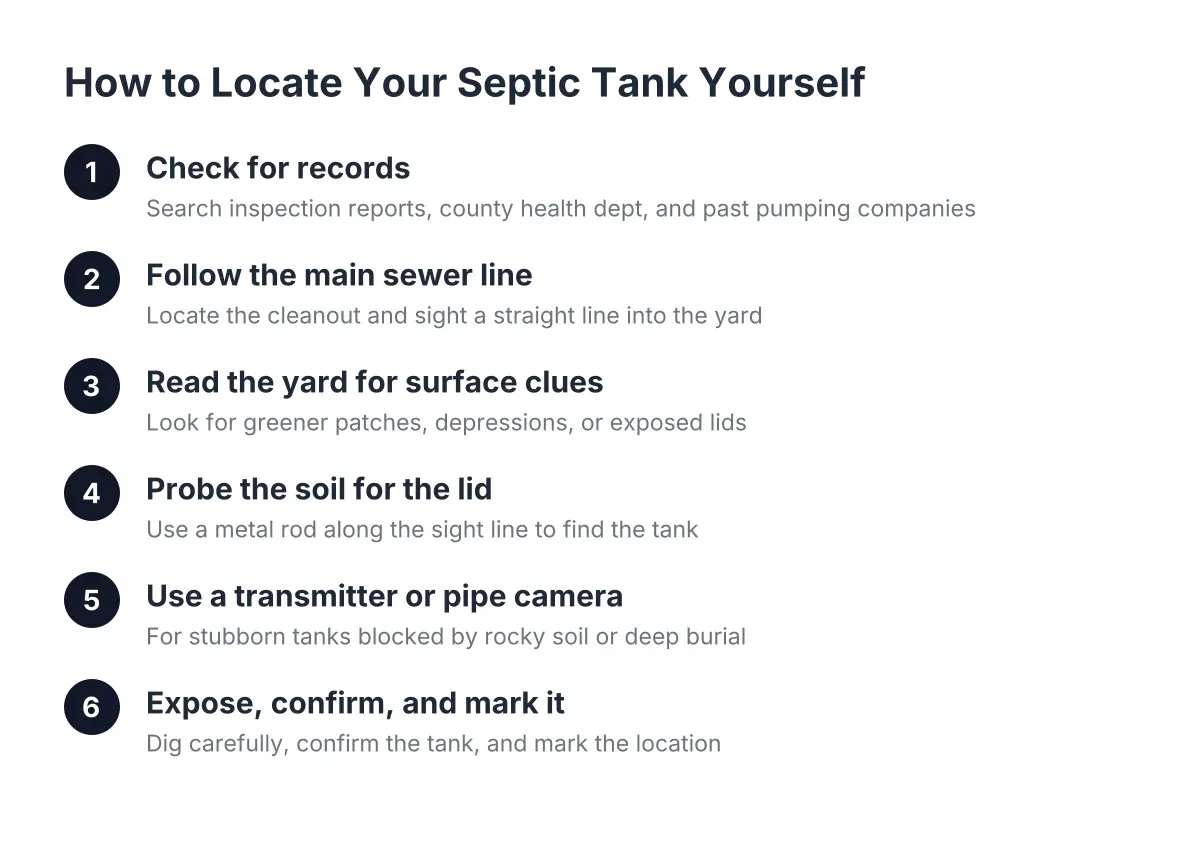
Step 1: Check for Records Before You Dig Anything
Start with paperwork, even if you think none exists. A permit sketch or as-built diagram can save you hours of probing in the yard.
Look in these places first:
- Your home purchase documents, especially the inspection report and any seller disclosures
- The San Bernardino County environmental health department, which may have a permit or as-built drawing on file
- The company that pumped the tank last, if a neighbor or previous owner remembers the name
- The original builder or a long-time neighbor with a similar floor plan
Even a rough sketch helps. A diagram that shows the tank 15 feet off the back door narrows your search from the whole yard to a strip of dirt you can probe in an afternoon.
However, do not be surprised if the county has nothing. Many Hesperia parcels predate consistent record keeping. If the paper trail is a dead end, move to the physical clues.
Step 2: Follow the Main Sewer Line From the House
Your main drain line points straight at the tank. Find where the sewer pipe exits the house and you have a direction to follow.
First, locate the main cleanout. It is usually a capped pipe, 3 to 4 inches wide, sticking a few inches out of the ground near the foundation. In homes with a basement or crawl space, you can often see the main line itself and note which wall it exits through.
Next, stand at that exit point and sight a straight line out into the yard. Septic installers almost always run the pipe straight to the tank to keep the fall consistent. Most tanks sit 10 to 25 feet from the house, though older installs vary.
In addition, note the slope of your lot. Sewage moves by gravity, so the tank will be downhill from the house, never uphill. On a flat Hesperia lot that clue matters less, but on a sloped parcel it can rule out half the yard immediately.
Step 3: Read the Yard for Surface Clues
A buried tank often announces itself if you know what to look for. Walk the area along your sight line slowly and check for these signs:
- A rectangular patch where grass or weeds grow greener or faster, fed by moisture below
- A low spot or shallow depression where backfill settled over the tank
- A bare or stressed patch of ground, since some tanks sit shallow enough to dry out the soil above them
- Concrete lids, risers, or inspection pipes barely poking through the dirt
- Areas snow melts first in winter, if you catch a rare High Desert snowfall
For example, say a homeowner in Hesperia bought a 1978 ranch house with zero septic paperwork. In that scenario, a faint rectangular dip about 18 feet off the back bathroom wall, right along the line from the cleanout, would be the first place to probe. That combination of clues finds a lot of tanks.
Desert landscaping makes this harder. Gravel yards and native scrub hide settling and green patches that a lawn would reveal. If the surface tells you nothing, you will need to probe.
Step 4: Probe the Soil to Locate Your Septic Tank Lid
A soil probe is the classic tool to locate a septic tank, and it is cheap. Any 4 to 5 foot metal rod with a handle works; hardware stores sell purpose-made probes for the price of a tank of gas.
Work along your sight line from the cleanout, pushing the probe into the soil every couple of feet. Most tanks sit with their top 6 inches to 2 feet below grade. When the probe hits something flat and hard at a consistent depth, you have likely found the tank; concrete feels solid and unforgiving, while fiberglass or plastic gives a duller thud.
Once you hit the tank, probe outward to trace its edges. Finding the corners tells you the tank's footprint and orientation, which helps you find the lid. On most tanks, the access lid sits over the inlet end, the outlet end, or the center. Probe for a slightly raised or distinct spot within the footprint.
Two cautions here. Probe gently; older concrete lids can be brittle, and a hard jab can crack one. Also call 811 before any digging so buried gas, water, and electric lines get marked first. That call is free and it is the law before you excavate.
Step 5: Use a Flushable Transmitter or Pipe Camera for Stubborn Tanks
Sometimes probing fails. Caliche layers and rocky High Desert soil can stop a probe cold, and deep-set tanks sit below comfortable probing depth. When that happens, electronic locating tools take over.
A flushable transmitter is a small radio beacon you flush down a toilet. It travels the sewer line and stops at the tank inlet, and a handheld receiver above ground pinpoints its position. Some homeowners rent these; septic crews carry them as standard equipment.
Similarly, a pipe camera with a locating sonde can be fed through the cleanout. The camera shows the pipe's condition on the way, and the sonde lets the operator mark the line's path and the tank connection from the surface. This method has a bonus for anyone planning maintenance: you learn whether the line has root intrusion or bellies before they cause a septic backup.
Therefore, if you have already spent a weekend probing with nothing to show for it, electronics are the logical next step. This is also where a professional septic tank locating service earns its fee, since the equipment, the experience reading desert soil, and the ability to expose and mark the lid come as one visit.
Step 6: Expose, Confirm, and Mark the Location
Finding the tank is only half the job. Now confirm it and record it so you never search again.
Dig carefully by hand over the spot you identified until you expose the lid. Confirm it is the access lid, not just the tank top, since pumping requires an opening large enough for the hose. If the lid sits more than a few inches down, consider having a riser installed; a riser brings the access to grade so future septic tank pumping does not start with a shovel.
Then document everything:
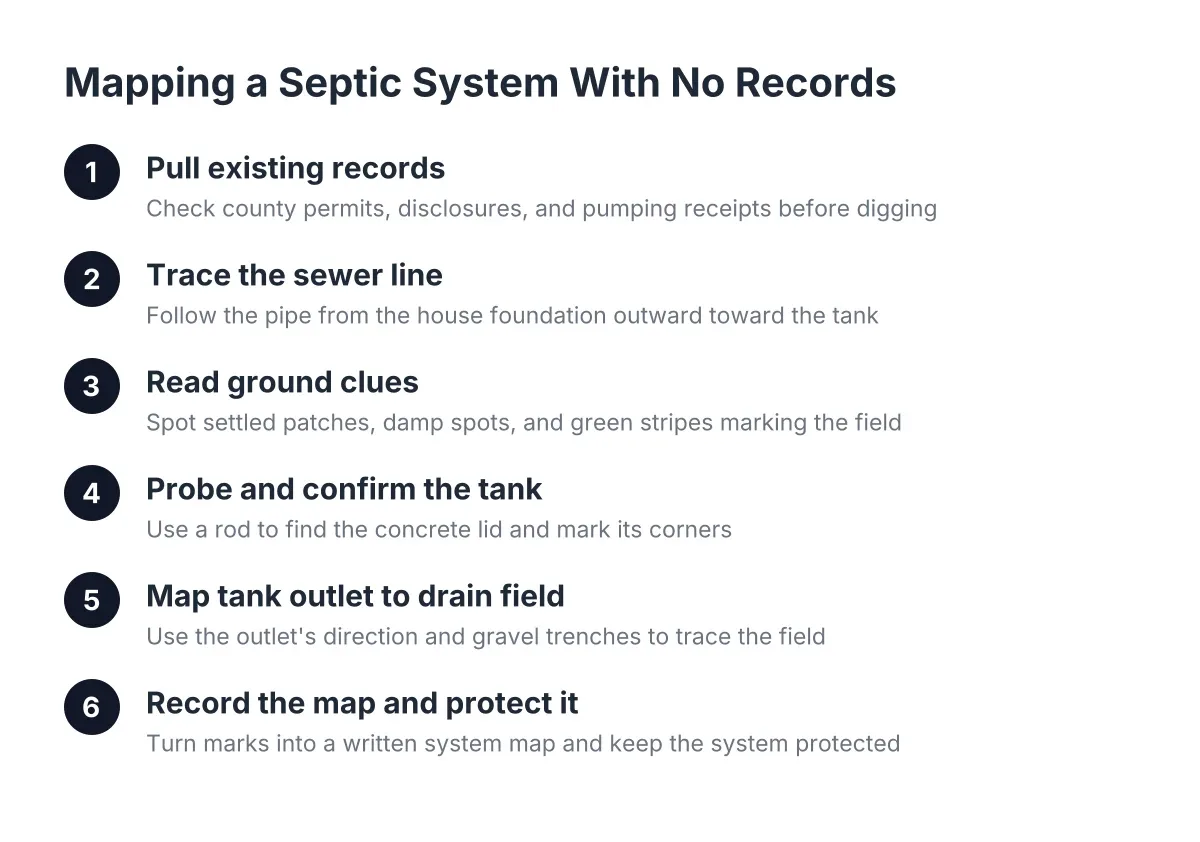
- Measure from two fixed points, such as house corners, to the lid center, and write the distances down
- Take photos of the open hole with the house in frame for reference
- Sketch a simple map showing the tank, the sewer line path, and the drain field direction if known
- Drop a pin on your phone's map app and save it
- Keep a copy with your house documents and give one to whoever pumps the tank
As a result, the next crew that services the system drives up, opens the lid, and gets to work. No searching, no extra digging charges, no wasted trip.
When to Call a Pro Instead of Doing It Yourself
Call a professional when probing fails, when you suspect the tank sits under concrete or a structure, or when a sale or permit deadline gives you no time to experiment. A crew with transmitters, cameras, and desert digging experience can find, expose, and mark a tank in one visit instead of your several weekends.
There are also situations where DIY carries real risk. A backup in progress means the tank may be full to the lid; opening it without the right setup exposes you to sewage and dangerous gases. Old steel or failing concrete tanks can have unsafe lids that collapse under weight. If anything about the tank looks compromised, stop and get a professional opinion before anyone stands over it.
The trade-off is straightforward. DIY locating costs you time and a probe rod, and it works on most straightforward lots. Professional septic tank locating costs money but comes with the equipment and judgment to handle no-record properties, buried lids under hardscape, and tight timelines. Neither choice is wrong; it depends on your soil, your schedule, and how the first attempt goes.
Why Finding the Tank Now Beats Finding It During an Emergency
Locating the tank while nothing is wrong is the cheapest version of this job. According to the U.S. Environmental Protection Agency, more than one in five U.S. households depend on individual septic systems, and the EPA recommends a professional inspection at least once every three years. You cannot follow that schedule if nobody knows where the tank is.
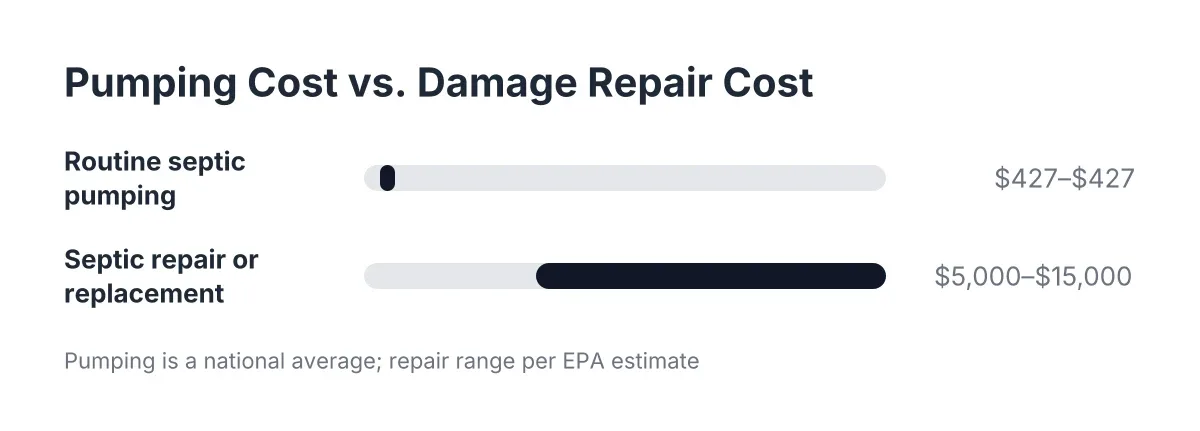
The cost math backs this up. Angi data puts the average cost of septic tank pumping at $427, with a typical range of $250 to $1,250 depending on tank size and location. Meanwhile, the EPA estimates septic repair or replacement typically runs $5,000 to $15,000. A neglected tank that fails because it was never found and never pumped lands on the expensive side of that gap.
So take the afternoon. Follow the sewer line, read the yard, probe the soil, and locate your septic tank before it forces the issue with a backup on a holiday weekend. Mark it, map it, and put pumping on the calendar. That is the whole difference between routine maintenance and an emergency call.
If you need your septic tank serviced, Hesperia Septic can help.