Septic Tank Cleaning Terms Explained: A Plain-English Glossary
If you own a home with a septic system in Hesperia or anywhere in the High Desert, you will run into words on quotes and inspection reports that nobody ever explained to you. This septic tank cleaning glossary breaks down the terms you actually meet when you call a provider, read an estimate, or watch a crew work in your yard. Each entry gives you a plain definition first, then tells you why the term matters for your wallet or your property. Use it to read a quote line by line, ask better questions, and spot a problem before it becomes a backup.
- Septic Tank
- Drain Field
- Baffle
- Riser
- Inlet and Outlet
- Scum Layer
- Sludge
- Effluent
- Effluent Filter
- Septic Tank Pumping
- Pumping vs. Cleaning
- Vacuum Truck
- Septic Tank Locating
- Backwash or Backflushing
- Septic Backup
- Slow Drains
- Septic Inspection
- Grease Trap
Parts of Your Septic System
Septic Tank
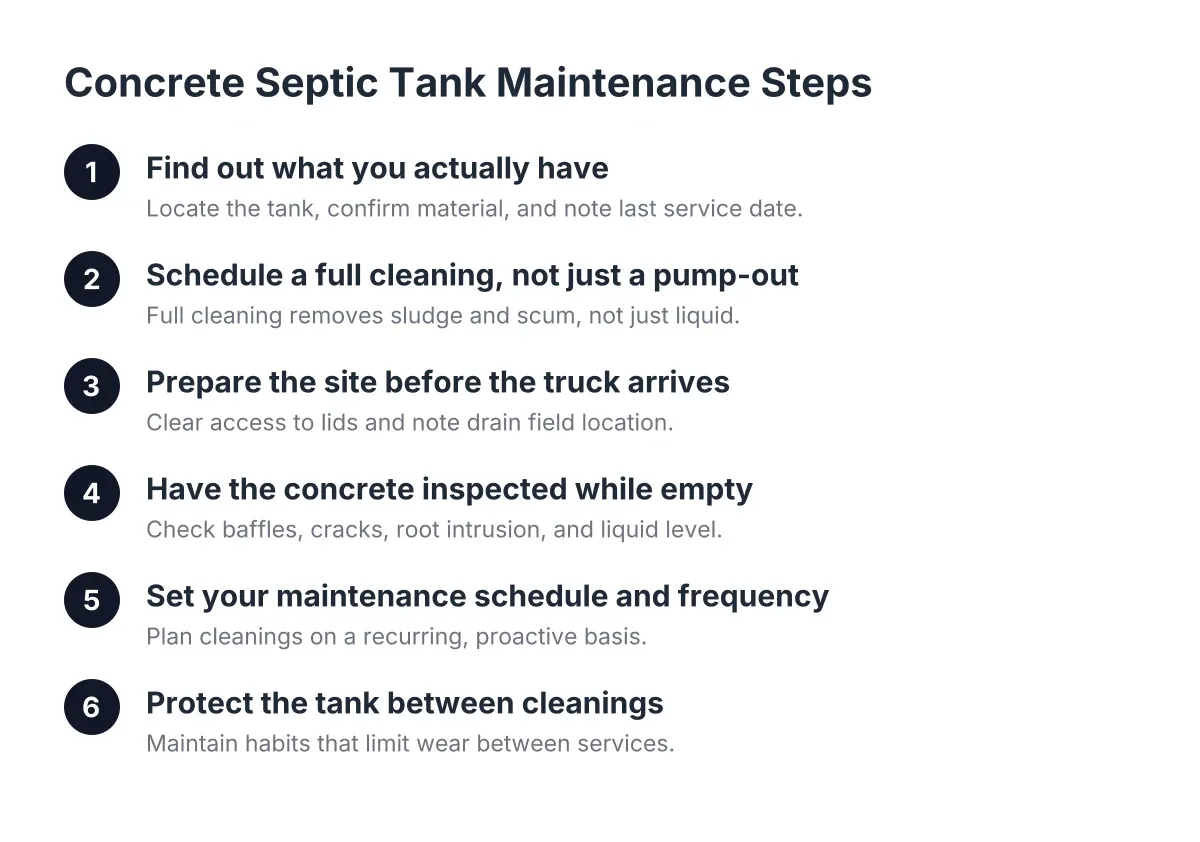
A septic tank is a buried, watertight container that receives all the wastewater from your home and holds it long enough for solids to settle out. Most tanks are concrete, fiberglass, or plastic. Everything that goes down your drains ends up here first, so the tank's condition affects your whole system. If you have a concrete tank, this step-by-step maintenance guide covers how to keep it working longer.
Drain Field
A drain field is the network of buried pipes and gravel trenches where liquid wastewater from your septic tank soaks into the soil. It is also called a leach field. The drain field does the final cleanup by filtering wastewater through the ground. A failed drain field is one of the most expensive septic repairs, so protecting it with regular pumping is worth the effort.
Baffle
A baffle is a barrier inside your septic tank that keeps floating grease and scum from flowing out into your drain field. Tanks have an inlet baffle where wastewater enters and an outlet baffle where liquid leaves. If a baffle breaks or rots away, solids can escape and clog the drain field. A provider who checks your baffles during service is looking out for your system, not padding the bill.
Riser
A riser is a pipe that extends from the top of your buried septic tank up to ground level, capped with a lid you can open. Without a riser, a crew has to dig down to the tank lid every time they pump it. Adding a riser costs money up front but saves digging fees on every future visit. If your quote mentions "riser installation," that is what it means.
Inlet and Outlet
The inlet is where wastewater from your house enters the septic tank, and the outlet is where the settled liquid leaves for the drain field. Providers check both during service because a clog at either point causes backups. If a crew says your outlet is blocked, expect the conversation to turn to what has been going down your drains.
What's Inside the Tank
Scum Layer
The scum layer is the floating mat of grease, oils, and light solids that sits on top of the liquid in your septic tank. It builds up over time and is one of the two layers a pumping crew measures to decide if your tank needs service. A thick scum layer that reaches the outlet baffle can push grease into your drain field, which is where real damage starts.
Sludge
Sludge is the layer of heavy solids that sinks and collects at the bottom of your septic tank. Bacteria break some of it down, but sludge always builds up over time and can only be removed by pumping. When sludge gets deep enough to reach the outlet, solids flow into the drain field and clog it. Sludge depth is the main number a provider uses to tell you whether your tank is due.
Effluent
Effluent is the liquid wastewater that flows out of your septic tank into the drain field after the solids have settled out. It sits between the scum on top and the sludge on the bottom. Clean, mostly clear effluent means your tank is doing its job. If a provider mentions cloudy effluent or solids in the effluent, your tank is overdue for service or has a broken part.
Effluent Filter
An effluent filter is a screen installed at the tank's outlet that catches small solids before they can reach the drain field. Not every tank has one. If yours does, it needs cleaning during routine service, and a provider may list that as a line item. It is cheap protection for the most expensive part of your system.
The Service Itself and Common Cleaning Terms
Septic Tank Pumping
Septic tank pumping is the process of removing the liquid, sludge, and scum from your tank with a vacuum truck. It is the core maintenance task for any septic system, and skipping it is how drain fields fail. Most homeowners search for pumping when drains slow down or smells appear, but pumping on a schedule is cheaper than pumping in an emergency. This walkthrough of the pumping process shows what happens from the moment the truck arrives.
Pumping vs. Cleaning
Pumping means removing the liquid and loose solids from your tank, while cleaning goes further by removing the compacted sludge stuck to the bottom and walls. Some providers use the words interchangeably, so ask which one your quote covers. When you're comparing cleaning services in our septic tank cleaning glossary, full tank cleaning takes more time and effort than a basic pump-out, and the price usually reflects that. If your tank has gone years without service, cleaning is often what it actually needs; this cost guide explains what drives the price up or down.
Vacuum Truck
A vacuum truck is the tanker truck a septic crew uses to suck the contents out of your tank through a large hose. It is also called a pump truck. The truck needs to park within hose reach of your tank, so access matters. If your tank sits far from the driveway or behind a fence, mention it when you call so the crew arrives prepared.
Septic Tank Locating
Septic tank locating means finding exactly where your buried tank and its lids sit on your property. Many homeowners, especially recent buyers, have no idea where their tank is. A provider may use records, probing, or locating tools to find it. If nobody has ever shown you your tank lids, expect locating to be part of your first service call.
Backwash or Backflushing
Backflushing means spraying some of the pumped liquid back into the tank to break up hardened sludge so the vacuum can remove it. It is a normal part of a thorough pump-out, not the crew putting waste back in your tank. If you see it happen and worry, ask; a good crew will explain it on the spot.
Problems and Paperwork
Septic Backup
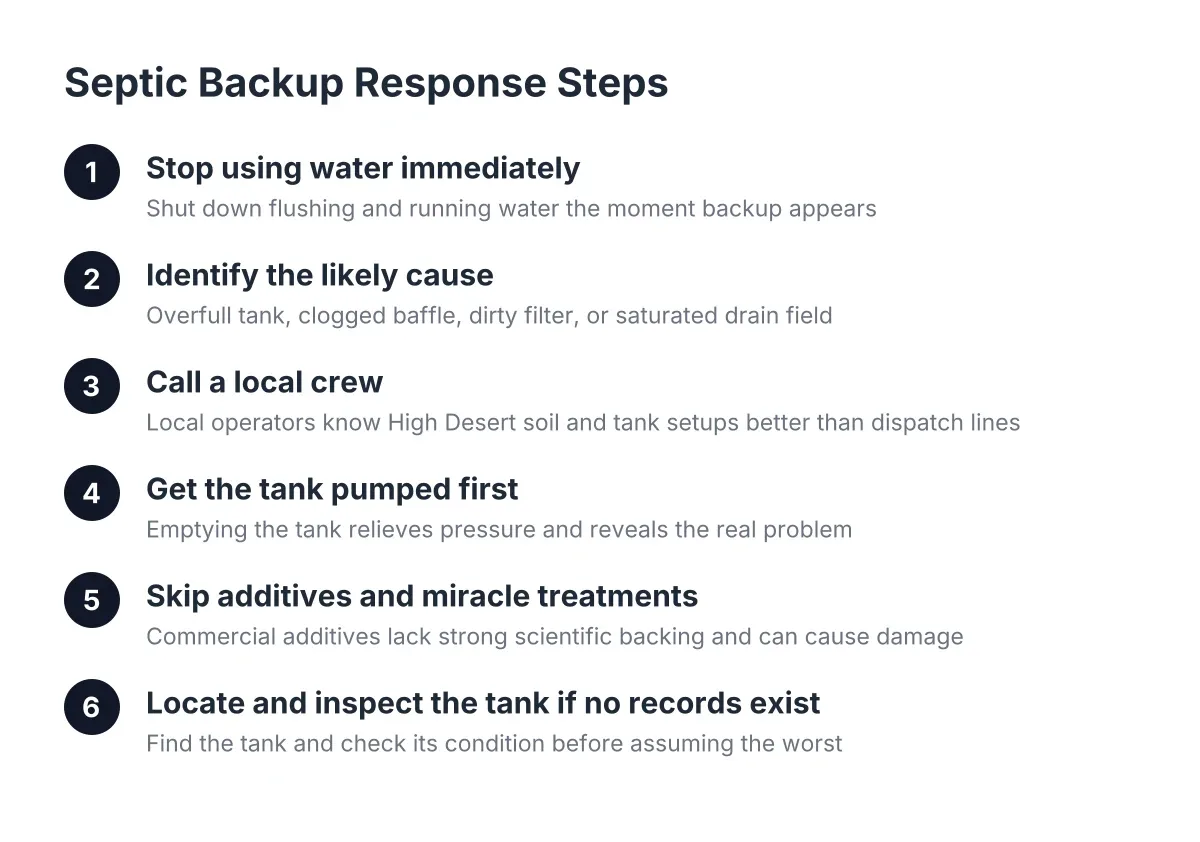
A septic backup is wastewater flowing the wrong way, coming up through your drains, toilets, or lowest fixtures instead of leaving the house. It usually means the tank is full, a line is clogged, or the drain field can no longer accept water. A backup is the loudest warning your system gives you. Learn the quieter warnings first in this list of signs your tank needs pumping.
Slow Drains
Slow drains are fixtures throughout the house that empty sluggishly at the same time, which points to a septic problem rather than a single clogged pipe. One slow sink is a plumbing issue. Every drain slow at once means the tank or drain field is struggling. Catching this early can mean a routine pump-out instead of an overflow in your yard.
Septic Inspection
A septic inspection is an evaluation of your tank and system condition, checking levels, baffles, lids, and how the system handles water. Buyers often order one before closing on a home, and owners use them to catch problems early. An inspection is different from pumping, though the two are often done together since an empty tank is easier to examine.
Grease Trap
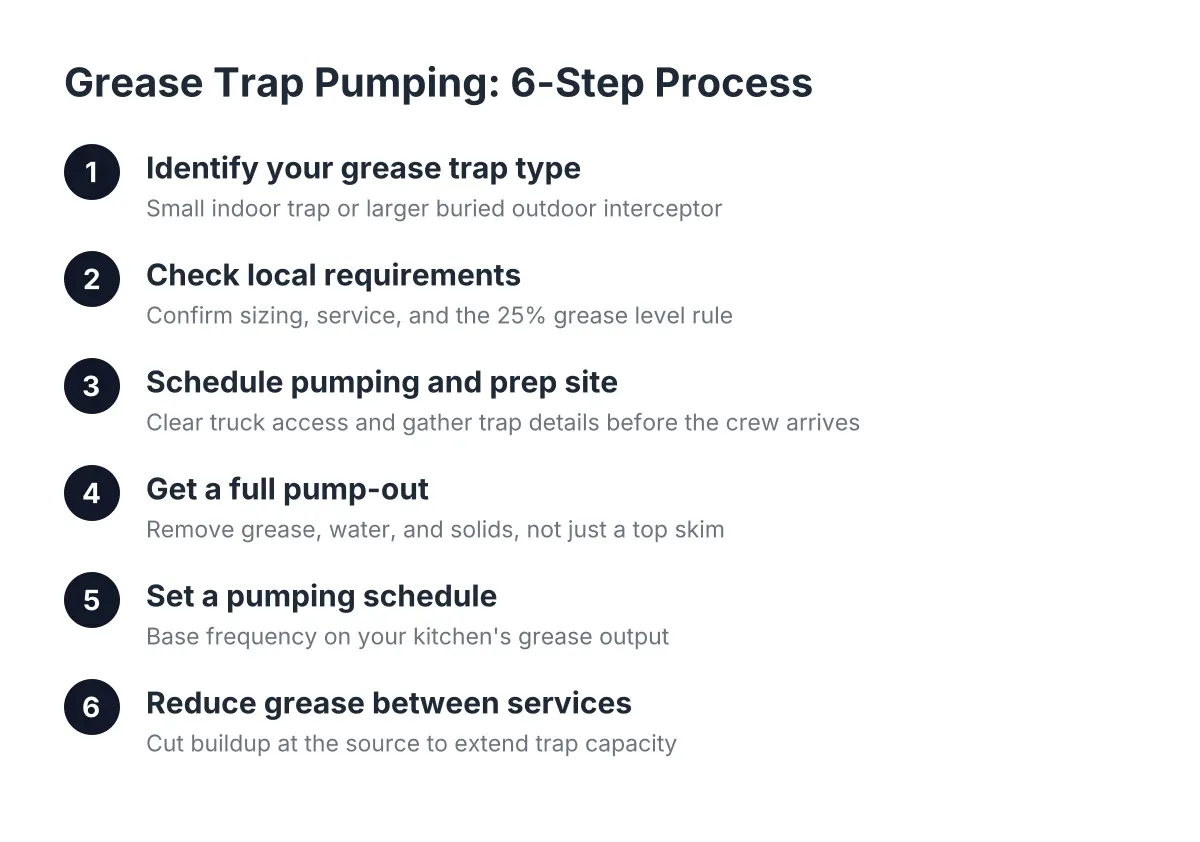
A grease trap is a container that catches fats, oils, and grease from kitchen drains before they reach the septic tank or sewer line. They are common at restaurants and some larger properties. Grease traps need their own pumping on a regular schedule. If your property has one, make sure your provider services it, since a full grease trap causes its own backups.
Using These Terms
You now know what the words on a septic quote actually mean, from sludge depth to riser installation. When a provider in Hesperia hands you an estimate, you can read each line, ask whether the price covers pumping or full cleaning, and understand the answer. That is the whole point of this glossary: fewer surprises, sharper questions, and a system that lasts longer because you knew what to ask for.
If you need your septic tank serviced, Hesperia Septic can help.
Related guide: septic tank cleaning — Complete Guide