Concrete Septic Tank Maintenance: A Step-by-Step Guide to Cleaning and Longevity
Concrete septic tank maintenance comes down to a handful of steps done on a schedule: pump the tank before solids build up, remove the sludge and scum a basic pump-out can leave behind, check the concrete and baffles for wear, and keep good records so you never have to guess again. Most homeowners search for "septic tank cleaning near me" only after something goes wrong. This guide is for doing it the other way, before the yard smells and the drains slow down.
One thing to clear up first, because it changes what you pay for. Pumping removes the liquid and whatever solids come out easily with it. Full cleaning goes further: the crew breaks up the compacted sludge layer on the bottom, removes the floating scum layer, and gets the tank interior down to where it can be inspected. If you own a concrete tank in Hesperia or the surrounding High Desert, that inspection step matters, because concrete wears in ways you can only see when the tank is empty.
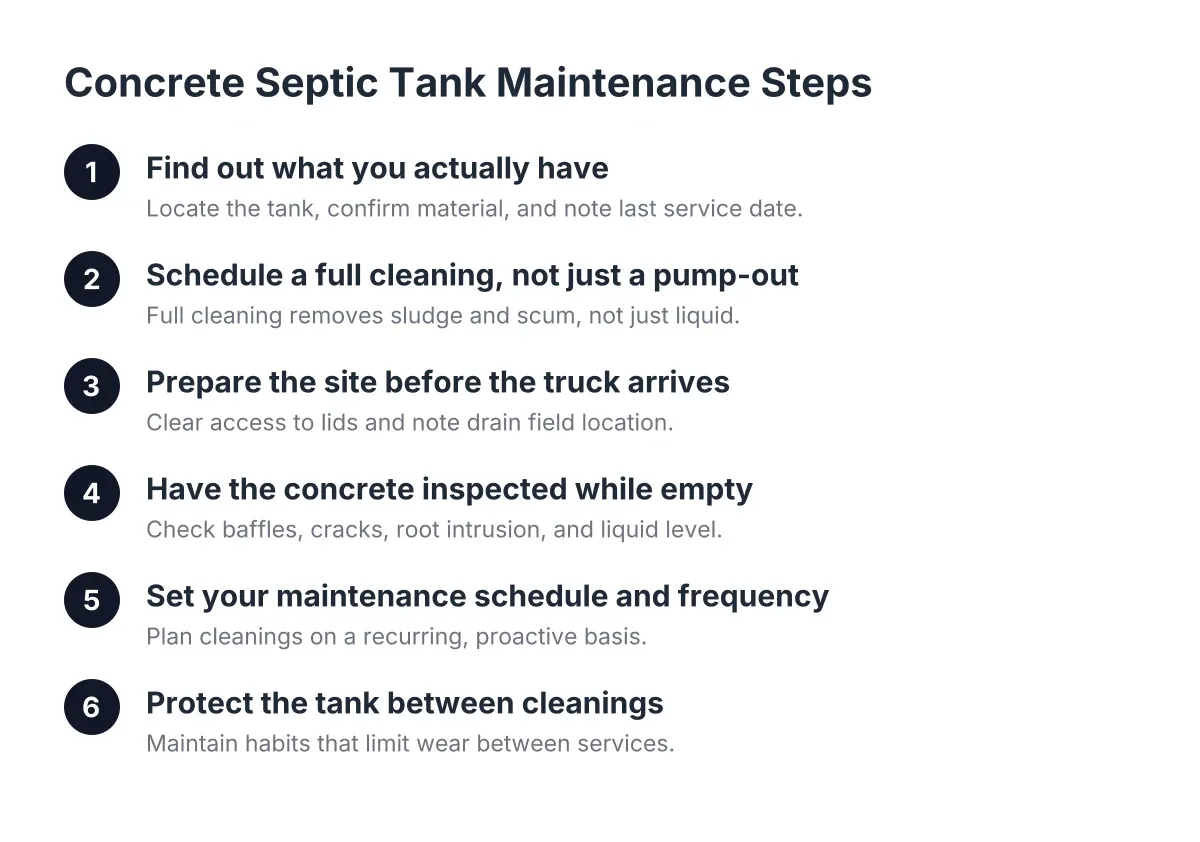
Here is the full process, step by step.
Step 1: Find Out What You Actually Have
Before you schedule anything, figure out where your tank is, what it is made of, and when it was last serviced. If you just bought the house, check your closing paperwork; some inspections note the tank location and condition. County permit records can also show where the system was installed.
However, plenty of Hesperia homeowners have no records at all. In that case, a septic tank locating service can find the tank, mark the lids, and confirm whether it is concrete, plastic, or fiberglass. Concrete is the most common material in older High Desert homes, and it is durable, but it is not maintenance-free. The baffles inside a concrete tank and the concrete itself can degrade over decades, which is exactly why concrete septic tank maintenance is worth doing on purpose instead of by accident.
Write down what you learn: tank location, lid depth, material, and last known service date. That one page of notes makes every future service visit faster and cheaper.
Step 2: Schedule a Full Cleaning, Not Just a Pump-Out
If you do not know when the tank was last serviced, book a full septic tank cleaning rather than a basic pump. Here is why the distinction matters for your wallet and your tank.
A basic pump-out pulls the liquid contents through the vacuum hose. That is fine for a tank on a regular schedule. But in a tank that has gone five or ten years, the bottom sludge layer compacts into something the truck cannot pull out without extra work. Pump only the liquid and you leave that hardened layer behind, which means less working capacity and a faster return trip.
A full cleaning includes:
- Pumping out all liquid contents
- Breaking up the compacted sludge layer on the tank bottom, usually with backflushing or agitation
- Removing the floating scum layer of grease and solids
- Rinsing the tank walls enough to see the concrete
- A visual check of the inlet and outlet baffles
Ask the company directly whether the quote covers sludge removal and agitation or just pumping. A straight answer to that question tells you a lot about who you are dealing with. It also protects you from paying twice, once for a pump-out that skips the sludge and again when the tank fills back up early.
Step 3: Prepare the Site Before the Truck Arrives
You can shave time off the visit with a little prep. First, clear a path to the tank lids. Move vehicles, trailers, and anything stored over the tank area. If the lids are buried, ask ahead whether digging is included or whether you should expose them yourself.
Next, make sure the truck can get within hose range of the tank. Vacuum hoses have limits, and a locked gate or a parked RV between the truck and the tank slows everything down. In addition, note where your drain field is so nobody parks or drives over it; vehicle weight can crush drain field lines.
For example, suppose a homeowner in Hesperia bought a place two years ago with no septic records. On service day, say the crew spends the first forty minutes probing for buried lids because nobody marked them. That is time and money spent on locating instead of cleaning. A homeowner who marked the lids after step one skips that cost entirely.
Step 4: Have the Concrete Inspected While the Tank Is Empty
This is the step that separates concrete septic tank maintenance from generic tank service, and it only takes a few extra minutes when the tank is already empty. Once the sludge and scum are out, the interior is visible. That is the only time anyone can check the things that actually end a concrete tank's life:
- Baffle condition. Concrete baffles erode over time. A failed outlet baffle lets solids flow into the drain field, and drain field damage is the expensive failure. Concrete septic tank baffle repair is a manageable job when caught early.
- Cracks and deterioration. Hairline cracks, spalling, or soft spots in the walls point toward concrete septic tank repair needs down the road. Small problems in concrete are fixable; ignored ones are not.
- Root intrusion. Roots that find a crack will widen it every year.
- Liquid level behavior. A tank that will not hold liquid, or one that was flooded above the outlet, tells the inspector something is wrong beyond the tank itself.
The U.S. Environmental Protection Agency recommends a professional inspection at least once every three years for the average household, and once a year for systems with pumps, float switches, or other mechanical parts. Pairing the inspection with a cleaning visit is the practical way to hit that schedule, since inspection requires an empty tank anyway.
Be aware of one trade-off: an honest inspection sometimes finds problems you were not budgeting for. That is still better than the alternative. According to the U.S. Environmental Protection Agency, septic repair or replacement typically runs $5,000 to $15,000, far more than routine service. A cracked baffle found during a cleaning is a small fix; the same baffle found after the drain field fails is not. If the inspection turns up structural cracks or a failing baffle, get a second opinion before major repair work; that is a reasonable ask and a legitimate company will not push back on it.
Step 5: Set Your Maintenance Schedule and Frequency
How often a septic tank needs cleaning depends on tank size, household size, and what goes down the drains. There is no single number that fits every home, which is why the visit you just completed is your best data point. Ask the crew two questions before they leave: how thick were the sludge and scum layers, and based on that, when should we come back?
A few factors push the schedule shorter:
- More people in the house means more solids, period.
- Garbage disposals add sludge fast. The Massachusetts Department of Environmental Protection recommends annual pumping for households with disposals, regardless of tank size.
- Heavy grease habits fill the scum layer sooner.
- Commercial use is its own category. A restaurant grease trap or an RV park's holding tanks fill on a schedule measured in months, not years, and usually need a recurring service agreement rather than an as-needed call.
Once you have a date, treat it like a smog check. Put it on the calendar, or better, ask whether the company will track it and call you. The whole point of a maintenance schedule is that you stop thinking about it.
Step 6: Protect the Tank Between Cleanings
Ongoing concrete septic tank maintenance is mostly about what you do not do. Between service visits, a few habits stretch the time until the next cleaning and protect the concrete itself:
- Keep grease, wipes, coffee grounds, and harsh chemicals out of the drains. Strong chemicals kill the bacteria that break down waste, and some can attack concrete over time.
- Spread out laundry loads instead of running four in one day; flooding the tank pushes solids toward the drain field.
- Keep vehicles, sheds, and heavy equipment off the tank and drain field.
- Fix running toilets and dripping faucets. Constant water flow through the tank shortens the time solids have to settle.
- Watch for warning signs: slow drains throughout the house, gurgling, sewage odor in the yard, or wet spots over the tank or drain field. Any of those means call before the schedule says to.
Step 7: Keep a Simple Service Record
Finally, keep every invoice and inspection note in one folder, paper or digital. Record the date, what was done, sludge and scum levels if the crew measured them, and anything flagged for watching, like a hairline crack or a worn baffle.
Therefore, the next visit starts from knowledge instead of guesswork, and if you ever sell the house, that folder answers the buyer's inspector before the question comes up. You bought a house with no septic history and felt the uncertainty firsthand. The record you keep now is the fix for the next owner, and for you in three years when you cannot remember whether it has been two years or four.
A concrete tank that gets cleaned on schedule, inspected while empty, and protected between visits can serve a home for decades. The work is not complicated. It just has to happen before the problem does.
If you need your septic tank serviced, Hesperia Septic can help.