Septic Tank Cover Replacement in Hesperia, CA: Concrete vs. Plastic vs. Fiberglass
If you just found a cracked, sunken, or missing lid on your tank, your first question is what to put back in its place. Septic tank cover replacement comes down to three main materials: concrete, plastic, and fiberglass. A clear septic lid material comparison helps you weigh the trade-offs. Each one behaves differently under High Desert sun, shifting soil, and the weight of whatever crosses your yard. This FAQ walks homeowners in Hesperia, CA through the trade-offs so you can make the call before a crew shows up, not while they are standing over an open tank.
What are the main material options for septic tank cover replacement?
The three common materials for septic tank cover replacement are concrete, heavy-duty plastic (often called poly), and fiberglass. Concrete is the traditional choice for the rectangular concrete tanks common in many regions, while plastic and fiberglass lids usually pair with risers that bring the access point up to grade. Most older tanks in the Hesperia area were built with concrete lids, so a like-for-like concrete replacement is the default starting point.
According to International Code Council, septic tank shapes and configurations vary by region; some areas use rectangular concrete tanks and others use circular tanks. That matters because the lid has to match the opening you actually have, not the one in a product photo.
Concrete vs. Plastic vs. Fiberglass: Which Lid Material Comparison Matters Most?
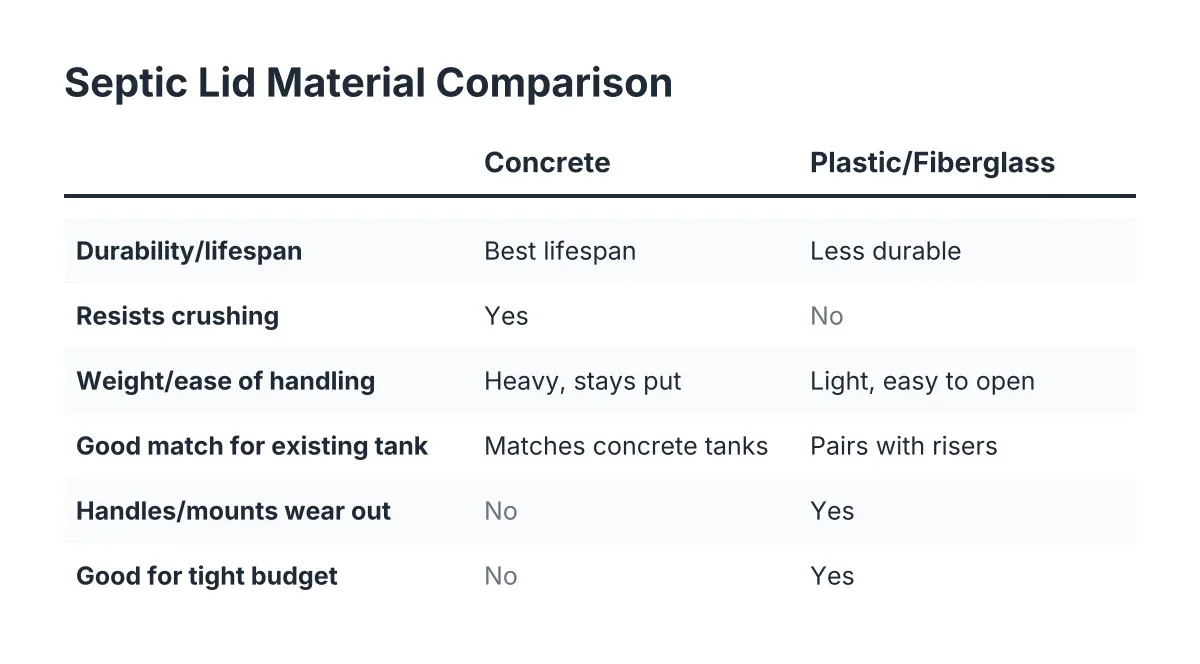
Concrete is the most durable and longest-lasting cover material for most residential tanks, which is why many installers prefer it. A properly made concrete lid resists crushing, holds up to decades of sun exposure, and will not warp or become brittle the way some plastics can. It is also the natural match for an existing concrete tank, since the fit and weight distribution were designed together.
One detail surprises a lot of homeowners: the tank itself is solid, reinforced concrete, but access lids are often a lighter foam-core design covered in concrete. That keeps the lid removable for septic tank pumping without a crane, while still giving you a concrete surface that lasts.
The downside is weight and handling. A concrete cover is not something one person slides aside to peek in the tank, and that is partly the point. It stays put.
When does a plastic or fiberglass lid make sense?
Plastic and fiberglass lids make sense when you are adding a riser, working with a poly tank, or dealing with unusual site conditions or a tight budget. They are light, easy to open for future pumping and inspections, and many models bolt or screw down for child safety. If your tank sits deep and you are tired of digging every three to five years, a riser with a plastic lid is a practical upgrade.
However, plastic has known weak points. Plastic handles snap off when pulled, and screw mounting points on risers and covers wear out over time, which can force a second replacement later. When comparing septic lid material options, durability under soil and foot traffic tends to favor concrete over plastic components. Plastic tanks and components also tend not to last as long as concrete and are more prone to crushing. For a lid that will sit under soil, foot traffic, or occasional equipment, concrete usually wins on lifespan.
How much does septic tank cover replacement cost in Hesperia, CA?
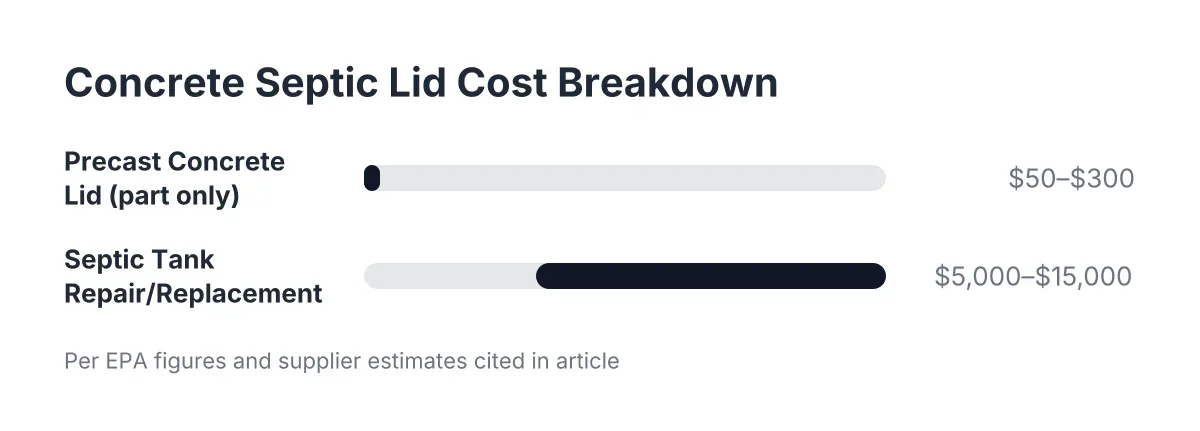
The cost of septic tank cover replacement depends on the material, the size and shape of the opening, how deep the lid sits, and whether a riser is added at the same time. As an illustrative range only, a straightforward lid swap often lands in the low hundreds of dollars, while adding a riser system or pouring a custom concrete lid costs more. Ask for a written quote based on your actual tank before agreeing to anything.
For perspective, replacing a lid is a small job compared to what happens when a damaged system goes unaddressed. The EPA estimates septic tank repair or replacement typically costs between $5,000 and $15,000, according to U.S. Environmental Protection Agency figures. A cover is one of the cheapest parts of the whole system to fix. Replacing just the lid is also far cheaper than replacing the tank itself; a crew can pour a custom concrete lid to fit an existing opening rather than touching the tank box.
Many homeowners pair the lid work with a scheduled pumping visit, since the tank is already exposed. According to Angi data, septic tank pumping averages $427, with a range of $250 to $1,250 or more depending on tank size and location.
Can I replace a septic tank lid myself?
You can measure a lid and buy a stock plastic cover yourself, but most septic tank lid replacement jobs belong with a professional crew. An open tank is a fall hazard and a gas hazard, and a mis-sized or badly seated cover can let soil, debris, or a child into the tank. Concrete lids are also heavy enough to injure someone without the right equipment.
There are a few things a homeowner can safely handle:
- Marking the lid location and keeping vehicles and heavy equipment off it
- Checking visible lids for cracks, chips, sinking, or movement a couple of times a year
- Keeping soil, landscaping fabric, and decorations from burying the access point
- Calling a pro immediately if a lid is cracked through, missing, or wobbles underfoot
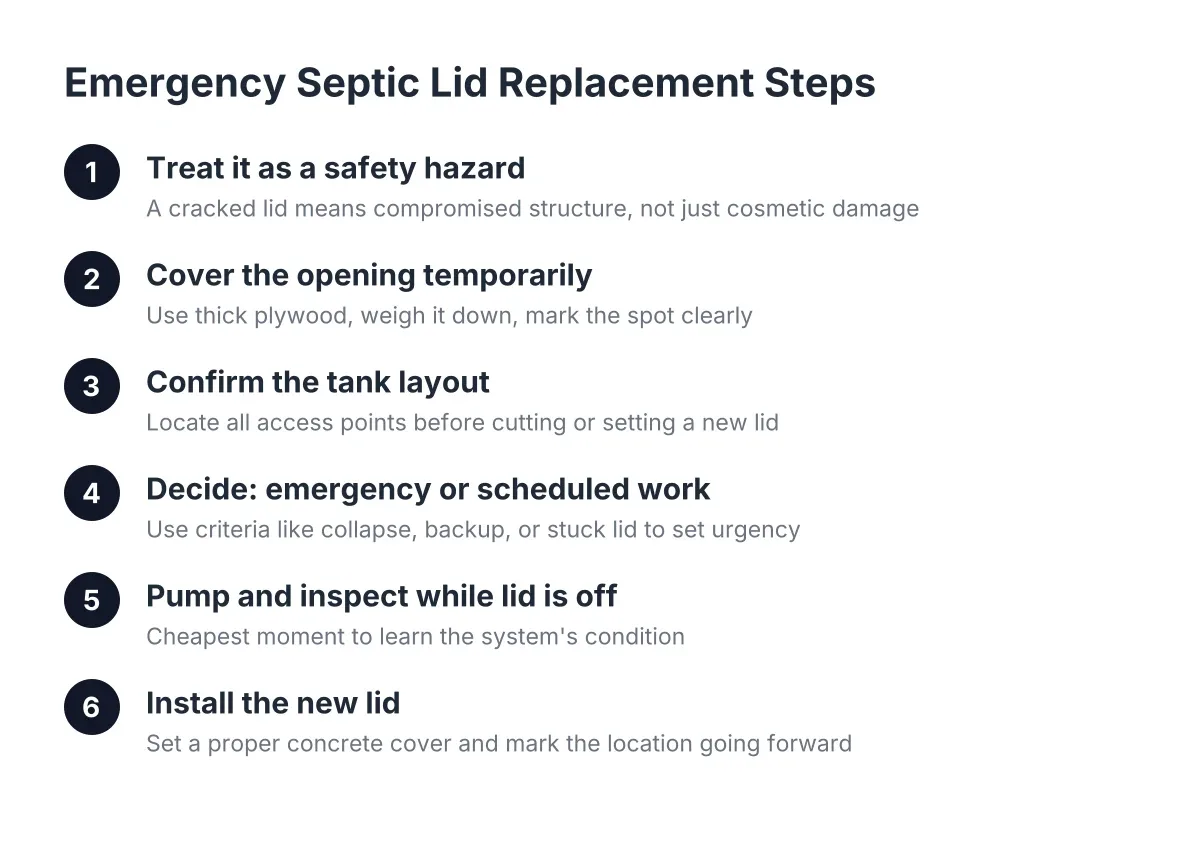
If the lid has collapsed, or you smell sewage or see a wet spot near the tank, treat it as urgent. At that point you may be looking at more than a cover problem, and an inspection should come before any parts get ordered.
What does a professional septic lid and material comparison during replacement include?
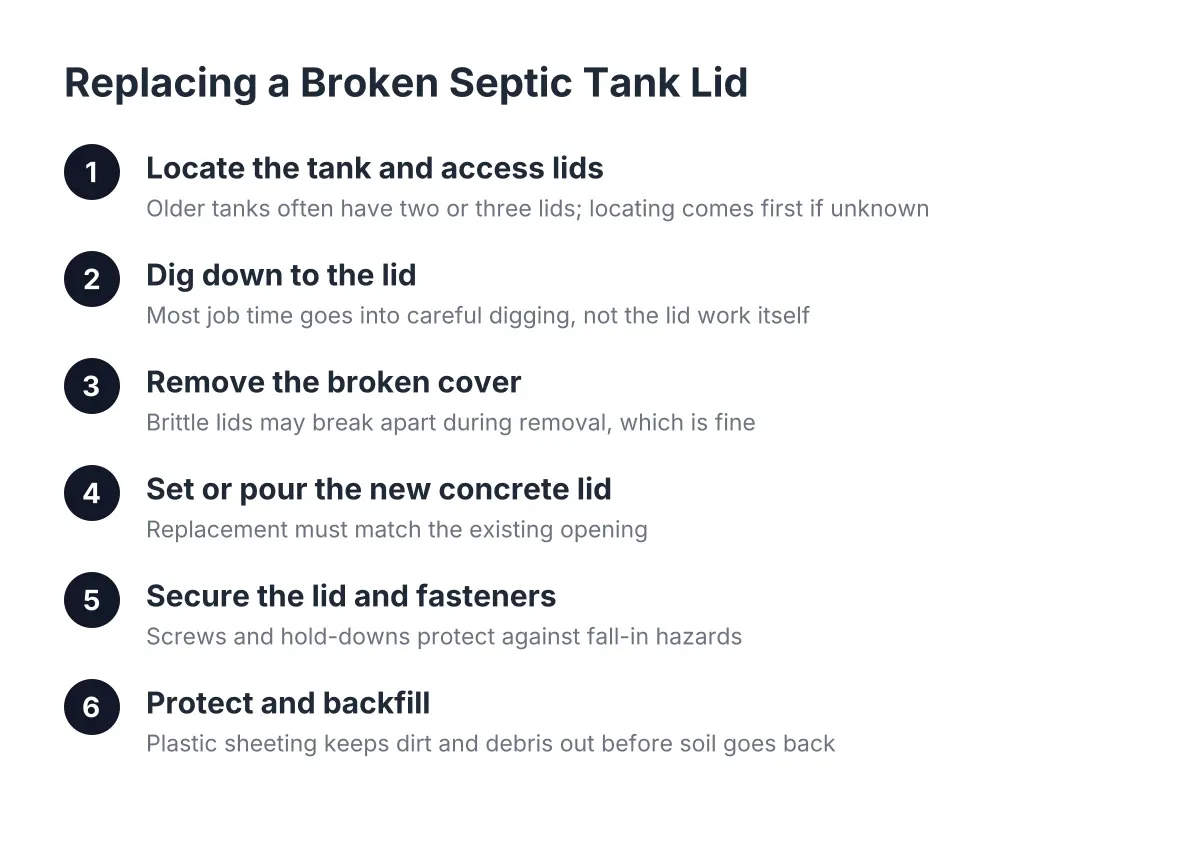
A professional septic tank cover replacement visit includes locating the tank, exposing the opening, measuring it, removing the damaged lid safely, and setting a properly fitted new cover. If the old lid was buried deep, the crew may recommend a riser so the next pumping does not require excavation. Good crews also protect the opening during the work so debris does not fall into the tank, then backfill and compact carefully.
Suppose a homeowner in Hesperia calls because the pumping crew found a concrete lid cracked in half, say on a 1980s tank buried about a foot down. In that scenario, a typical crew would measure the opening, quote a matching concrete cover or a poured replacement, and offer a riser upgrade as an option rather than a requirement. The homeowner picks based on budget and how often they want to dig.
Things that usually cost extra: septic tank locating when no records exist, deep excavation, riser installation, and any pumping or cleaning done during the same visit.
Does Hesperia's climate affect which cover material to choose?
High Desert conditions favor durable materials. Intense sun, big day-to-night temperature swings, and dry, sandy soil are hard on exposed plastic, which can grow brittle over years of UV exposure. Concrete shrugs off the sun, and a buried concrete lid is largely indifferent to surface temperature swings. When making a septic lid material comparison in this climate, concrete typically outperforms plastic over the long term.
Soil movement matters too. According to Onsite Installer, fill around tank penetrations should be compacted thoroughly to prevent settling and damage, and the same care applies when backfilling over a replaced lid. Loose desert sand that settles unevenly can leave a lid unsupported at one edge, which is how cracks start.
How do I choose a septic company for lid or cover work?
Choose a local, septic-focused company that will look at your actual tank before quoting a fixed price. A fair quote names the material, the size, whether a riser is included, and what excavation and backfill are covered. Be cautious of anyone who pushes a full tank or system replacement before inspecting the lid and opening; a broken cover alone rarely means the tank is failing.
Three questions worth asking before you book:
- Will you match my existing concrete opening, or do you recommend a riser, and why?
- What is included in the price: locating, digging, the cover itself, and backfill?
- Can you pump or inspect the tank on the same visit while it is open?
That last question saves money. The U.S. Environmental Protection Agency recommends a professional inspection at least once every three years, and combining trips means you dig once instead of twice.
Should I replace the cover or wait until my next pumping?
Replace a cracked, sinking, or missing cover now rather than waiting for your next scheduled pumping. A compromised lid is a safety issue for kids, pets, and anyone walking the yard, and an open path for soil and debris to enter the tank. A hairline crack in a lid that still sits solidly can sometimes wait for a professional opinion, but any lid that moves, sags, or has a visible gap should not.
If you are already dealing with a septic backup or slow drains on top of a bad lid, get the whole system looked at in one visit. The lid may be the visible symptom of a tank that has not been pumped in years.
For homeowners in Hesperia, CA weighing concrete against plastic or fiberglass, the short version is this: concrete for longevity and a like-for-like fit on an older tank, plastic or fiberglass with a riser for easy future access. A local septic crew that pumps, inspects, and replaces covers can look at your tank, quote the options side by side, and handle the swap in a single visit. If your lid is cracked or missing, reach out to a Hesperia septic service to get an estimate and get the tank sealed up safely.
If you need your septic tank serviced, Hesperia Septic can help.
Prefer to talk it through? Call (760) 249-7872 — a quick call is usually the fastest way to get a straight answer for your situation.