How to Replace a Broken Septic Tank Lid: The Step-by-Step Process Explained
If you need to replace a broken septic lid, the process is more straightforward than most Hesperia homeowners expect. The lid is a separate piece from the tank itself, so a cracked or crumbling cover usually means a targeted swap, not a full system project. This FAQ walks through the steps a crew follows, what you should do before they arrive, and how to keep the new lid in good shape.
Does a broken lid mean I have to replace the whole septic tank?
No, a broken lid almost never means the whole tank has to go. The lid, sometimes called the cover, is a separate concrete piece that sits over the access opening. A crew can remove the damaged cover and set or pour a new one to fit the existing opening, leaving the tank box alone.
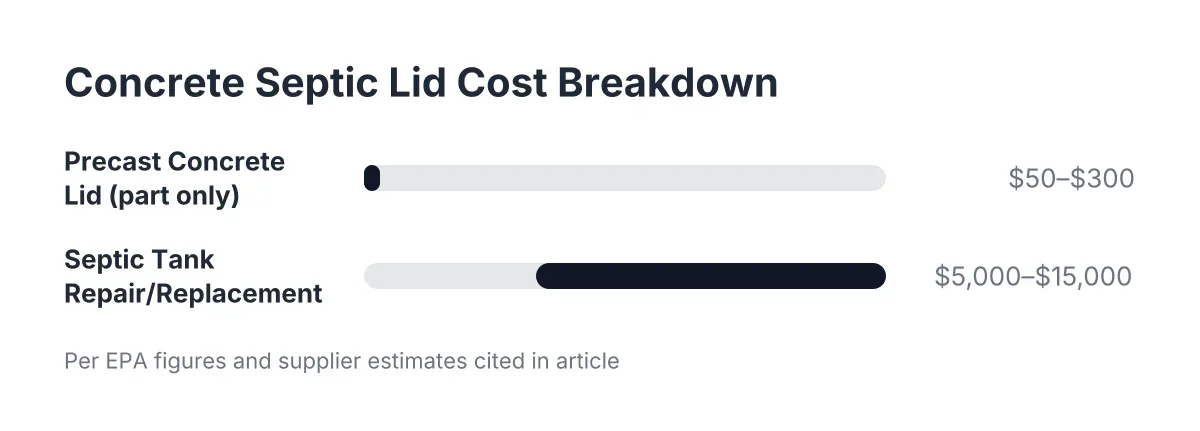
That matters for your budget. According to the U.S. Environmental Protection Agency, septic tank repair or replacement typically runs between $5,000 and $15,000. A lid swap sits at a small fraction of that, which is why confirming the damage is limited to the cover is the first thing a good crew checks.
However, if the tank walls themselves are cracked or the concrete around the opening has deteriorated badly, the fix gets bigger. That is one scenario where you want a professional inspection before anyone quotes a number.
How does a crew replace a broken septic tank lid, step by step?
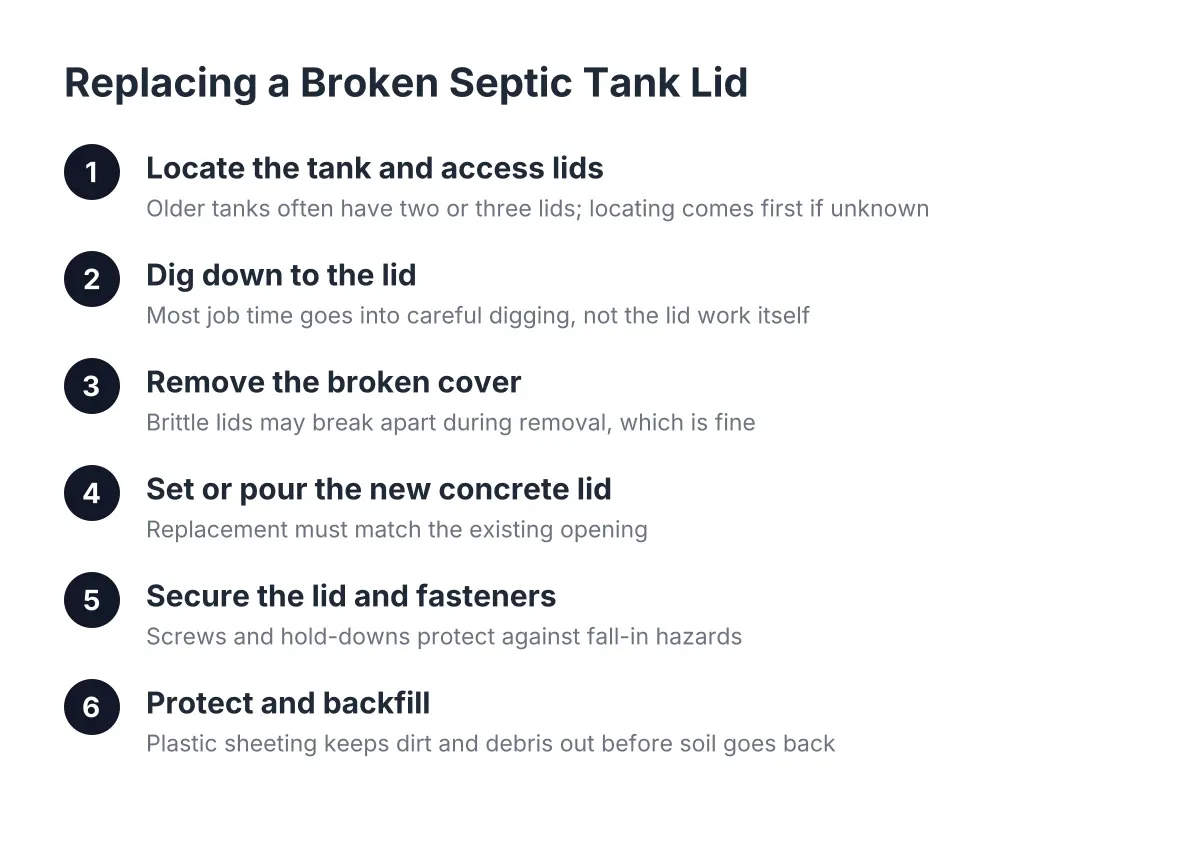
Replacing a broken septic tank lid follows a predictable sequence: locate the tank, expose the lid, remove the damaged cover, fit or pour a new concrete lid, secure it, and backfill. On most jobs, digging takes longer than the actual replacement. Here is how the process usually goes:
- Locate the tank and its access lids. Older tanks often have two or three lids at the front, middle, and back. If you do not know where yours sits, septic tank locating comes first.
- Dig down to the lid. Most of the total job time goes into careful digging, not the lid work itself. Probing has to be done gently, because forcing a probe into a weakened lid can punch through it.
- Remove the broken cover. Corroded or brittle lids sometimes break apart during removal, which is fine since they are being replaced anyway.
- Set or pour the new concrete lid. Openings vary by tank shape and era, so the replacement must match the existing opening. Some jobs call for a poured-to-fit lid; others take a standard concrete septic tank cover.
- Secure the lid and any fasteners. Screws and hold-downs go back in fully so nothing can be dislodged, which protects kids and pets from a fall-in hazard.
- Protect and backfill. A layer of plastic sheeting over the lid before backfilling keeps dirt and debris out of the tank, then soil goes back over the top.
A typical crew that already knows Hesperia and High Desert tank setups can move through this quickly, because they have seen the common local tank configurations before.
What should I do before the crew arrives?
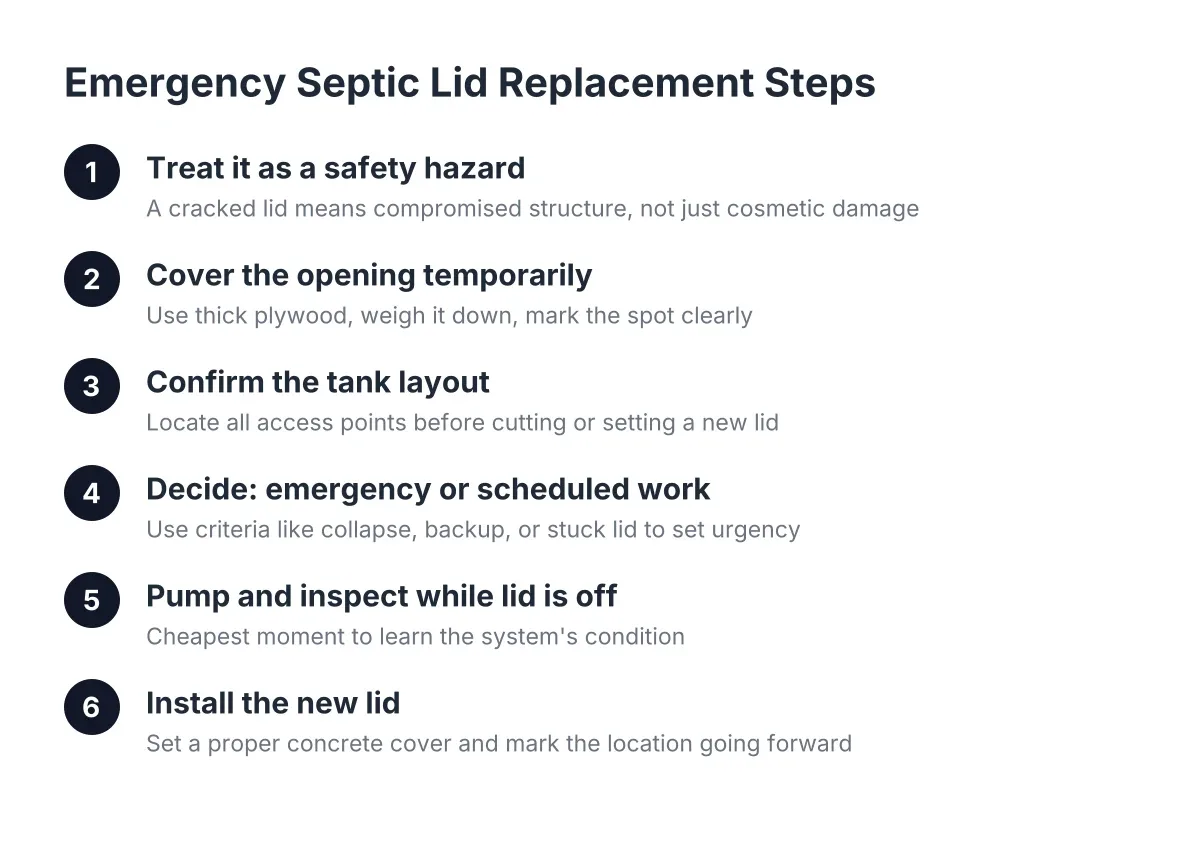
Before the crew arrives, mark anything you know about the tank location, clear the area above it, and keep people and pets away from the damaged cover. If the old lid is cracked or partially collapsed, do not stand on it or lay a loose rock or board over the hole. A loose covering is easy to knock aside and is a serious fall-in risk, especially for children.
In addition, gather any paperwork you have. Say a homeowner in Hesperia bought the house four years ago and has a county diagram or an old pumping receipt in the closing documents; in that scenario, the diagram can save an hour of locating work. If you have nothing, that is common too, and locating equipment handles it.
Should the tank be pumped when the lid gets replaced?
Pumping at the same time as a lid replacement usually makes sense, because the tank is already dug up and open. Combining septic tank pumping with the lid work saves you a second excavation later, and it lets the crew look at the inside of the tank while it is empty.
For a Routine Maintainer who is not sure when the tank was last pumped, this is the natural moment to reset the clock. According to Angi data, septic tank pumping averages $427, with a range of $250 to $1,250 or more depending on tank size and location. Once it is done, you can put the next service on a calendar instead of guessing.
Why do concrete septic lids crack or fail in the first place?
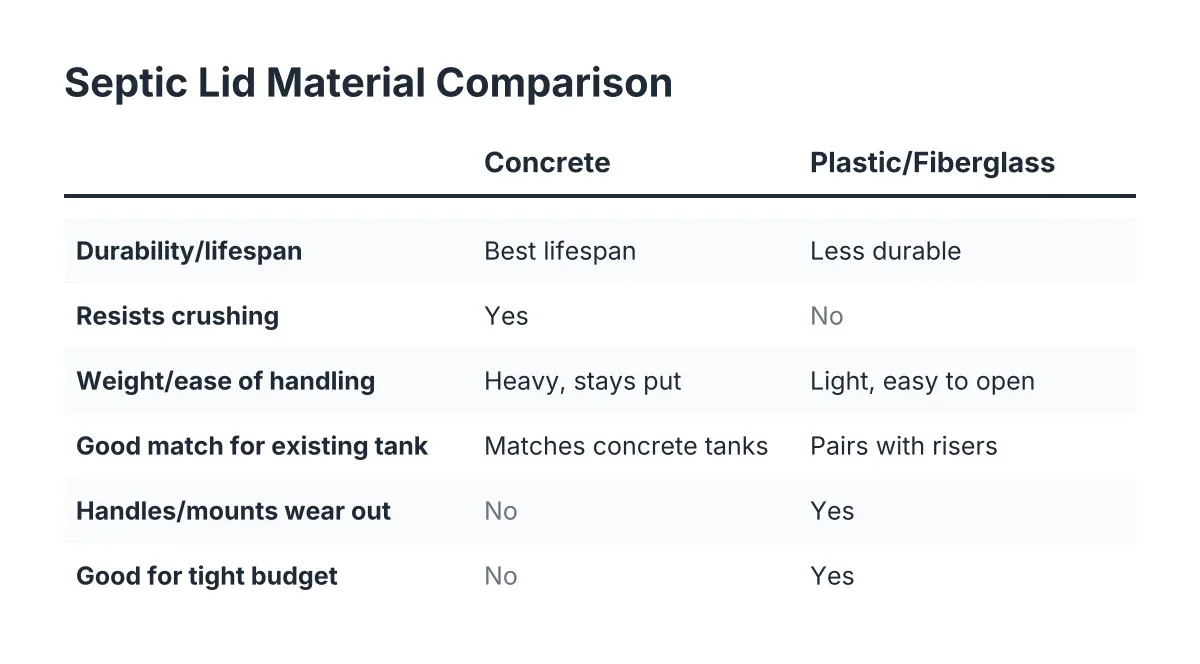
Concrete septic lids fail from age, gas exposure, and physical stress. Gases inside the tank corrode the underside of the lid over the years, so a cover can look fine from above while turning brittle underneath. That is why some lids snap when pried open, even though nothing ever drove over them.
Other common causes include vehicles or equipment crossing the tank area, tree roots shifting the cover, and plastic handles that snap off and force the lid to be broken for access. Round lids on some tanks tend to corrode from the inside faster than older tapered designs, which makes them prone to breaking during service.
Is it worth adding a riser when you replace a broken septic tank lid?
Adding a riser during a lid replacement is often worth it, because the expensive part of the job, the digging, is already done. A riser brings the access point up to or near ground level, so future septic tank pumping and inspection visits skip the excavation entirely. Installing the riser itself is quick once the lid is exposed.
For example, suppose your lid sits two feet down in hard High Desert soil. Every future pumping visit starts with digging unless a riser goes in now. For a homeowner who wants a maintenance schedule they do not have to think about, a riser turns every future visit into a lift-and-pump job.
The trade-off is a visible cover in the yard and a modest added cost on this visit. Some homeowners prefer the buried look and accept the digging later; that is a fair choice as long as the lid location is documented.
Can I replace a broken septic tank lid myself?
Replacing a septic tank lid yourself is possible but risky, and for most homeowners it is not worth it. Concrete lids are heavy, tapered pieces that must be aligned carefully rather than dropped into place, and an open tank is a genuine fall hazard while the work happens. Tank gases are also dangerous in an open, unventilated excavation.
There is also the fit problem. Tank shapes and openings vary by region and era; some areas use rectangular concrete tanks and others use circular ones, according to the International Code Council. A mismatched cover can leave gaps that let soil in or fail under weight. If the opening itself is deteriorating, or you find standing water around the tank, stop and bring in a professional, because that points to a problem bigger than the lid.
How do I keep the new lid in good shape after a septic tank lid replacement?
Protecting a new lid comes down to three habits: keep weight off it, keep it secured, and get eyes on it regularly. After any lid replacement, never let vehicles, trailers, or heavy equipment cross the tank area, and confirm that all fasteners went back in after each service visit.
Fold the lid check into your regular maintenance rhythm. The U.S. Environmental Protection Agency recommends a professional inspection at least once every three years for the average household, and once a year for systems with pumps or float switches. Each inspection is a built-in chance to catch corrosion on the lid before it becomes the next thing you have to replace. Fixing household water problems helps too; per the U.S. Environmental Protection Agency, a single running toilet can push as much as 200 extra gallons per day into a septic system, adding load the whole system has to handle.
What does a broken lid mean for the rest of my septic system?
A broken lid by itself usually does not harm the rest of the system, but it removes the barrier protecting it. A conventional system has two main components, the septic tank and the drain field, according to the U.S. Environmental Protection Agency. An open or crumbling lid lets soil, debris, and runoff into the tank, and that added material can eventually push solids toward the drain field, where the expensive damage happens.
Therefore, treat a cracked or missing cover as a now problem, not a someday problem. The lid swap is one of the cheaper septic fixes you will ever schedule; the drain field trouble it can prevent is one of the most expensive. Handling it promptly, and pairing it with pumping if the tank is due, is how you stay the neighbor whose yard never smells like anything at all.
If you need your septic tank serviced, Hesperia Septic can help.
Related guide: septic tank lid replacement — Complete Guide
Prefer to talk it through? Call (760) 249-7872 — a quick call is usually the fastest way to get a straight answer for your situation.