Emergency Septic Backup: What to Do First and Who to Call in Hesperia
A tenant calls about sewage in the shower, or you walk into your rental during a turnover and the toilets will not flush. When a septic backup affects a rental property, what you do in the first hour matters more than anything you do later. The wrong move spreads contaminated water through a unit you have to re-lease. The right moves contain the mess, protect the property, and get the right crew rolling toward it, even if you are forty minutes away or in another state.
This guide walks through the steps in order. It is written for landlords, small property owners, and operators in Hesperia and the High Desert who manage septic-served buildings they do not live in. You often learn about the problem secondhand, which means you need a plan you can run over the phone. A septic backup at a rental requires rapid decisions by a landlord or owner working remotely.
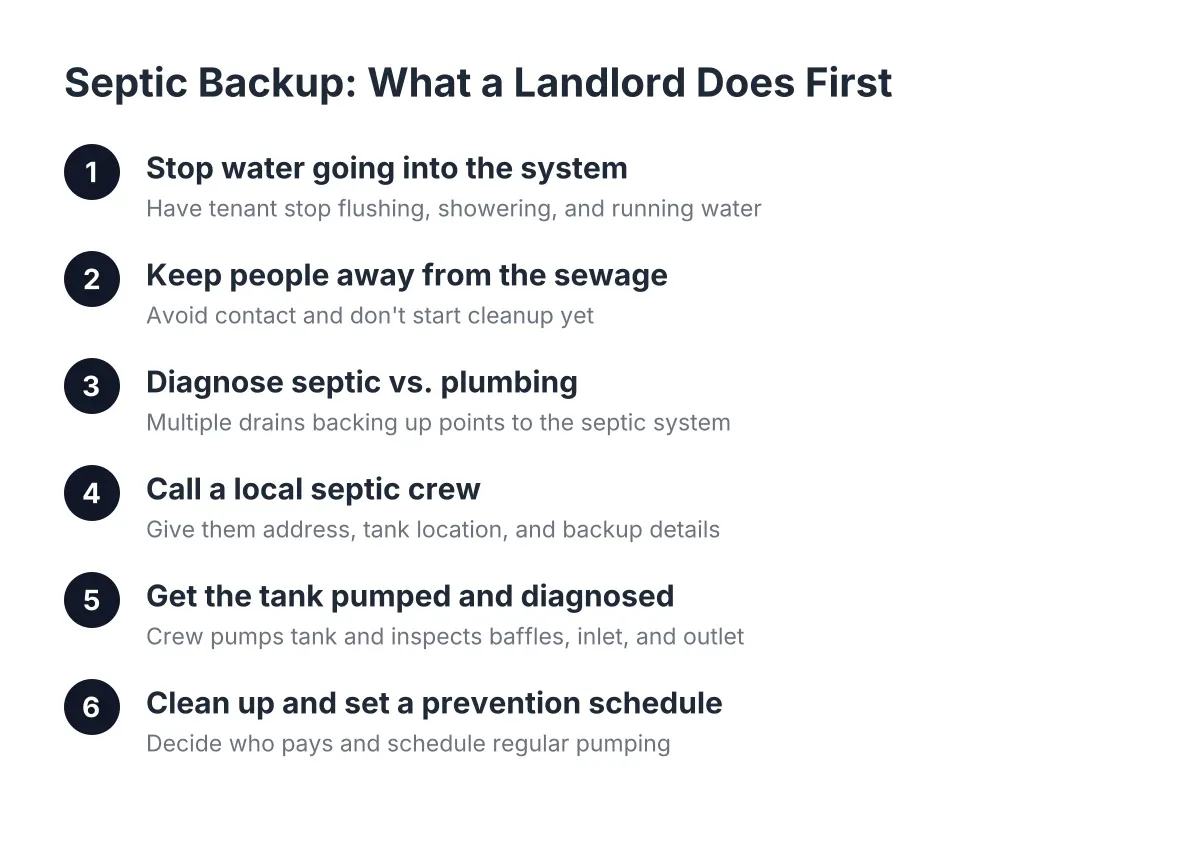
Step 1: Stop All Water Going Into the System
Nothing you do next helps if water keeps flowing into a full tank. Every flush, every shower, every load of laundry pushes more sewage toward the lowest drain in the building, which is usually a tub, a floor drain, or a ground-floor toilet.
Call your tenant and give them three instructions:
- Stop flushing toilets, even if they seem to work
- No showers, dishwasher, or laundry until further notice
- Turn off any running water they can hear, including a toilet that will not stop filling
That last one matters more than people think. According to the U.S. Environmental Protection Agency, a single leaky or running toilet can add as much as 200 gallons of extra water per day into a septic system. On a tank that is already full, that extra water is the difference between a slow drain and sewage on the floor.
If the tenant is cooperative, have them shut off the water supply valve at the problem toilet. If the situation is bad, shutting off the main water valve to the house stops everything at once.
Step 2: Keep People Away From the Sewage
Backed-up wastewater is raw sewage, not just dirty water. It carries bacteria that can make people sick, and it soaks into carpet, drywall, and subfloor fast.
Tell your tenant to keep kids and pets out of any affected room and to avoid walking through standing water. Do not let anyone start scrubbing with a mop and bucket yet. Cleanup done wrong spreads contamination, and if the backup continues, they will be cleaning the same floor twice.
For a landlord dealing with a septic backup in a rental, this step is also about habitability. Sewage inside a unit is the kind of condition that triggers tenant complaints and, in worse cases, formal habitability claims. Documenting that you responded fast, with timestamps on your calls and photos from the tenant, protects you later.
Step 3: Diagnose Whether It Is the Septic System or the Plumbing
During an emergency, figuring out whether a septic backup at a rental is caused by the septic system or plumbing is critical before you call anyone, because it determines who you call. The pattern of the backup tells you most of what you need to know.
Signs the problem is the septic system:
- Multiple drains back up at once, especially the lowest ones in the house
- Toilets gurgle when a sink or washer drains
- Sewage or standing water appears over the tank or drain field outside
- Strong sewage smell in the yard, not just one bathroom
Signs the problem is a single plumbing clog:
- One fixture backs up while everything else drains fine
- The problem started right after something specific went down one drain
If multiple fixtures are involved, call a septic company first, not a plumber. A septic crew can open the tank, check the level, and diagnose whether the tank is full, whether the inlet is blocked, or whether the drain field has failed. A clogged inlet baffle is a common cause of septic backups, according to the Washington State Department of Health, and it is one of the first things a septic professional checks. Additionally, a plumber snaking a line into a full tank solves nothing, and you pay for two service calls instead of one.
Step 4: Call a Local Septic Crew and Give Them the Right Information
A backed-up tank almost always needs emergency septic pumping before anyone can diagnose anything else. Pumping drops the level in the tank, relieves pressure on the line, and lets the crew see the baffles, the inlet, and the outlet. When a landlord contacts a septic company about a backup in a rental, providing clear information speeds the response.
When you call, have this information ready. You can gather most of it from your tenant or your property file:
- The property address and whether a tenant will be on-site to provide access
- Where the tank is, if you know, or whether the lids are buried
- What is backing up and how long it has been happening
- When the tank was last pumped, even a rough guess
- Any gate codes, dogs on the property, or parking constraints for a pump truck
If you do not know where the tank is, say so up front. Septic tank locating is a normal part of the job out here; lots of High Desert properties have buried lids and no records. It adds time, so the crew should know before they arrive.
Searching "24 hour septic pumping" will surface plenty of national call centers that dispatch whoever is available. For a rental you cannot babysit, a local Hesperia crew has two advantages: they know the soil and the common tank setups in this area, and you can build a relationship so the next call is routine instead of a fire drill.
Step 5: Get the Tank Pumped and the Cause Diagnosed
Once the truck arrives, septic tank pumping comes first. The crew opens the tank, pumps out the solids and liquid, and then looks at what the empty tank reveals. A tank packed with solids past the outlet points to deferred maintenance. Water flowing back into the tank from the outlet side points to a drain field problem, which is a bigger conversation.
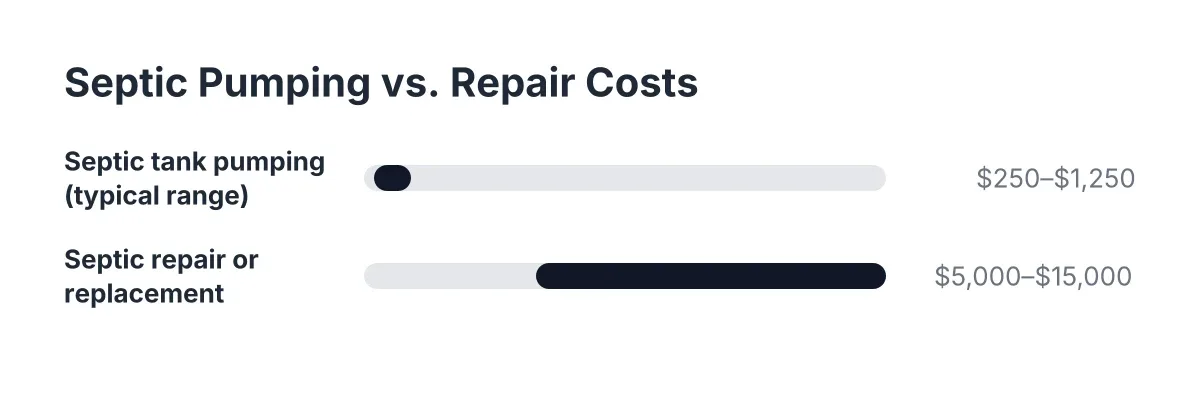
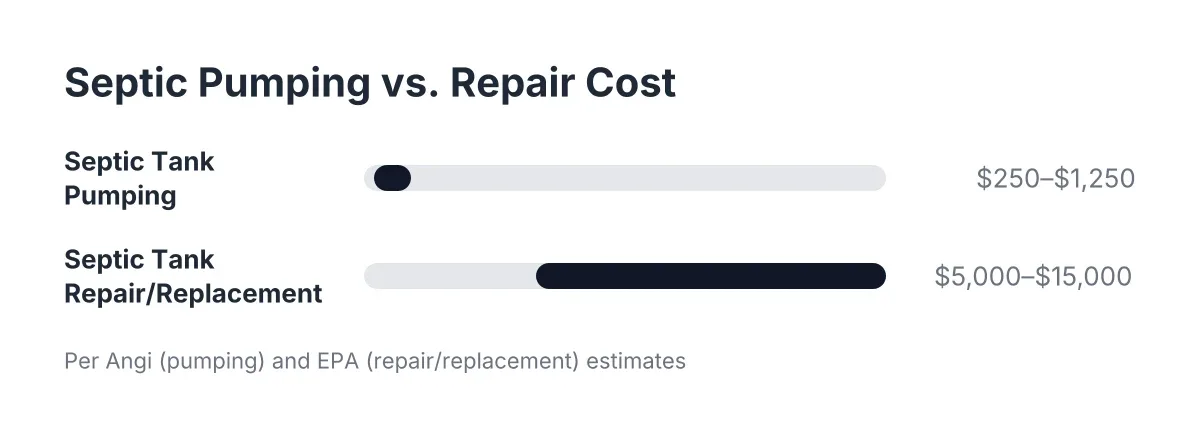
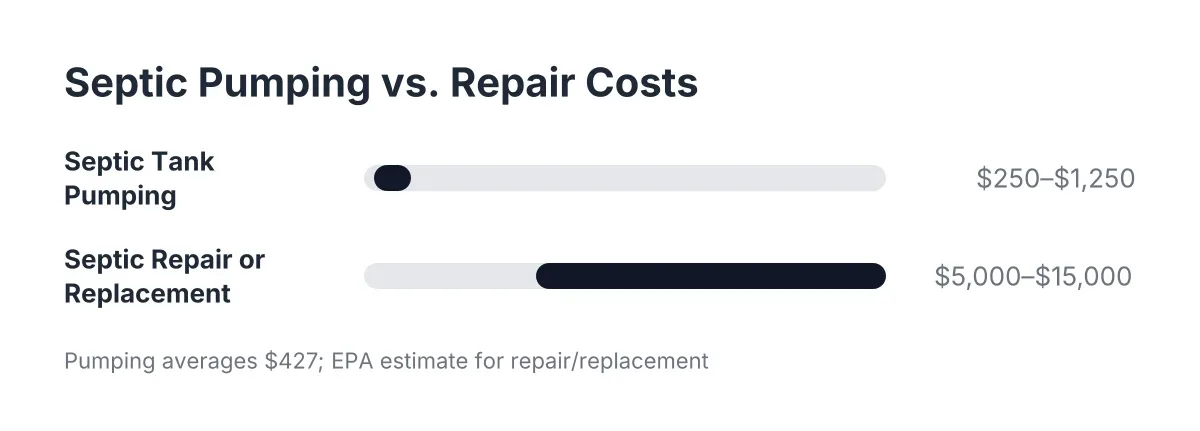
For cost context, Angi data puts the average cost of septic tank pumping at $427, with a range of roughly $250 to $1,250 depending on tank size and location. Emergency and after-hours work typically runs higher than a scheduled visit. That is still a fraction of the alternative; the EPA estimates septic repair or replacement typically costs $5,000 to $15,000.
Ask the pumper questions while they are on-site. A good septic crew can tell you whether this was a one-time clog, a tank that went too long between services, or an early sign of drain field trouble. If the diagnosis points to drain field failure or a damaged tank, bring in a septic professional for a full inspection before authorizing major work; pumping alone will not fix a failed field, and that is a decision worth a second set of eyes.
Also ask for documentation. Septic waste pumped from a tank is hauled by truck to a treatment plant for disposal, as the New Hampshire Department of Environmental Services describes, and a legitimate pumper can provide a service record. For a landlord, that paper trail supports habitability compliance and your expense records.
Step 6: Clean Up and Decide Who Pays for What
After the tank is pumped and drains are flowing, deal with the inside of the unit. Small spills on tile can be cleaned with disinfectant and protective gloves. Sewage that soaked into carpet, pad, or drywall is a different situation; that material usually needs to come out, and a professional remediation company is the safer call for anything beyond a small area.
Then sort out cause and responsibility. If the backup traces to tenant behavior, like wipes, grease, or feminine products in the line, your lease terms govern whether you can pass through costs. If it traces to a tank that had not been pumped in years, that one is on the owner. Either way, photograph everything and keep the pumping invoice with the diagnosis noted.
Step 7: Put the Rental on a Septic Backup Prevention Schedule
Most emergency backup calls trace back to one thing: a tank that went years past its service interval while sludge and scum built up. Rentals are especially prone to this because the owner is not there to notice slow drains, and tenants rarely report small warning signs.
As a baseline, the EPA recommends a professional septic inspection at least every three years, and Penn State Extension notes that a household of four generally benefits from pumping every two to three years. A rental with high occupancy or frequent turnover deserves the shorter end of that range. If you took over a property and have no service records, treat the tank as overdue and schedule pumping now, when it is cheap and convenient.
Suppose you own three septic-served rentals around Hesperia. Putting all three on a rotating schedule with one local crew means one phone call a year, invoices for your records, and a pumper who already knows where each tank sits. Compare that with an illustrative worst case: an unmanaged tank backs up mid-lease, you pay emergency pumping rates, lose a week of rent to remediation, and field angry tenant calls the whole time. The schedule costs less in every way.
What to Have Ready Before the Next Emergency Septic Backup for a Landlord
Do this prep while nothing is wrong. Create a one-page septic sheet for each property with the tank location, lid depth, last pumping date, and the number of a local septic company. Share a copy with your tenant or property manager so the first hour of the next incident runs without you.
An emergency septic backup you do nothing to prepare for costs you twice: once in the emergency rate, and again in tenant goodwill. One that hits a prepared owner is a bad afternoon, a pump-out, and a note in the file. In 2026, with repair costs where they are, the prepared version is the only one worth owning.
If you need your septic tank serviced, Hesperia Septic can help.
Prefer to talk it through? Call (760) 249-7872 — a quick call is usually the fastest way to get a straight answer for your situation.