Septic Tank Pumping Near Me: How to Book Emergency Service in Hesperia
When your toilets gurgle, drains slow down, or sewage backs up into the tub, the first search most people type is septic tank pumping near me. That search usually happens at the worst possible moment, after the problem has already made a mess. This guide covers two things at once: how to book emergency septic pumping in Hesperia fast when you need it, and how to set up a simple routine so you never have to make that panicked call again.
If you own a home in Hesperia or anywhere in the High Desert, there is a good chance you live on a septic system instead of city sewer. According to the U.S. Environmental Protection Agency, more than one in five U.S. households depend on individual septic systems or small community cluster systems to treat their wastewater. Out here, that number feels higher. Many neighborhoods were built without sewer lines at all, which means you, not the city, are responsible for what happens underground.
Why Searching for Septic Tank Pumping Near You Usually Happens Too Late
A septic tank does not send a warning email. It fills with solids slowly, year after year, and everything seems fine right up until it is not. By the time you notice symptoms, the tank has often been past due for pumping for a long while.
Here is the hard truth behind most emergency calls: visible symptoms only show up after the problem has already started. Sewage in the shower drain means the tank or line is already blocked. A soggy, smelly patch over the drain field means solids may have already pushed out of the tank and into the soil. At that point, pumping alone may not fix everything.
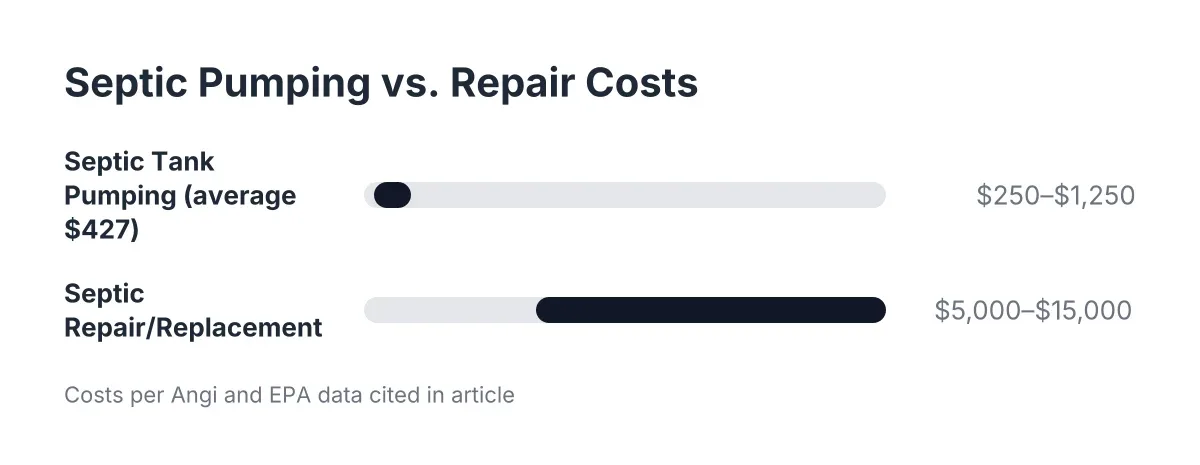
The money side makes this worse. According to Angi data, septic tank pumping averages $427, with a typical range of $250 to $1,250 or more depending on tank size and location. Compare that with repair or replacement. The EPA estimates septic tank repair or replacement typically costs between $5,000 and $15,000. Skipping a few hundred dollars of pumping can set up a five-figure problem later.
So the real answer to "how do I book emergency septic tank pumping near me" has two parts. First, know what to do in the moment, which we will cover next. Second, get on a schedule so the emergency never happens, which is where the rest of this guide goes.
When Emergency Septic Pumping in Hesperia Becomes Necessary
Some septic symptoms can wait a few days. Others mean stop using water and call today. Knowing the difference saves you from damage inside the house.
Call for service promptly if you notice any of these:
- Sewage backing up into tubs, showers, or floor drains, especially at the lowest point in the house
- Multiple drains running slow at the same time, not just one sink
- Gurgling sounds from toilets or drains when you run water elsewhere
- Wet, spongy, or unusually green ground over the tank or drain field
- Sewage odor in the yard, near the tank lids, or inside the house
- Standing water or gray liquid surfacing in the yard
One slow sink is usually a plumbing clog you can handle yourself with a plunger or drain snake. However, when several fixtures act up at once, the problem sits downstream of all of them, in the tank or the main line. That is septic territory, and it calls for a truck, not a bottle of drain cleaner. In fact, chemical drain cleaners can kill the bacteria your tank needs to break down waste, so keep them away from a septic system entirely.
If sewage is actively backing up, cut your water use to near zero. Every flush, every load of laundry, and every shower adds water to a tank that has nowhere to put it.
How to Book Emergency Septic Service: A Step-by-Step Walkthrough
Booking emergency septic pumping goes faster when you know what the dispatcher will ask. Most of the delay in an emergency call comes from missing information, not from the truck itself. For residents seeking emergency septic pumping in Hesperia, here is the sequence that gets a crew to your property with the least friction.
- Stop adding water. Pause laundry, dishwashing, and showers. If sewage is coming up inside, this is the single most useful thing you can do before anyone arrives.
- Figure out where your tank is, if you can. Check your home purchase paperwork, county records, or look for lids or a slightly sunken rectangle in the yard. If you have no idea, say so when you call; septic tank locating is a normal part of the job, though it adds time.
- Call a local septic company, not a general plumber. Pumping requires a vacuum truck. A plumber can clear a clog in your house lines, but only a septic crew can empty the tank.
- Describe the symptoms plainly. Backup inside versus odor outside versus slow drains tells the crew what to expect and what equipment to bring.
- Uncover the tank lids if you safely can. Crews typically charge extra for digging out buried access, and digging takes time you may not want to spend during a backup. Even partial exposure helps.
- Clear a path for the truck. A vacuum truck needs to park within hose range of the tank. Move vehicles, open gates, and mention long driveways or soft sand when you book.
One honest note on timing: no company can promise a specific arrival window during a busy stretch, and anyone who guarantees one over the phone before knowing your situation is guessing. What you can control is being ready, which often matters more than which truck is dispatched first.
What Happens When the Septic Pumping Crew Arrives
A proper job starts with locating and uncovering the tank, because guessing at lid placement risks damaging pipes or the tank itself. Once the lids are open, the crew pumps out the liquids and solids, and a good operator looks at what comes out. Heavy solids, grease layers, or water flowing back in from the drain field all tell a story about the health of your system.
After pumping, the waste does not stay on your property or get dumped nearby. According to the New Hampshire Department of Environmental Services, septic waste pumped from residential tanks is transported by truck to a sewage treatment plant for disposal. The tank gets closed up, and you should get a plain explanation of what the crew found, including whether the backup was a full tank, a clogged line, a failed baffle, or something bigger.
Here is a worthwhile money tip for later, once the emergency is over. Since an inspection visit often costs close to what pumping costs, it usually makes sense to have the tank pumped during the same visit rather than paying separately for a look-only diagnosis. An empty tank is also the only tank an inspector can see the inside of.
The Better Plan: Never Need Emergency Septic Pumping in Hesperia Again
Everything above is damage control. The cheaper, calmer path is a maintenance schedule you set once and stop thinking about. This matters most for people in one specific situation: you bought a house with a septic system, you have no record of when it was last pumped, and nothing is wrong yet. That quiet stretch is exactly when to act.
Start with a baseline pump-out and inspection, even if the system seems fine. You cannot build a schedule from an unknown starting point. Suppose a homeowner in Hesperia bought their place three years ago, the inspector mentioned the septic system at closing, and nobody has touched it since. There is no smell, no backup, and no obvious reason to spend money. In that scenario, the smart move is still a pump-out now, because the tank might have been near capacity at the sale. A few hundred dollars buys a known starting point and an honest look inside the tank. Waiting for a symptom means waiting for the expensive version of the same visit.
From that baseline, the guidance is straightforward. According to Penn State Extension, pumping every two to three years is generally advisable for an active family of four, since more people means more solids and more water. The EPA recommends a professional inspection at least once every three years for the average household, and once a year for alternative systems with pumps, float switches, or other mechanical parts. Smaller households can sometimes stretch longer; the baseline pump-out tells you where you actually stand.
Then put the next service date on your calendar, or better, ask the company to track it and call you. A standing reminder from your septic service beats trusting your memory across two or three years. Symptoms are a lagging indicator; a schedule is a leading one.
Day-to-Day Habits That Stretch the Time Between Pump-Outs
Routine septic tank maintenance is mostly about what goes down your drains between service visits. The tank relies on bacteria to break down waste and on calm settling time to separate solids from liquids. Your daily habits either help that process or fight it.
Keep these out of a septic system:
- Wipes of any kind, even ones labeled flushable
- Cooking grease, fats, and oils
- Coffee grounds, paper towels, and feminine hygiene products
- Harsh chemicals, paint, solvents, and heavy use of antibacterial cleaners
- Excessive garbage disposal use, which sends food solids straight to the tank
Water habits matter too. Spread laundry loads across the week instead of running five loads on Saturday, and fix running toilets fast; a constantly running toilet can push water through the tank faster than solids can settle. In addition, protect your drain field. Never park vehicles or place heavy structures over it, and keep deep-rooted trees away so roots do not invade the lines. In our High Desert soil, the drain field is doing hard work, and compacted or root-damaged soil shortens its life.
Choosing a Septic Company in Hesperia Before You Need One
The worst time to vet a septic company is during a backup, when you will hire whoever answers the phone. Choosing a provider while nothing is wrong lets you ask real questions and compare answers calmly. For Hesperia and the surrounding High Desert, a short list of questions sorts providers fast.
Ask these three things:
- Is septic your main work, or a side service? A septic-focused crew with its own vacuum trucks handles pumping, cleaning, inspections, locating, and backup response as the core of the business. For a multi-trade shop, septic is often an afterthought behind plumbing work.
- What exactly does the quoted price include? A fair quote names the base pumping service and states what costs extra, such as digging to expose buried lids, extra-long hose runs, or heavy solids that take longer to remove. Vague quotes grow on the invoice.
- Will you tell me what you find, and keep a record? You want an operator who shows you the condition of the tank, explains what the waste level means, and notes the date for your next service. That record is what turns one visit into a schedule.
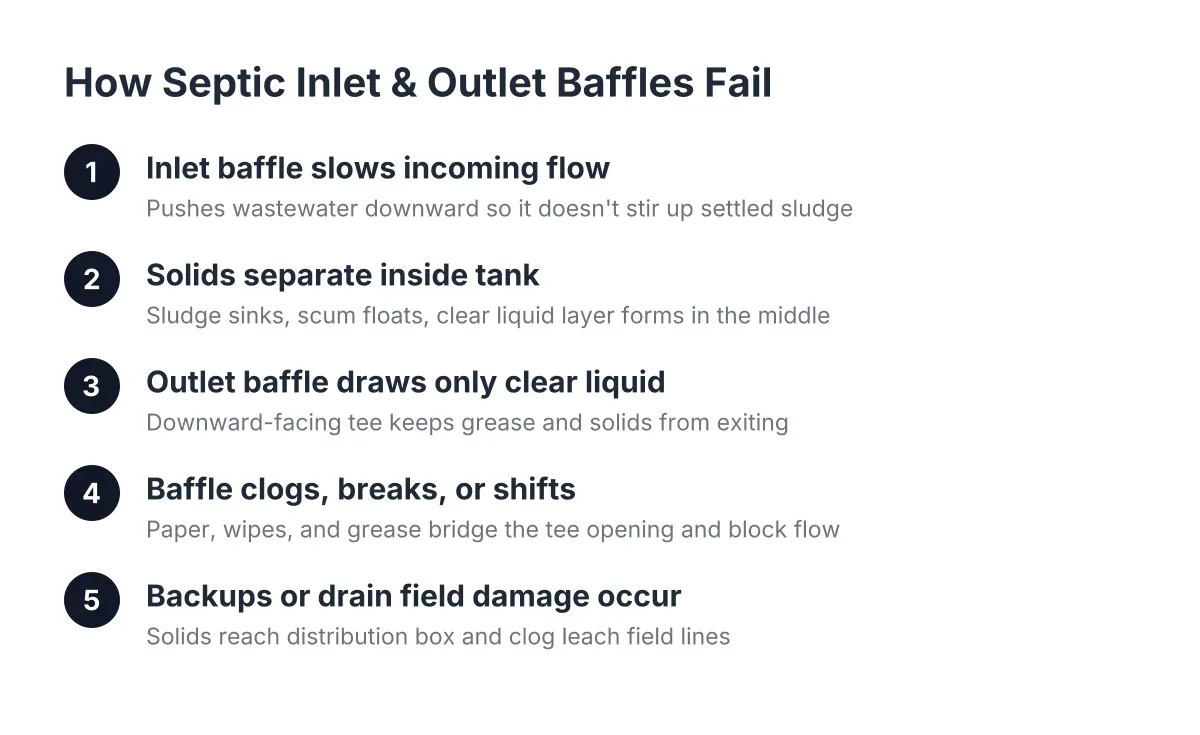
A reasonable worry deserves a direct answer here: will a company invent problems to upsell you? The honest protection is transparency. A trustworthy operator can point to what they are describing, a corroded baffle, a saturated drain field, roots in the line, while the tank is open and you are standing there. Be cautious of anyone diagnosing a major repair without opening the tank first. Also note that installing or replacing a system is a different trade from pumping; according to the New Hampshire Department of Environmental Services, licensed septic installation requires additional certification covering soil types, percolation rates, and system design. Major repairs and replacements are a job for licensed specialists, and a good pumping crew will tell you when you have crossed from maintenance into that territory.
If you run a restaurant, commercial kitchen, or RV park in the area, the same logic applies with higher stakes. Grease traps and holding tanks fill on a schedule driven by your business volume, and health code compliance does not wait. A recurring service arrangement with a local crew that shows up on the agreed date beats scrambling for grease trap pumping the week before an inspection.
What This Costs, and What Waiting Costs
As of 2026, routine pumping remains one of the cheapest line items in homeownership relative to what it prevents. The Angi average of $427 for a pump-out sits against the EPA's $5,000 to $15,000 estimate for repair or replacement. Divide a pump-out across the two or three years it covers and the math gets even friendlier; you are paying a modest annual amount to protect a system that would cost thousands to rebuild and would tear up your yard in the process.
Emergency visits generally cost more than scheduled ones, for understandable reasons: after-hours work, digging out unknown lids, and dealing with backups adds labor. Exact pricing depends on your tank size, access, and condition, which is why phone quotes are estimates until someone sees the site. That is not evasion; it is how an honest quote works in this trade.
The takeaway is simple. People who search for septic tank pumping near them in a panic and people who schedule it calmly every few years get the same truck and the same service. One group pays more, deals with sewage in the house, and loses a weekend. The other puts a date on the calendar and forgets about it.
If your Hesperia home or business is overdue, or you honestly do not know when the tank was last pumped, reach out to a local septic crew and get a baseline pump-out on the books. Starting the schedule now is what keeps your name off the emergency-call list for good.
If you need your septic tank serviced, Hesperia Septic can help.
Prefer to talk it through? Call (760) 249-7872 — a quick call is usually the fastest way to get a straight answer for your situation.