8 Signs Your Septic Tank Needs Pumping Now, Not Next Year
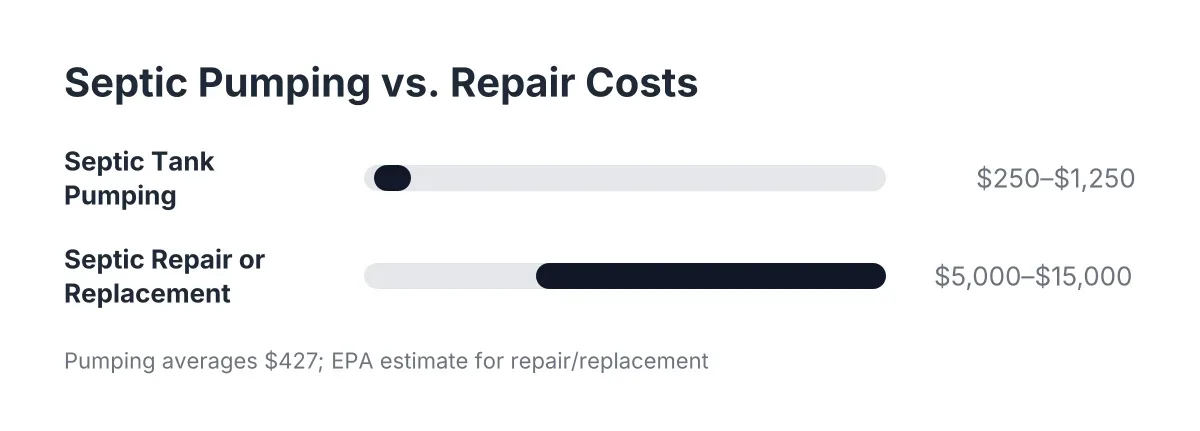
If you own a home on septic in Hesperia and you can't remember the last time the tank was pumped, you're not alone. Most calls we take start the same way: something in the house changed, and the homeowner wants a straight answer, not a sales pitch. This guide covers the septic tank warning signs you should never ignore, ranked roughly from "schedule it soon" to "stop running water and call today." Knowing the difference can save you real money; according to the U.S. Environmental Protection Agency, septic repair or replacement typically costs $5,000 to $15,000, while a routine pump-out is a few hundred dollars.
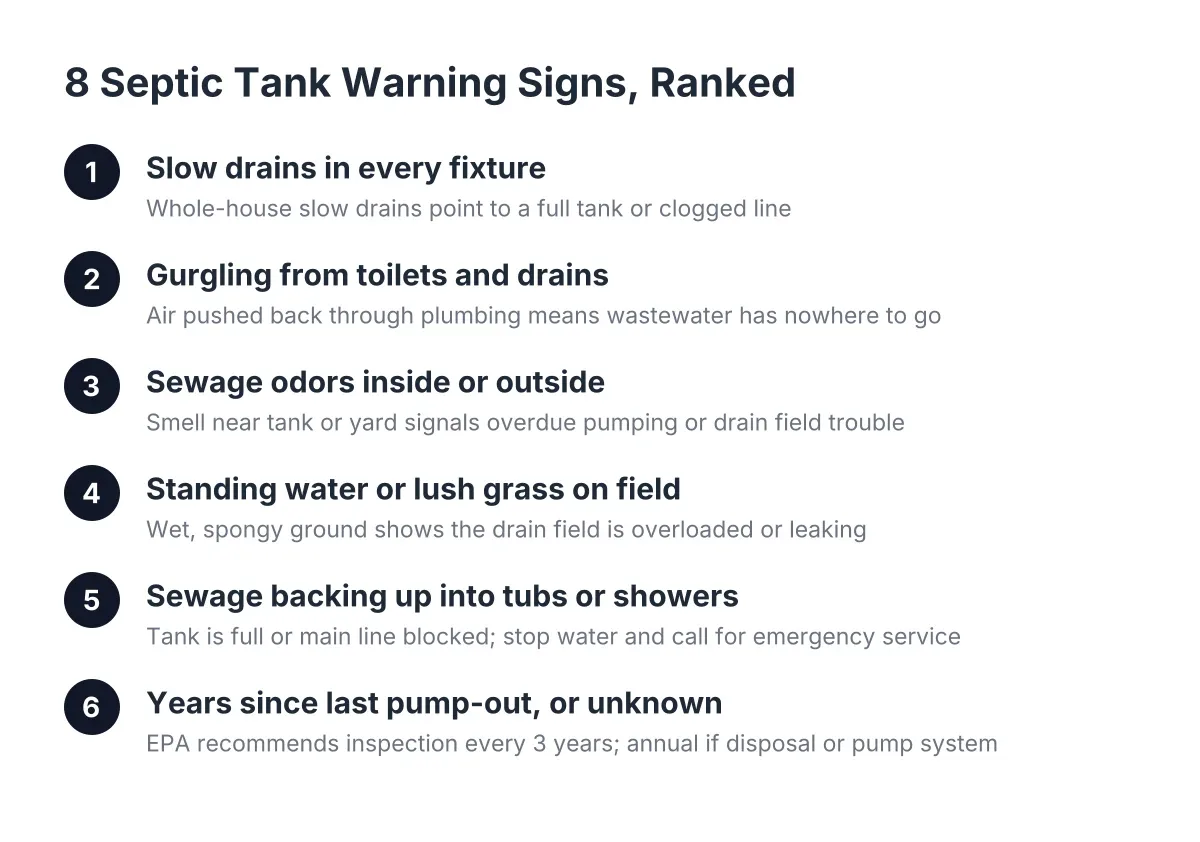
Here are the eight warning signs, in order.
1. Slow Drains in Every Fixture, Not Just One
One slow sink is usually a clogged pipe. Slow drains across the whole house, especially in the lowest fixtures like a ground-floor shower or toilet, point to a full septic tank or a clogged line between the house and the tank.
Watch what happens when you run the washing machine. If the toilet gurgles or the shower drain backs up while the washer empties, the system can't take water as fast as your house sends it. That pattern is one of the most reliable early warning signs when a septic tank is getting full.
2. Gurgling Sounds From Toilets and Drains
Gurgling means air is being pushed back through your plumbing because wastewater has nowhere to go. It often shows up before any visible backup, which makes it a useful early warning.
For example, a homeowner near Main Street and Escondido Avenue might notice the hall bathroom toilet bubbling every time someone showers. Nothing has overflowed yet, so it's easy to ignore. That gurgle is the system telling you the tank is near capacity or the outlet is clogging. Booking a pump-out at this stage usually means a routine visit instead of an emergency one.
3. Sewage Odors in the House or Yard
A healthy septic system should not smell. If you catch a rotten-egg or sewage odor near drains inside, or around the tank lid and drain field outside, gases and wastewater are escaping where they shouldn't.
Odor near the tank often means it's overdue for pumping. Odor spread across the yard, especially with damp ground, can mean the drain field is struggling. In Hesperia's dry climate, a persistent sewage smell outside stands out; our soil doesn't stay wet on its own, so a smelly, soggy patch deserves attention fast.
4. Standing Water or Lush Grass Over the Drain Field
Wet, spongy ground over the tank or drain field is one of the clearest septic tank warning signs that something is leaking or overloaded. When the tank fills past its working level, wastewater pushes out to the drain field faster than the soil can absorb it, and it surfaces.
In the High Desert, this sign is hard to miss. A bright green strip of weeds or grass in an otherwise brown yard, with no irrigation to explain it, usually sits right over the drain field. That greenery is being fed by effluent. Pumping the tank relieves the pressure, but if the drain field is already saturated, an inspection should come with it.
5. Sewage Backing Up Into Tubs, Showers, or Floor Drains
This is the sign that skips the warning stage. When dark water or sewage comes up through the lowest drains in the house, the tank is full or the main line is blocked, and every flush makes it worse.
If this is happening now, do three things:
- Stop running water. No flushing, no laundry, no dishwasher.
- Keep people and pets away from any backup inside or pooling outside.
- Call for emergency septic pumping rather than waiting to see if it drains on its own.
A backup rarely fixes itself. Pumping the tank is usually the first step, and it also lets a crew see whether the problem is the tank, the inlet line, or the drain field.
6. It's Been Years Since the Last Pump-Out, or You Don't Know
You don't need a visible symptom to be overdue. Solids build up in the tank whether or not anything smells. Once the sludge layer gets deep enough, solids flow into the drain field, and that's how a cheap maintenance task turns into a five-figure repair.
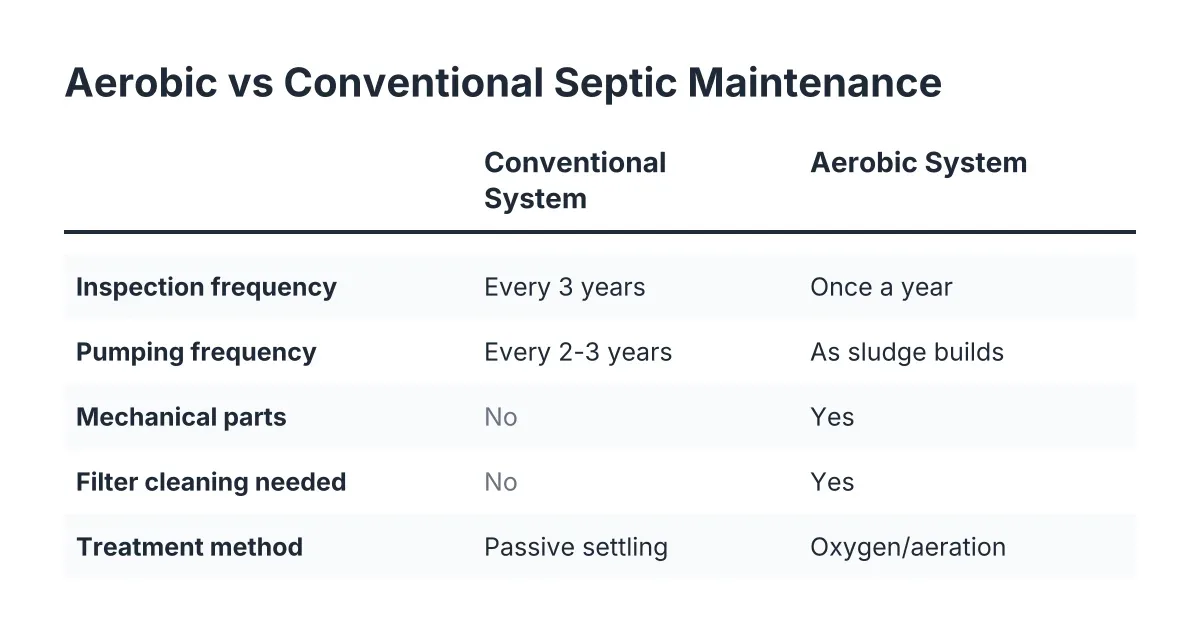
The EPA recommends a professional inspection at least once every three years for the average household, and once a year for alternative systems with pumps or float switches. In addition, households with garbage disposals produce far more sludge; the Massachusetts Department of Environmental Protection recommends annual pumping for those homes regardless of tank size.
If you just bought a house in Hesperia and the seller couldn't tell you when the tank was last serviced, treat that as a sign in itself. A pump-out with an inspection gives you a clean baseline and a record to plan from.
7. The Septic Alarm Is Going Off
Not every system has one, but if yours does, take it seriously. Systems with pumps or float switches use an alarm to signal high water in the tank, a failed pump, or a power issue. It's the one part of a septic system designed to warn you before sewage reaches your floor.
However, an alarm doesn't tell you which problem you have. Silencing it and hoping is how a high-water warning becomes a backup by the weekend. A pump-out plus an inspection of the floats and pump usually sorts out whether you had a one-time overload or a component that needs repair.
8. Nitrate or Bacteria Problems in a Nearby Well
This one matters for rural Hesperia properties on well water. A failing or leaking septic system can send bacteria and nitrates into the groundwater your well draws from. If a water test comes back with elevated nitrates or coliform bacteria, the septic system is a prime suspect.
This is also the sign where you should bring in a professional rather than troubleshoot alone. Pumping may be part of the fix, but tracing contamination to a leaking tank or failed drain field takes an inspection, and sometimes county involvement. No article can diagnose that from your kitchen table.
How to Tell a Full Tank From a Failing System
A full tank needs pumping. A failing system needs pumping plus diagnosis, and the signs overlap, which is why homeowners get nervous about upsells. Here's a practical way to sort them.
Signs that usually mean the tank is full and pumping alone will fix it:
- Slow drains and gurgling that started gradually
- Odor near the tank lid, not spread across the yard
- No service history for three or more years
Signs your septic tank warning signs may indicate failing, where pumping is step one but not the whole answer:
- Standing water or sewage surfacing over the drain field
- Backups that return within weeks of a pump-out
- Contamination showing up in well water tests
The honest trade-off: pumping a failing system buys time, but it doesn't repair a crushed line or a saturated drain field. A crew that pumps your tank should be able to tell you what they see at the inlet, outlet, and baffles, and whether liquid flows back from the drain field into the tank. Flowback during pumping is a strong indicator the field is the problem, not the tank.
If several of the "failing" signs sound familiar, two resources will help you decide the next move. Our guide to 7 signs your septic system needs replacement, not just another pumping walks through when a tank is genuinely at the end of its life. And a professional septic system inspection in Hesperia gives you a measured answer — sludge depth, baffle condition, and drain field health — instead of a guess.
What Acting Early Actually Saves You
The gap between routine service and emergency repair is the whole argument for acting on early signs. According to Angi data, septic tank pumping averages $427, with a typical range of $250 to $1,250 depending on tank size and location. Compare that to the EPA's estimate of $5,000 to $15,000 for repair or replacement, and the math settles itself.
There's a practical difference too. A scheduled pump-out happens on your calendar, in daylight, with the lids located ahead of time. An emergency call happens with sewage in your shower, often after hours, sometimes with a tank nobody can find because it was buried decades ago. If you don't know where your tank is, septic tank locating is worth doing before you ever need it urgently.
What to Expect When You Call a Local Crew in 2026
Knowing what a normal visit looks like makes it easier to compare quotes and spot padding. A straightforward septic tank pump-out in the Hesperia area generally includes:
- Locating and uncovering the tank access lids
- Pumping out liquids, sludge, and scum, not just the liquid layer
- A visual check of the tank, baffles, and inlet and outlet as it empties
- Telling you what they found, in plain language, before recommending anything else
Ask any company you call whether the quote covers digging to reach the lids, and whether they pump the full tank or skim it. Those two questions expose most of the pricing surprises homeowners run into. A local, septic-focused crew should answer both without hesitation.
The Bottom Line for Hesperia Homeowners
Slow drains, gurgling, and odors are your cheap warnings; backups, surfacing sewage, and alarms are the expensive ones. If you've noticed any of the early septic tank warning signs or backing up or filling, scheduling a pump-out now is the difference between a routine service call and a weekend you'll be telling neighbors about for years. And if you've hit the later signs, stop running water and get a crew out; the tank isn't going to un-fill itself.
If you need your septic tank serviced, Hesperia Septic can help.