What to Inspect Before Buying High Desert Property With a Septic System
You found the property. Maybe it is a house on a couple acres outside Hesperia, or a lot with a well and an old manufactured home. The seller says the septic works fine. There are no records, no permits on file, and no visible lid anywhere in the yard. Before you sign anything, you need a septic tank inspection that produces a written, documented report you can hand to your lender, your escrow officer, or the county. This guide walks through exactly what that means, what an inspector actually checks, and why High Desert soil makes some of this different than what you will read in a generic national article.
Why "The Seller Says It Works" Is Not Enough
A septic system is buried. That single fact explains most of the risk you are taking on. A roof with missing shingles shows itself. A furnace that will not fire shows itself. Additionally, a septic tank that is cracked, undersized, or sitting over a failing drain field can look perfectly fine from the surface for years.
Here is the problem with taking the seller's word for it. Most sellers are not lying; they genuinely do not know. If the system has never backed up into the house while they lived there, they assume it is healthy. However, a tank can be one heavy laundry weekend away from failure and still drain normally on the day you walk the property.
The stakes are not small. The U.S. Environmental Protection Agency estimates septic repair or replacement typically costs between $5,000 and $15,000, far more than routine pumping. On some High Desert lots with difficult access or soil that will not pass a percolation test, a full drain field replacement can run higher than that. That is the number you are gambling with when you skip the inspection to keep escrow moving.
In California, septic-served homes are less common than in much of the country. According to the U.S. Environmental Protection Agency, only about 10 percent of California homes are on septic systems, compared with 55 percent in states like Vermont. As a result, many California buyers, agents, and even some lenders have never dealt with one. That knowledge gap is exactly where expensive surprises live, and it is why the burden of due diligence falls on you.
The No-Records Problem, and Why It Is So Common in Hesperia
Plenty of properties in Hesperia and the surrounding High Desert were built decades ago, sold several times, and passed along with no septic paperwork at all. The county may have a permit on file, or it may not. The original owner may have added a second tank or moved the drain field without telling anyone. Older tanks were often buried deep with no riser, so there is nothing to see at grade.
For example, suppose a buyer is in escrow on a 1970s home on a half acre off Ranchero Road. The seller inherited the place and never lived in it. Nobody knows where the tank is. The disclosure form says "septic, condition unknown." In that scenario, the buyer has two choices: close blind and hope, or get the tank located, opened, and inspected before contingencies expire.
Locating comes first, and it matters more than most buyers expect. A crew can find a buried tank by tracing the main sewer line from the house, probing likely spots, or running a locator device through the line from a cleanout. Once the tank is found, they mark it, dig to the lid, and open it. Only then can anyone tell you anything real about condition.
If you are the buyer, get the locate and the inspection done as one visit. Splitting them into separate appointments burns days you do not have inside a contingency window.
What a Septic Tank Inspection Actually Includes
A septic tank inspection is a physical, opened-lid evaluation of the tank and the system it feeds, not a glance at the yard. The inspector locates and uncovers the tank, checks liquid levels before and after pumping, examines the tank structure and baffles, and evaluates how the drain field is accepting water. The result is a documented report on system condition.
That last part matters. A drive-by opinion is worthless in a real estate transaction. What you need is documentation, and a proper inspection produces it.
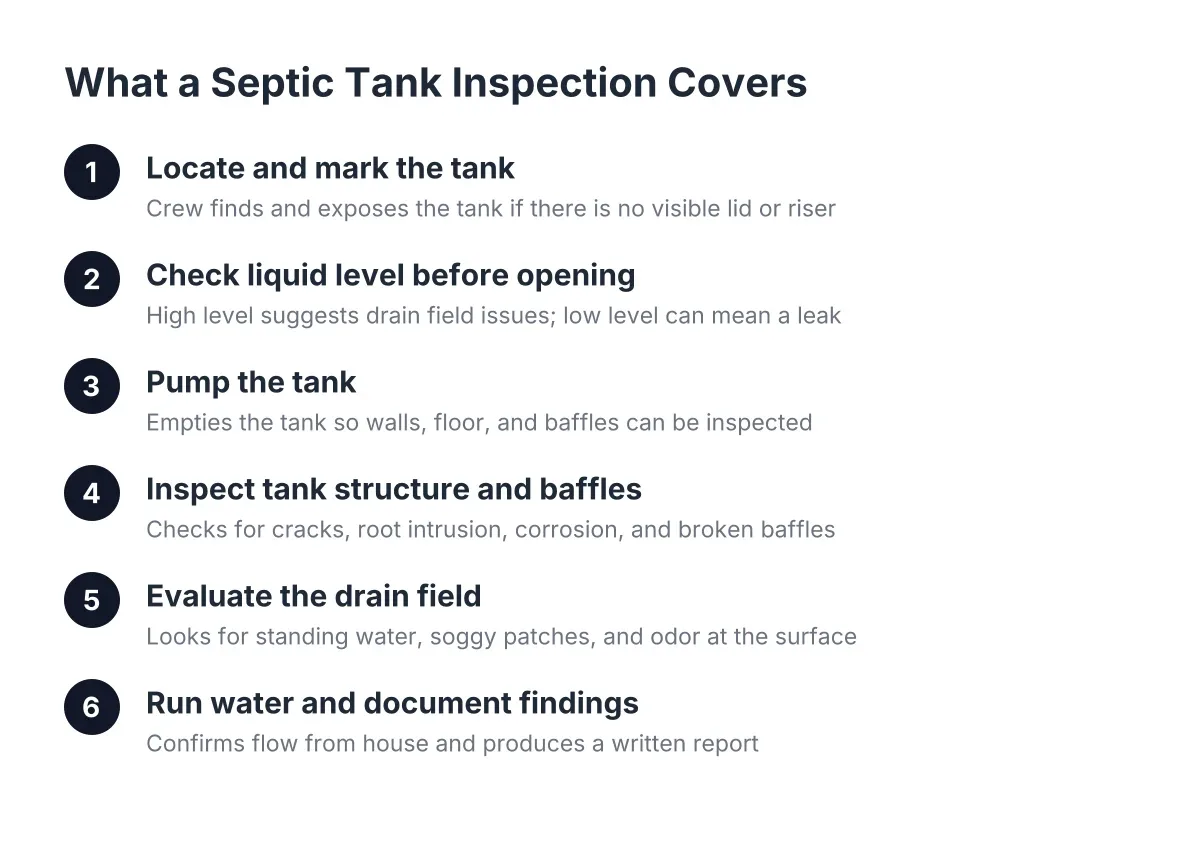
Here is what a thorough inspection covers, step by step:
- Locate and mark the tank. If there is no visible lid or riser, the crew finds the tank first, then digs to expose the access.
- Check liquid level before opening. A level above the outlet pipe suggests the drain field is not taking water. A level below normal can mean the tank is leaking.
- Pump the tank. You cannot inspect what you cannot see. Pumping empties the tank so the inspector can look at the walls, floor, and baffles. This is why septic tank inspection and pumping are usually done together on a purchase.
- Inspect the tank structure. Cracks, root intrusion, corroded rebar in older concrete tanks, and deteriorated baffles all show up once the tank is empty.
- Check the inlet and outlet baffles. These direct flow and keep solids out of the drain field. Missing or broken baffles are one of the most common and most fixable findings.
- Evaluate the drain field. The inspector looks for standing water, unusually green or soggy patches, sewage odor at the surface, and how the field responds when water runs from the house.
- Run water from the house. Flushing toilets and running fixtures confirms the line from the house to the tank flows properly and shows how the system handles real use.
- Document everything. Photos, measured observations, and a written report you can attach to your purchase file.
Some systems also have an inspection port or inspection pipe near the drain field, a capped vertical pipe that lets an inspector check for liquid ponding in the field itself. If the property has one, that pipe cap gets pulled and checked. Many older High Desert systems do not have them, which makes the open-tank evaluation and the surface check of the field even more important.
One honest caveat: no inspection can see everything. Drain field lines run underground for dozens of feet, and an inspector reports what the evidence shows on that day. A system can pass inspection and still fail years later under heavier use than the sellers ever put on it. A good report tells you condition and risk; it is not a lifetime warranty, and nobody honest will sell it as one.
What High Desert Soil Does to Septic Systems
Hesperia sits on a mix of sandy, fast-draining soil and pockets of harder, compacted ground, and the difference matters enormously for a septic system. Sandy soil drains quickly, which is generally good for a drain field. Compacted or clay-heavy pockets drain slowly, and a drain field built over them struggles from day one.
An inspector who works this area every week knows the local patterns. They know which neighborhoods sit on decomposed granite that percolates well and which ones sit on caliche-like hardpan that does not. They know that older systems out here were sometimes sized for a small weekend cabin, not the four-bedroom family home that later replaced it. In addition, they know what desert heat and freeze-thaw cycles do to older concrete tanks, which can spall and crack in ways an out-of-area inspector might not recognize.
This local knowledge changes what a report says. A generic checklist inspection might note "drain field accepting water." A local inspection can add context: this field is in fast soil and has capacity to spare, or this field is in marginal ground and is one added bathroom away from trouble. That second kind of finding is what actually helps you negotiate or walk away.
How a Septic Tank Inspection Report Works in Escrow
A septic tank inspection report is a written document that states where the tank is, what condition the tank and drain field are in, what was pumped and observed, and what repairs or concerns the inspector found. Lenders, escrow officers, and county offices accept it as evidence of system condition for a home sale, refinance, or permit.
Buyers worry that ordering an inspection will delay escrow. In practice, the opposite is usually true. The delays happen when a buyer waits until the last week of contingencies, then discovers nobody knows where the tank is. Locating, digging, pumping, and inspecting can happen in a single visit once scheduled, and a written report typically follows shortly after. Ordering early in the contingency period is what keeps the timeline safe.
The report gives you three practical levers in a transaction:
- A pass gives you confidence to close. You know the location of the tank, its condition, and roughly what maintenance it needs. That is worth documenting even on a clean system, because you will own that information forever.
- A problem finding gives you negotiating power. If the inspection turns up a cracked tank or a saturated drain field, you can ask the seller to repair it, credit you at closing, or reduce the price. Without a report, you have no standing to ask for anything.
- A failure finding lets you walk away with your deposit. If your contract includes an inspection contingency, a documented failed system is grounds to exit. That is the whole point of doing this before the contingency expires, not after.
Some buyers hesitate at the septic tank inspection cost, especially on a property they might not keep. Think of it as a fraction of a percent of the purchase price spent to rule out a five-figure liability. For scale, Angi reports that septic tank pumping alone averages $427 nationally, ranging from $250 to $1,250 or more depending on tank size and access. An inspection with locating adds to that, but it remains small money against a $5,000 to $15,000 repair you did not see coming.
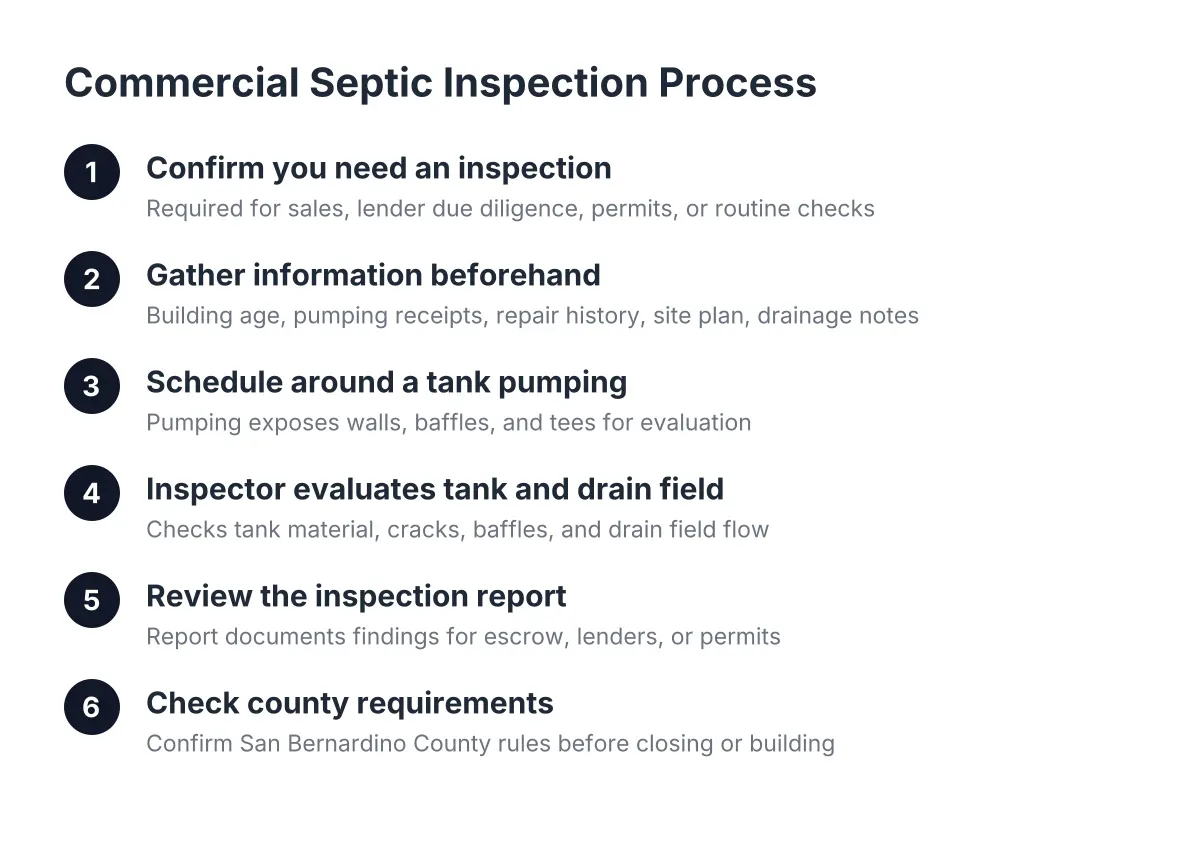
Requirements also vary by county and lender. As of 2026, some lenders require a septic evaluation before funding a loan on a septic-served property, and San Bernardino County has its own permit and records processes. Check what your specific lender and the county require early, because those requirements set your timeline, not the other way around.
How Long Does a Septic Inspection Take?
A full septic inspection with locating and pumping usually takes a few hours on site, though the exact time depends on how hard the tank is to find and how deep the lids are buried. A tank with an exposed riser goes fast. Furthermore, a deep tank with no records and no visible access takes longer because the crew has to locate it and dig by hand.
Several factors stretch or shrink the visit:
- Whether the tank location is known or has to be found from scratch
- How deep the lids are buried, and whether there is one lid or several
- Tank size and how full it is when the crew arrives
- Access for the pump truck, which matters on long dirt driveways and fenced lots
- Whether the drain field shows problems that need extra evaluation
Plan for a half day and you will rarely be surprised. The written report follows the site visit, so build a few days of buffer between the inspection date and your contingency deadline.
Red Flags You Can Spot Yourself Before You Pay for Anything
You are not qualified to pass or fail a septic system from the surface, and neither is anyone else. However, you can spot warning signs on a walkthrough that tell you an inspection is not optional on this particular property. If you see any of these, do not close without a professional evaluation:
- A patch of grass or weeds that is greener and lusher than everything around it, especially in the desert where nothing else is green
- Soggy or spongy ground anywhere between the house and the property line
- Sewage odor outside, near a cleanout, or inside the house
- Slow drains in every fixture, not just one sink
- Gurgling from toilets or drains when other fixtures run
- A seller who cannot or will not say when the tank was last pumped
- No visible lid, riser, or inspection port anywhere on the lot, combined with no county records
None of these prove the system has failed. Each one raises the odds that it has, or that it is close. A do-it-yourself surface check is a screening tool, not a substitute for an opened-tank professional septic system inspection, particularly when the tank has structural issues that only show once it is pumped and the walls are visible.
The Bottom Line for Buyers With No Records
Buying High Desert property with an unknown septic system is not reckless if you do it in the right order. Locate the tank. Open it. Pump it. Inspect it. Get the findings in writing before your contingency period ends. That sequence turns an invisible five-figure risk into a known quantity you can price, negotiate, or reject.
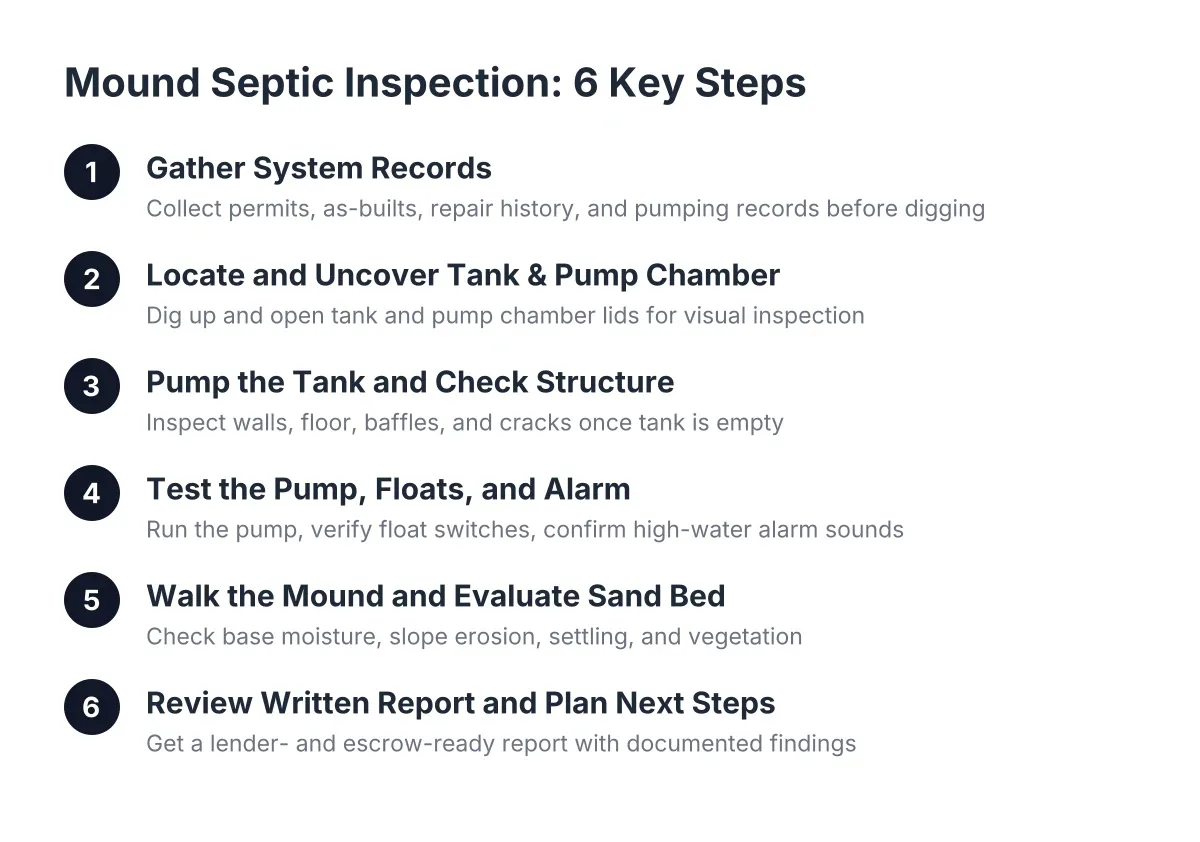
Once you own the place, keep the habit. The U.S. Environmental Protection Agency recommends a professional inspection at least once every three years for a standard system, and once a year for alternative systems with pumps, float switches, or other mechanical parts. The inspection report from your purchase becomes the baseline record the property never had, including a marked tank location that the next owner, or the next service crew, will thank you for.
The buyers who get burned out here are not the ones who bought properties with old systems. They are the ones who bought blind. A few hours with a local crew, a pump truck, and a shovel is what separates the two.
If you need your septic tank serviced, Hesperia Septic can help.