8 Signs Your Septic Tank Needs Pumping or Emergency Service Today
A septic system rarely fails without warning. It sends up signals first, sometimes for weeks. The problem is that most people in Hesperia do not know which signals mean "schedule septic tank pumping soon" and which mean "get a crew out today before sewage ends up in the hallway." Understanding septic tank emergency signs helps you match the symptom to the likely cause and decide how fast to act. This guide walks through the signs your septic tank is full, backing up, or heading toward a bigger failure, so you can respond appropriately.
That matters whether you live on the property or not. Homeowners usually notice trouble in the shower drain. Landlords and small business owners often hear about it secondhand, from a tenant texting about a smell or a health inspector flagging a grease trap. Either way, the symptoms below tell the same story.
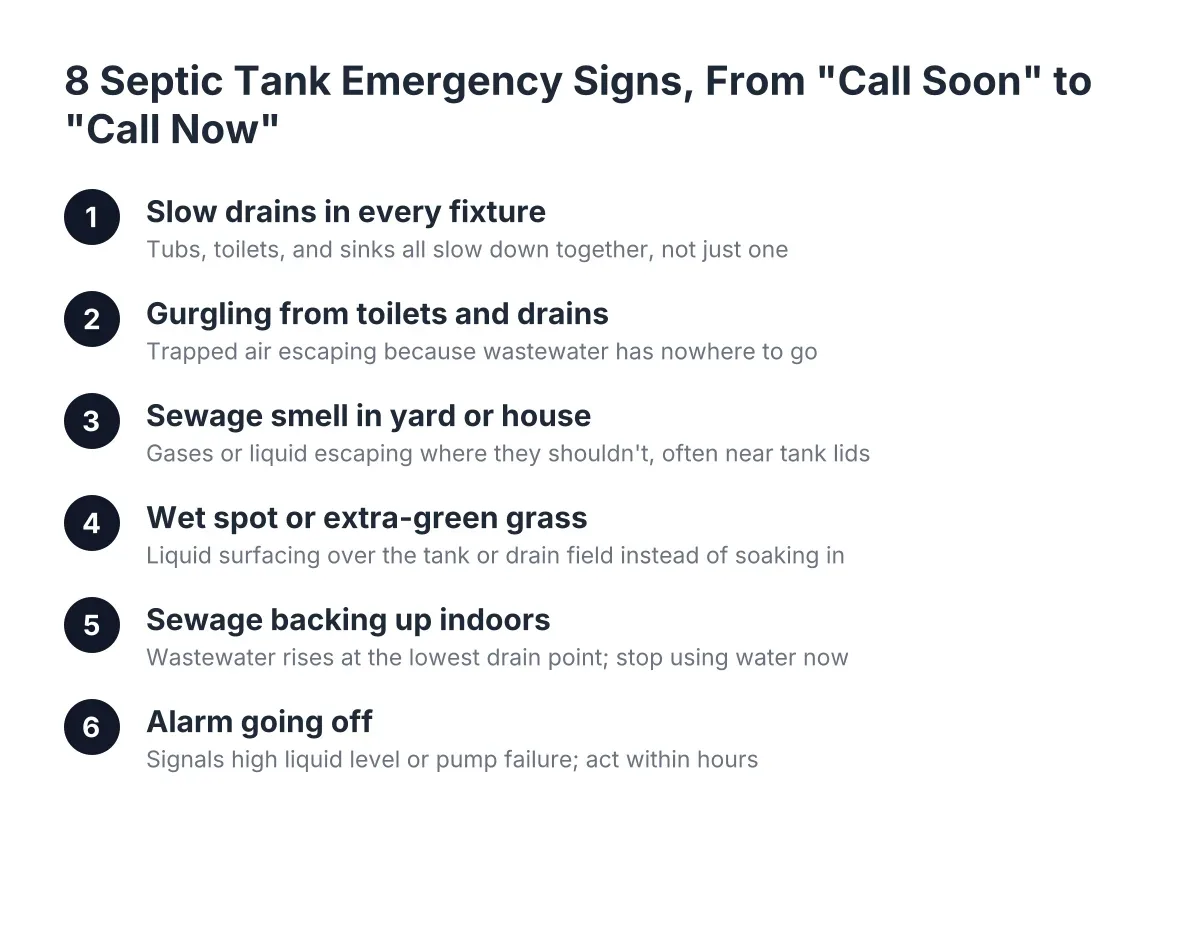
Here are the eight warning signs, roughly in order from "call soon" to "call now."
1. Slow drains in every fixture, not just one
One slow sink is usually a plumbing clog. Slow drains in every fixture at once, tubs, toilets, and sinks together, point to the septic system, not the pipes. When the tank fills past its working level or the outlet line clogs, the whole house drains against a backed-up tank, and everything slows down together.
Run a quick test: flush a toilet on one end of the house while a sink drains on the other. If both struggle, the problem sits downstream of the house, in the tank or the drain field. This is one of the earliest and most reliable signs your septic tank needs to be pumped, and catching it here usually means a routine pump-out instead of an emergency call.
2. Gurgling sounds from toilets and drains
Gurgling is trapped air escaping through your plumbing because wastewater has nowhere to go. When the tank is full or the outlet is clogged, water pushes air back up the lines, and you hear it bubble through the toilet or a floor drain.
Pay attention to timing. Gurgling after a laundry cycle or a long shower means the system is struggling with normal water volume. That is a full-tank symptom, and it tends to show up days or weeks before an actual backup. Treat it as your early warning, not background noise.
3. Sewage smell in the yard or inside the house
A septic tank smell in the yard, that rotten-egg odor near the tank lids or over the drain field, means gases or liquid are escaping where they should not. Outside, it often signals a tank at capacity or a leak at the lid or lines. Inside, odor from drains usually means gases are pushing back through the plumbing because the tank cannot vent or drain normally.
For landlords, this is often the first septic tank emergency signs you hear about. A tenant in Hesperia reports "a sewer smell out back," and you are managing it from another city. Take that call seriously. Odor rarely resolves on its own, and it is one of the classic signs your septic tank is getting full or has a failing component. An inspection or pump-out now beats a habitability complaint later.
4. A wet spot or extra-green grass over the tank or drain field
In the High Desert, a soggy patch of ground that nobody is watering is hard to miss. A wet spot over the septic tank or drain field means liquid is surfacing instead of soaking into the soil. Sometimes the culprit is a tank so full that effluent escapes at the lid. Other times it is a saturated or failing drain field.
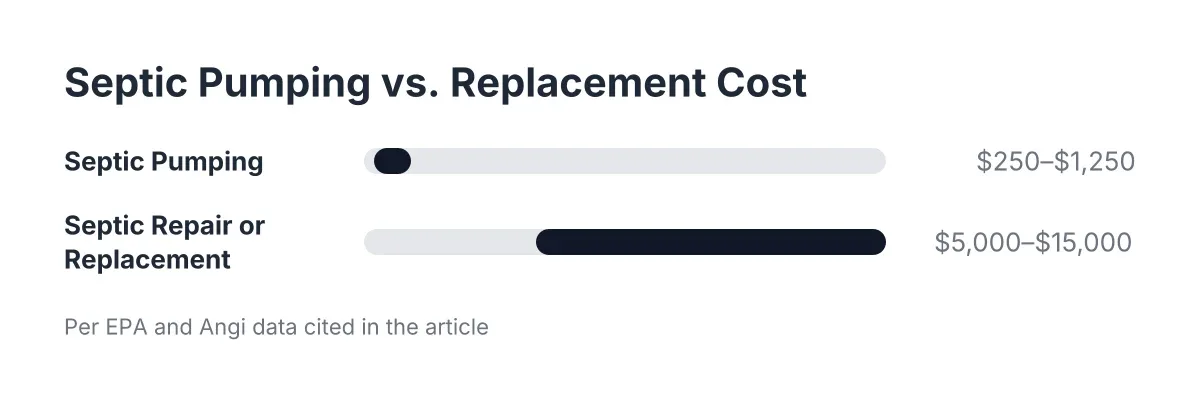
Look for a strip of grass or weeds noticeably greener than everything around it, standing water with no irrigation source, or mushy soil near where the tank sits. These are textbook drain field failure symptoms. This one matters because pumping fixes a full tank, but a failed drain field is a different, larger project. According to the U.S. Environmental Protection Agency, septic repair or replacement typically runs $5,000 to $15,000, which is exactly why you want to catch problems while pumping can still solve them.
5. Sewage backing up into tubs, showers, or floor drains
Sewage in the house is the line between "schedule service" and "emergency." Wastewater always backs up at the lowest point first, usually a ground-floor tub, shower, or floor drain. If you see gray or black water rising there, the tank or main line is full and the system has nowhere left to send waste.
Stop using water immediately. Every flush, load of laundry, and shower adds to what is already backing up. This is the point where emergency septic pumping is the right call, not a drain cleaner or a plunger. Backups are also a health issue; raw sewage indoors needs cleanup as well as pumping.
6. Septic tank emergency signs: The alarm is going off
If your system has an alarm, it exists for one reason: the liquid level in the tank is higher than it should be, or a pump has failed. Do not silence it and move on. An alarm gives you a short window, often less than a day of normal water use, before high water becomes a backup.
Cut water use to the minimum and get the system looked at. Systems with pumps, float switches, or other mechanical parts also need more regular attention; the U.S. Environmental Protection Agency recommends inspecting those alternative systems once a year, compared with at least once every three years for a standard tank.
7. You cannot remember the last pump-out, or you just took over the property
Sometimes the biggest warning sign is not a symptom at all. It is a blank spot in the records. If you cannot answer "when was this tank last pumped," assume the answer is "too long ago." This comes up constantly with rental properties and small commercial buildings. A new owner takes over a Hesperia rental, the previous owner left no septic records, and nobody even knows where the tank is buried.
In that situation, a septic inspection and tank locating visit answers the question directly. A crew finds the tank, checks sludge levels, and tells you whether you are due. That single visit turns an unknown into a maintenance schedule, which is exactly what an out-of-town landlord or restaurant manager wants: one less thing to babysit. Grease traps deserve the same treatment; if an inspector flagged yours, waiting only makes the citation worse.
8. Extra water is overloading the system
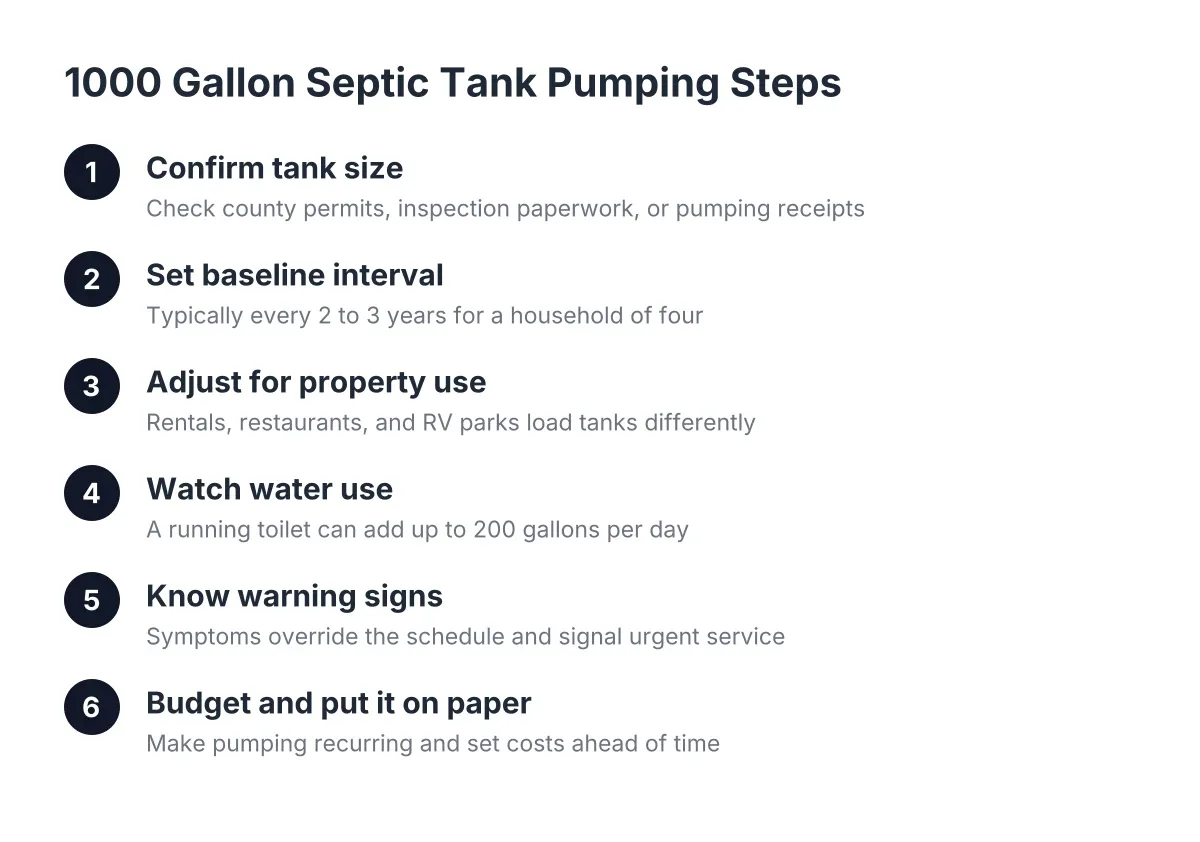
A septic tank can be "full" because of sludge, or because too much water is hitting it too fast. According to the U.S. Environmental Protection Agency, a single leaky or running toilet can send as much as 200 gallons of extra water per day into a septic system. That alone can push a marginal tank into backup territory.
Before assuming the worst, check for these water sources:
- A toilet that runs or hisses between flushes
- A dripping faucet or a water softener that cycles constantly
- Laundry habits, like running five loads back to back on a Saturday
- Irrigation or roof runoff draining toward the tank or drain field
Fixing the water problem sometimes buys the system relief. However, if symptoms continue after the extra water stops, sludge in the tank is the likely cause, and pumping is the fix.
How do I know if my septic tank is full or actually failing?
A full septic tank causes slow drains, gurgling, odors, and backups that improve immediately after septic tank pumping. A failing system shows the same symptoms, but they return within days or weeks of a pump-out, often with wet ground or sewage surfacing over the drain field. Pumping fixes full; it only postpones failing.
That distinction is the whole point of septic system troubleshooting: match the symptom to the cause before spending money. As a rough guide, one or two early signs, slow drains and gurgling, usually mean the tank needs to be emptied. Multiple signs at once, especially odors plus wet ground plus backups, suggest the drain field or another component is involved.
There is an honest limit to what you can diagnose from the surface, though. Sludge levels, baffle condition, and drain field saturation can only be confirmed by opening the tank. If symptoms persist after pumping, or you see sewage surfacing outdoors, bring in a professional rather than guessing. Older properties add another wrinkle; some old types of septic systems, like undersized single-compartment tanks or cesspools, fail in ways a modern tank does not, and they need an experienced eye.
What to do when you spot the signs your septic tank is in trouble
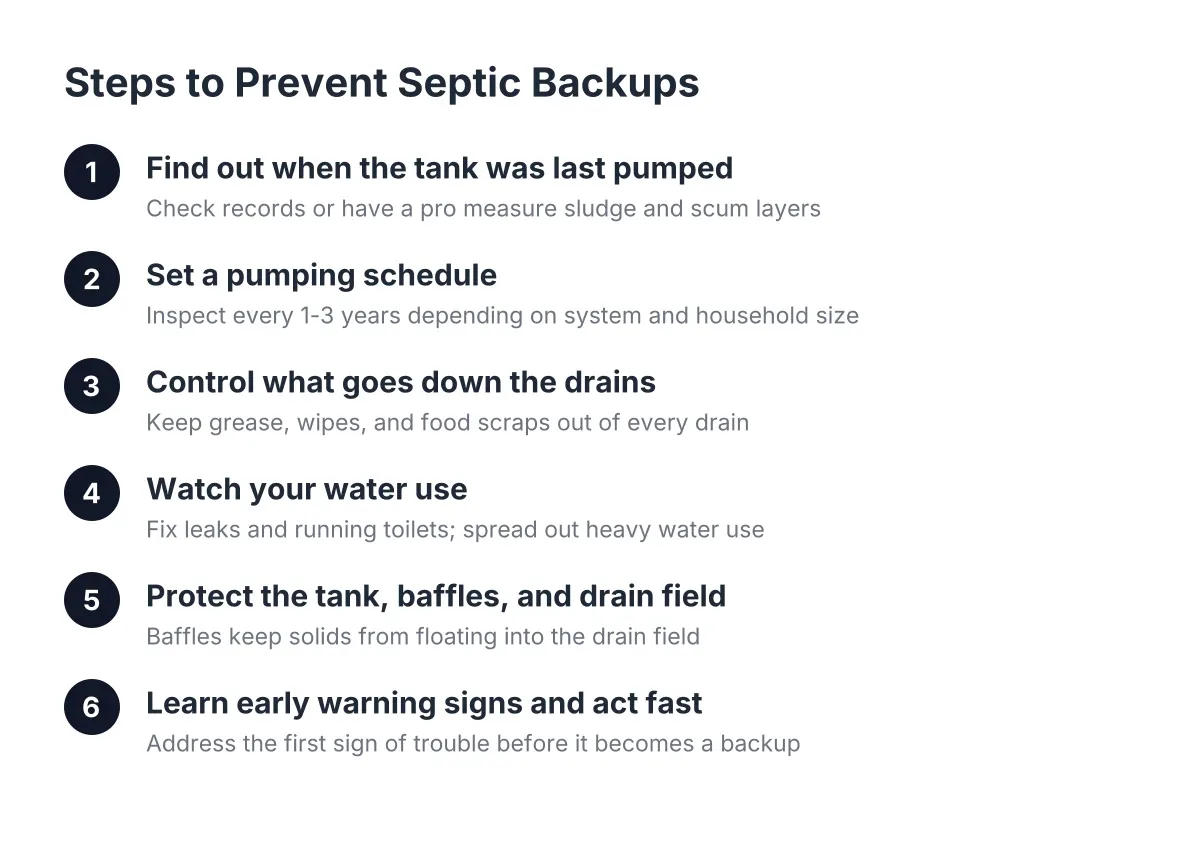
React based on severity, not panic. Early symptoms buy you time to schedule; backups and alarms do not.
- Sewage indoors or an alarm sounding: stop all water use and call for emergency septic pumping the same day.
- Odors, gurgling, or slow drains house-wide: cut back water use and schedule pumping within days, not weeks.
- Wet spots or surfacing sewage outside: keep people and pets away and request an inspection along with the pump-out.
- No records or a new property: schedule septic tank locating and an inspection to establish a baseline.
Cost-wise, catching it early pays. According to Angi, septic tank pumping averages $427, typically ranging from $250 to $1,250 depending on tank size and location. Compare that with the EPA's $5,000 to $15,000 estimate for repair or replacement, and the math argues for acting on the first sign, not the fifth.
One last note for anyone managing property with Spanish-speaking tenants: if a tenant mentions a problem with the "alcantarillado," that is sewer in Spanish, though on a septic property the complaint almost always traces back to the tank or drain field, not a city line. The signs your septic tank sends are the same in any language: slow drains, bad smells, wet ground, and backups. Read them early, and a Hesperia crew with a pump truck can usually handle the rest in a single visit.
If you need your septic tank serviced, Hesperia Septic can help.