Signs Your Septic Tank Needs Pumping Now, and How to Never Get There
Most septic emergencies in Hesperia do not start at 8pm on a Saturday. They start months earlier, with a slow drain nobody mentioned, a wet spot in the yard everyone stepped around, and a septic tank cleaning that kept getting pushed to next month. By the time sewage is backing up into the tub, the system has been asking for help for a long time. This guide covers both ends of that story: the warning signs that mean you need a truck out today, and the plain, practical upkeep that keeps you off the emergency-call list entirely.
Here is the honest version of how this works. A septic system is not a mystery box. It is a tank, a set of pipes, and a drain field, and each one gives you signals before it fails. Learn the signals, keep a simple septic tank maintenance schedule, and you can go years without ever making a panicked phone call.
The Warning Signs That Mean Your Tank Is Full or Failing
Some septic problems can wait until Monday. Others cannot. Knowing the difference saves you money and, in the worst cases, saves your floors.
Signs you need septic tank cleaning today
Sewage backing up into a tub, shower, or floor drain is the clearest sign a septic tank needs emergency pumping today. Standing sewage or a strong sewage smell inside the house means waste has nowhere to go, and every flush makes it worse. Stop running water and call for emergency septic pumping.
Here are the signs that mean same-day or next-day service, not a note on the calendar:
- Sewage coming up in the lowest drain in the house, usually a tub or shower
- Toilets that gurgle or refuse to flush in more than one bathroom at once
- A wet, soggy, or foul-smelling patch of ground over the tank or drain field
- Sewage surfacing in the yard, especially after laundry or showers
- A septic alarm going off, if your system has one
- Drains throughout the house running slow at the same time
One bad drain is usually a plumbing clog. Every drain acting up at once is a septic problem. That distinction matters, because a lot of Hesperia homeowners call a regular plumber first, hear “we don’t really do septic,” and lose a day while the backup gets worse.
Signs you have a few weeks, not a few hours
Slow drains that improve after light water use, occasional gurgling, or a faint outdoor odor near the tank lid are early warnings, not emergencies. They usually mean the tank is filling with sludge and losing capacity. Schedule septic tank cleaning soon, before the next heavy-use weekend turns a warning into a backup.
Grass that grows greener and faster in one strip of the yard is another quiet signal. That strip often sits over a drain field that is receiving liquid it should not be receiving. In the High Desert, where most yards run dry, an unexplained lush patch stands out fast.
What Actually Happens Inside the Tank
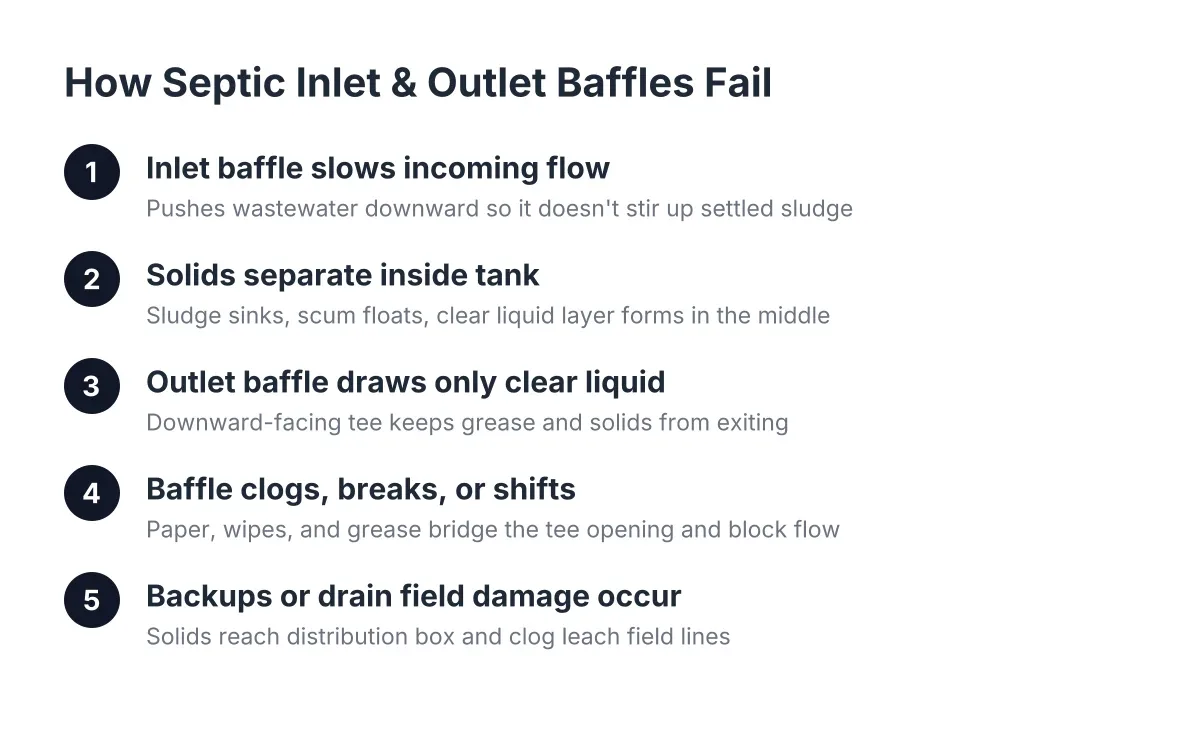
Every drop of water that leaves your house lands in the septic tank first. Solids sink to the bottom and become sludge. Grease and soap scum float to the top. The liquid in the middle flows out to the drain field, where the soil filters it.
The problem is simple math. Sludge and scum never leave on their own. They build up until the liquid layer in the middle shrinks, and then one of two things happens. Either solids push out into the drain field and clog it, or the tank fills completely and waste backs up toward the house.
That is why septic tank cleaning exists. Pumping removes the sludge and scum before they reach the outlet. It is the single cheapest thing you can do for the system, and skipping it is how a few hundred dollars becomes a five-figure repair.
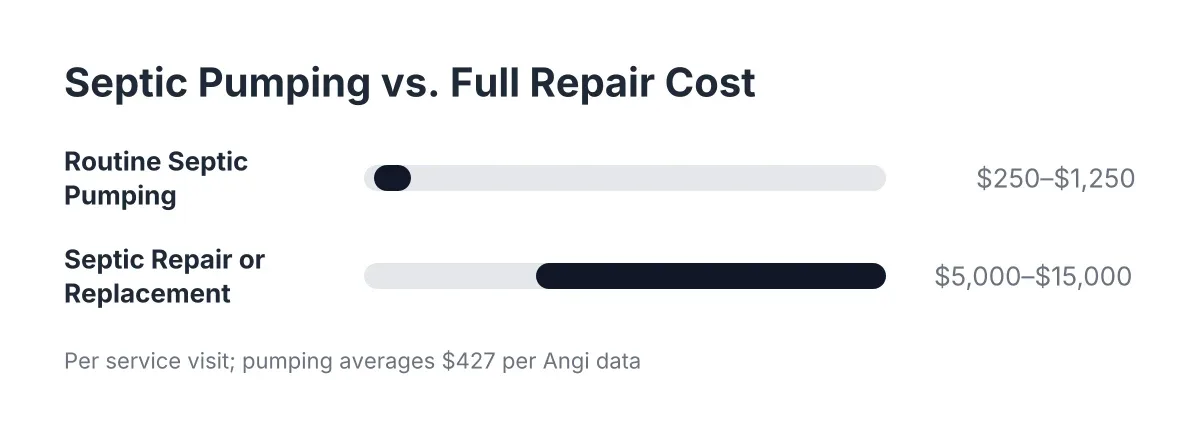
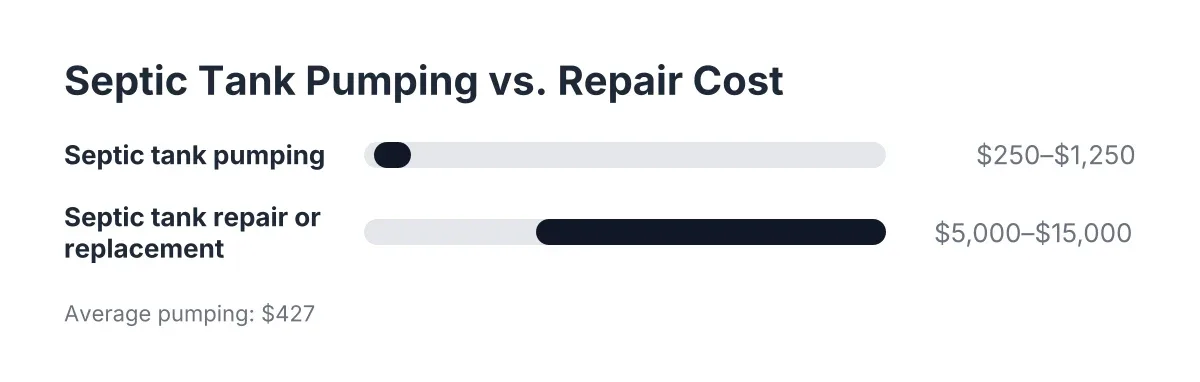
The cost gap is not small. According to Angi, septic tank pumping averages $427, with a typical range of $250 to $1,250 depending on tank size and location. Compare that to what happens when a neglected tank ruins the drain field: the EPA estimates septic tank repair or replacement typically costs between $5,000 and $15,000. One number is routine upkeep. The other is a construction project in your yard.
How Often to Pump a Septic Tank
Most households should have a professional inspect the septic system at least once every three years, according to the U.S. Environmental Protection Agency, with pumping scheduled based on what that inspection finds. Systems with pumps, float switches, or other mechanical parts should be inspected once a year, per the same EPA guidance.
However, “how often to pump septic tank” does not have one universal answer, and anyone who gives you a single number without asking questions is guessing. The right interval depends on:
- Household size. More people means more water and more solids. A family of six fills a tank far faster than a retired couple.
- Tank size. A small tank serving a big household needs attention more often than a large tank serving a small one.
- Garbage disposal use. Homes with garbage disposals generate significantly more sludge; the Massachusetts Department of Environmental Protection recommends annual pumping for such households regardless of tank size.
- Water habits. Long showers, back-to-back laundry days, and leaky toilets all push water through the tank faster than solids can settle.
The practical move is to have the tank pumped, ask the crew how full it was, and set your next date from there. If the tank was near capacity, shorten the interval. If it had plenty of room, you can stretch it. After two or three cycles you will know your house’s real number instead of a generic one.
What Not to Flush With a Septic System
A septic system can safely handle three things: human waste, toilet paper, and wastewater. Everything else either clogs the tank, kills the bacteria that break down waste, or passes through to clog the drain field. The shorter your list of exceptions, the longer your system lasts.
The repeat offenders that fill Hesperia tanks early:
- “Flushable” wipes, which do not break down no matter what the package says
- Cooking grease and fats poured down the kitchen sink
- Coffee grounds, eggshells, and food scraps through the disposal
- Feminine hygiene products, dental floss, and cotton swabs
- Paint, solvents, and harsh drain cleaners
- Cat litter, even the kinds labeled flushable
Grease deserves its own warning. It cools, hardens, and builds a scum layer that eats tank capacity and coats pipes. Restaurant kitchens have grease traps and scheduled grease trap pumping for exactly this reason; a home kitchen has neither, so the tank absorbs everything you pour. Keep a can by the stove, pour grease into it, and throw it in the trash.
Chemical drain cleaners are the other quiet killer. The tank depends on live bacteria to digest solids. Dump enough bleach, antibacterial cleaner, or caustic drain opener down the pipes and you sterilize the tank, and then the solids stop breaking down at all.
Septic tank cleaning products and additives: do they replace pumping?
No septic tank cleaning product, powder, or additive removes the sludge sitting at the bottom of your tank. Additives may claim to boost bacteria or dissolve solids, but the physical waste has to be pumped out through a hose into a truck. There is no shortcut in a bottle.
A healthy tank already contains all the bacteria it needs, supplied free of charge by everyone in the house. Some homeowners spend years buying monthly septic tank additive powder while the sludge layer keeps rising, then face a backup anyway. If you enjoy using an additive and it is septic-safe, it probably does no harm. Just never let it replace pumping on a schedule.
Drain Field Care: Protecting the Part You Cannot Pump
The drain field is the one part of your septic system that cannot be pumped, cleaned, or easily fixed. Once soil clogs with solids or gets crushed, the common fix is digging up the yard and building a new field. Protecting it costs nothing; replacing it costs thousands.
Drain field maintenance is mostly about what you keep away from it:
- Never park or drive vehicles over the drain field. This includes RVs, trailers, and delivery trucks, which are common culprits on larger High Desert lots.
- Keep trees and deep-rooted shrubs at a distance. Roots hunt for the moisture in drain field lines and crack them open.
- Direct rain gutters and yard drainage away from the field. Saturated soil cannot absorb wastewater.
- Do not build sheds, patios, or paved areas over the field. The soil needs air to treat wastewater.
- Spread out water use. Run laundry across the week instead of six loads on Sunday, so the field never gets flooded all at once.
In addition, know where your tank and field actually are. Plenty of Hesperia homeowners bought their house without a septic map and have no idea what sits under which patch of dirt. A septic tank locating service can mark it once, and then every future pump-out, inspection, and landscaping decision gets easier.
A Septic Maintenance Schedule You Will Actually Keep
The best septic maintenance schedule is the one simple enough to follow for twenty years. You do not need a binder. You need a few recurring reminders and one page of records.
Here is a realistic version for 2026:
- Monthly, two minutes. Walk the yard over the tank and drain field. Look for wet spots, odors, or unusually green grass. Fix any running toilets or dripping faucets, since constant water flow works the system around the clock.
- Every three years, or yearly with mechanical parts. Have the system professionally inspected, in line with EPA guidance. The inspector measures sludge levels and tells you whether pumping is due now or can wait.
- On the inspector’s recommendation. Schedule septic tank cleaning before the tank is critically full, not after. Cleaning a tank at 70 percent full is maintenance. Cleaning it after a backup is triage.
- Ongoing. Keep the flush list short, keep grease out of the sink, and keep vehicles off the field.
- Always. Write down every pump-out and inspection date, the company, and what they found. That record tells you your real pumping interval and pays for itself when you sell the house.
For example, consider a common Hesperia scenario. A family buys a home on a half-acre lot, never gets told when the tank was last pumped, and hosts Thanksgiving three years later. Twelve guests, two days of showers and dishes, and by Friday morning sewage is standing in the hall bathtub. An emergency crew pumps the tank and finds it packed solid, with wipes matted through the outlet. The pump-out itself might have cost a few hundred dollars on a Tuesday in October. Instead they paid for emergency septic pumping on a holiday weekend, plus a follow-up visit to check whether solids had pushed into the drain field. Every part of that was avoidable with one calendar reminder.
When Pumping Is Not Enough: Recognizing Real Failure
Sometimes a backup returns days after the tank is pumped, and that pattern points past the tank. If the tank fills again within days, or sewage keeps surfacing over the drain field after pumping, the problem is likely a failed field, a broken line, or a collapsed baffle. That is septic tank repair territory, not a cleaning problem.
Signs of septic system failure that pumping alone will not fix:
- Backups that come back within days or weeks of a pump-out
- Sewage or standing water over the drain field even in dry weather
- Water flowing back into the tank from the field side during pumping
- Strong sewage odors that never fully go away
This is where you should be careful with anyone quick to sell a full replacement. A slow field is not always a dead field; sometimes a crushed pipe, root intrusion, or a failed baffle is the real issue, and those repairs cost a fraction of a new system. Ask the crew to show you what they found, in plain terms, before you agree to major work. A trustworthy local septic operator would rather explain the problem over an open tank lid than pressure you into the biggest ticket.
One honest limitation: no article can diagnose your yard from a distance. Soil conditions, tank condition, and system age vary from lot to lot across Hesperia and the High Desert, so treat this guide as a framework and let an on-site inspection make the final call.
The Short Version
A septic system fails slowly, then all at once. The homeowners who never end up searching “24 hour septic service” at midnight are the ones who watch for slow drains and wet spots, keep wipes and grease out of the pipes, protect the drain field from tires and roots, and put septic tank cleaning on a schedule instead of waiting for a reason.
Routine pumping runs a few hundred dollars. A drain field replacement runs thousands, per the EPA’s estimates, and comes with an excavator in your yard. The gap between those two outcomes is not luck. It is a calendar reminder and a short list of habits, starting today.
If you need your septic tank serviced, Hesperia Septic can help.