Septic Replacement vs. Repair: When Hesperia, CA Homes Need to Replace, Not Fix
If your septic system keeps acting up, you are probably weighing the same question every property owner in your spot asks: should you pursue a septic repair vs replacement, or can a pump-out and a small fix get things working again? The honest answer is that most septic problems in Hesperia, CA do not require a new system. However, some do, and knowing the difference protects you from paying for a replacement you did not need, or throwing money at pumping when the drain field is already gone.
This guide walks through how a septic crew actually decides between repair and replacement, which signs point to a failing system versus a full tank, what the replacement process looks like in the High Desert, and how to avoid getting upsold by fear.
Why the Repair-or-Replace Question Matters So Much
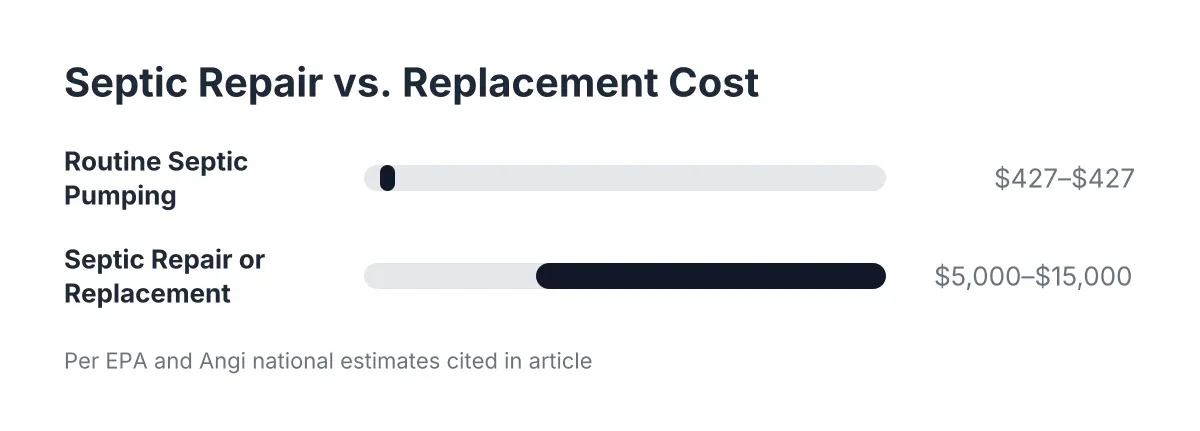
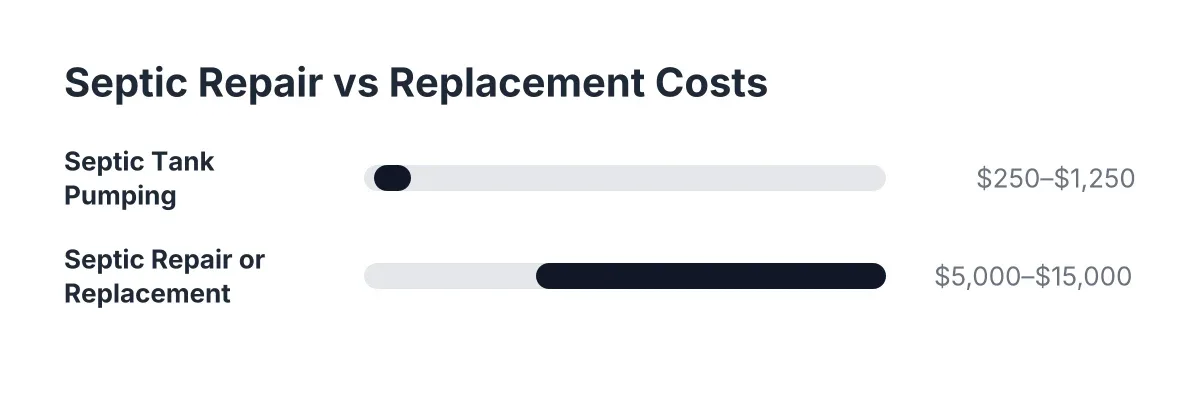
The stakes are different depending on which side of the line you land on. Routine septic tank pumping is a modest, predictable expense. According to Angi, septic tank pumping averages $427, with a typical range of $250 to $1,250 or more depending on tank size and location.
A full septic system replacement sits in a different category entirely. The EPA estimates septic tank repair or replacement typically costs between $5,000 and $15,000, far more than routine pumping, according to U.S. Environmental Protection Agency figures. That gap is exactly why you want a clear-eyed diagnosis before anyone starts digging up your yard.
It also explains the fear many homeowners carry into this decision. Nobody wants to be told their system is dead when a $400 pump-out would have solved it. On the flip side, paying for pump-out after pump-out on a failed drain field just delays a replacement you will eventually have to make anyway, with extra money spent along the way.
How a Septic System Fails, and Which Part Usually Goes First
A conventional septic system consists of two main components: the septic tank and the drain field, according to U.S. Environmental Protection Agency. The tank clarifies wastewater by letting solids settle. The drain field, sometimes called the leach field or soil absorption area, disperses the clarified liquid into the ground.
Understanding that split is the key to the whole repair-versus-replace question. Tanks and drain fields fail in different ways, and they carry different price tags.
Tank problems tend to be fixable. A cracked lid, a broken baffle, a damaged inlet pipe, or roots intruding at a connection point can usually be repaired without touching the rest of the system. For example, a broken septic pipe gets fixed by cutting out the damaged section and installing new pipe, not by patching the old one in place. That is a repair job, not a replacement job.
Drain field problems are the ones that push a system toward replacement. Soil around the trench lines can clog with biological buildup over decades. Once the soil stops absorbing water, no amount of pumping the tank will fix it. The tank fills back up, and wastewater has nowhere to go. Replacing a failed drain field is expensive precisely because it means digging up or abandoning the old trench lines and installing new ones in fresh soil.
How Septic Repair vs Replacement Decisions Happen in Practice
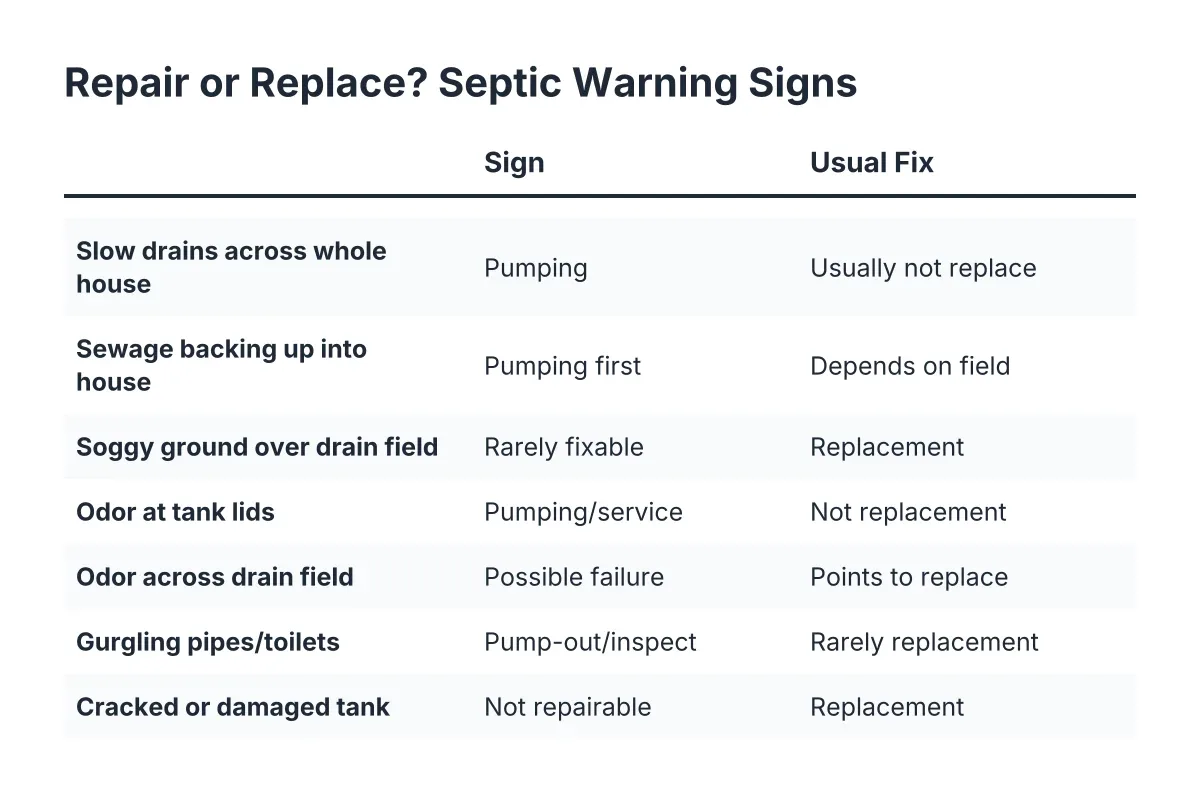
A trained septic crew decides between repair and replacement by finding where the failure lives. If the problem sits inside the tank or the pipes, repair usually wins. If the drain field soil can no longer absorb water, replacement becomes the realistic fix. The pattern of your backups tells most of the story.
Here is the practical logic a crew works through on site:
- One backup, tank is full, no standing water in the yard. This is almost always a pumping call. The tank filled up on schedule and needs service, nothing more.
- Backup returns weeks or months after a pump-out. Now the drain field is suspect. A healthy system should go years between pump-outs, not months.
- Soggy ground or sewage odor over the drain field, especially in dry High Desert weather. Water surfacing above the trenches means the soil is rejecting effluent. That points toward drain field failure.
- Slow drains throughout the house right after a recent pumping. If the tank was just emptied and the house still drains poorly, the blockage or failure is downstream of the tank.
- Visible damage found during inspection. A cracked tank, collapsed baffle, or crushed pipe is a specific, repairable defect if the rest of the system checks out.
The repeated-backup pattern deserves emphasis. When a septic company keeps getting called back to pump the same tank every few months, the tank is not the problem. The drain field has stopped doing its job, and at that point replacement, not another pump-out, is the honest recommendation.
One caution on the other side: a flagged drain field is not automatically a dead drain field. Sometimes a system that looks failed responds to reduced water use, resting the field, or remedial treatment before anyone commits to full excavation. However, health departments generally require full replacement of a truly failed absorption system rather than accepting aftermarket restoration products as a permanent fix. Treat remedial measures as a possible reprieve, not a substitute for a real diagnosis.
Signs Your Septic System Needs Replacing, Not Another Pump-Out
The signs of true system failure cluster around one theme: the ground can no longer accept water. Watch for these patterns over time, not just once:
- You need pumping far more often than you used to. For an active family of four, pumping every two to three years is generally advisable, according to Penn State Extension. If you are calling every six months, something downstream is failing.
- Wet spots or unusually green grass over the drain field. In Hesperia's dry climate, a lush green stripe in an otherwise brown yard is a red flag, not good luck.
- Sewage odors outdoors that come back after every pumping.
- Gurgling drains and slow flushing that pumping only fixes briefly.
- Standing water or effluent surfacing in the yard. At this stage the system is failing openly, and it becomes a health concern for your family and neighbors.
- The system is decades old with no repair history. Every septic system has a lifespan. A drain field installed when the house was built in the 1970s has likely used up its useful life, even if the tank itself is sound.
Age matters more than most homeowners expect. If you just bought an older home in Hesperia with the original system and no service records, plan as if major work is coming. Buyers of older homes are wise to factor likely replacement costs into the purchase negotiation, because a decades-old system may simply be at the end of its run.
When Repair or Pumping Solves It, and Replacement Would Be an Upsell
Repair or routine septic tank pumping solves the problem whenever the failure is contained to one fixable part and the drain field still absorbs water. A full tank, a broken baffle, a root-invaded pipe, or a crushed line near the tank are all repairs. None of them justify replacing a working system.
This is the section for the skeptical homeowner, and skepticism here is healthy. Some situations that sound scary are routine:
- A first-time backup in a house you just bought. Suppose you closed on a Hesperia home last spring, the previous owner left no records, and now the shower is backing up. The most likely explanation is a tank that has not been pumped in years, not a dead system. Pump it first, inspect it, then decide.
- Odor near the tank lids. Often a seal or riser issue, not system failure.
- A single slow drain. That is usually a plumbing clog inside the house, not a septic problem at all.
- Solids buildup in the tank. Pumping and cleaning handle this. It only becomes a replacement issue if buildup is ignored for years and solids migrate into the drain field.
A fair way to test any replacement recommendation is to ask the crew to show you the evidence. Where is the water surfacing? What did the tank look like when opened? How fast did the tank refill after pumping? A legitimate diagnosis has observable facts behind it. If the answer is vague pressure to sign today, get a second opinion. Any honest local septic service in Hesperia, CA expects that question and can answer it in plain terms.
There is a real limitation to acknowledge here: no article can diagnose your specific system. Soil conditions, system age, tank condition, and household water use all interact, and the repair-versus-replace call sometimes requires opening the tank and probing the field. Use this guide to ask sharper questions, not to skip the professional inspection.
The Septic Tank Replacement Process in the High Desert
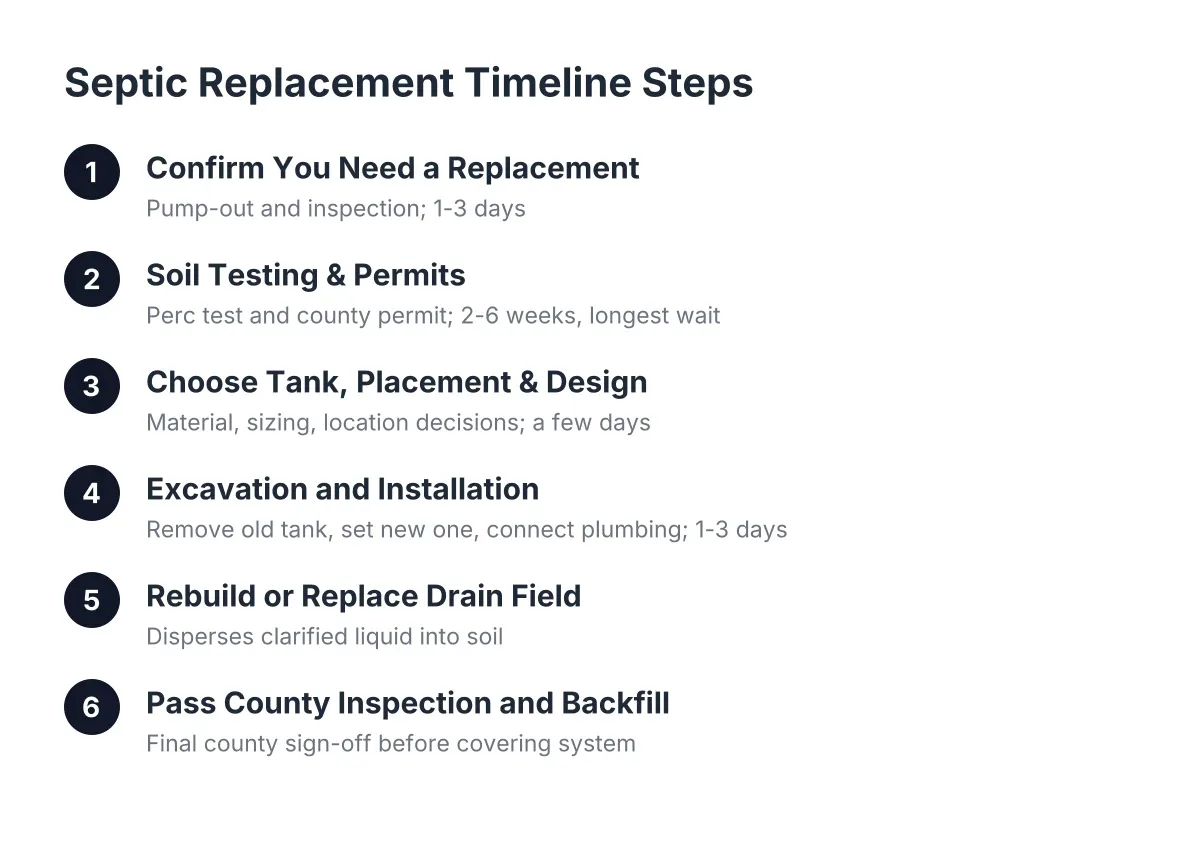
If the diagnosis genuinely points to replacement, here is what the process looks like for property owners in Hesperia and the surrounding High Desert. Knowing the steps ahead of time removes most of the uncertainty.
Step 1: Inspection and Diagnosis
Everything starts with confirming what failed. That usually means locating the tank, pumping it so the inside can be seen, checking baffles and pipes, and evaluating the drain field. Septic tank locating matters more than people expect; on older Hesperia properties, nobody alive may know exactly where the components sit.
Step 2: Permits Through San Bernardino County
Septic work in Hesperia runs through San Bernardino County requirements. Replacement is not a handshake job; permits document that the new system meets current standards. As of 2026, expect the permitting step to involve site evaluation and approval before excavation starts. In some jurisdictions, a failed conventional gravel-and-pipe drain field cannot simply be rebuilt as-is; the property may be required to upgrade to a more advanced system, which raises cost. Confirm current county requirements before budgeting.
Step 3: Soil Testing
Before a new drain field goes in, the soil has to prove it drains. A percolation test must be performed before installing a septic system to determine how well the soil absorbs water, according to University of Nebraska-Lincoln Extension. High Desert soil varies from sandy washes to hard-packed layers, so this test drives where and how large the new field will be.
Step 4: Design and Installation
Installation is specialized work beyond pumping. Becoming a licensed septic installer requires certification and licensing beyond a pumping operation, including knowledge of soil types, percolation rates, system design, and local regulations, according to New Hampshire Department of Environmental Services. A pumping and service company may handle diagnosis, pumping, and coordination while a licensed installer performs the excavation and system construction.
During installation, details matter. For example, after a new tank is set, fill material around pipe penetrations should be compacted thoroughly to prevent settling that damages the connection, per Onsite Installer. Sloppy backfill is a common cause of early failures at otherwise new systems.
Step 5: Final Inspection and Restoration
The county inspects the completed work before backfill in most cases, then the yard gets restored. Keep every document from this process. The next owner of your home, or the next crew that services the system, will thank you.
One more planning note: home additions and remodels can force this issue too. If a planned garage or room addition sits over the existing tank or drain field, the system may need relocation or replacement even if it works fine today. Check system location before you design an addition, not after.
What Repair and Replacement Cost in 2026
Concrete numbers help you plan, so here is the honest picture as of 2026. Routine septic tank pumping averages $427 nationally, ranging from $250 to $1,250 or more, according to Angi. Minor repairs like a baffle or a pipe section typically land above a pump-out but well below system work.
Full replacement is the big number. The U.S. Environmental Protection Agency estimates septic repair or replacement typically runs $5,000 to $15,000. Drain field replacement drives the high end because of excavation, materials, soil work, and permitting. Local factors in Hesperia, including soil conditions, system size, and county requirements, move the final figure, so treat these as planning ranges rather than quotes.
Here is an illustrative scenario. Say a Hesperia homeowner has paid for three emergency pump-outs in one year at a few hundred dollars each, and the tank refills within weeks every time. In that scenario, another year of repeat pumping could cost over a thousand dollars while the drain field stays dead. Putting that money toward diagnosis and a planned septic system replacement gets the problem actually solved, on the homeowner's schedule instead of during a holiday backup.
Maintenance: The Cheapest Answer to the Replace-or-Repair Septic Question
The best outcome in the whole septic replacement, repair, or replace decision is never facing it at all. Routine maintenance and pumping is what keeps homeowners out of forced-replacement territory. Solids that stay in the tank never reach the drain field, and a drain field that never clogs can serve the property for decades.
The maintenance baseline is simple. The average household should have its septic system inspected at least once every three years by a professional, according to U.S. Environmental Protection Agency. Alternative systems with pumps, float switches, or mechanical parts should be inspected once a year, per the same source. Pair inspections with pumping on a schedule that fits your household size and water use.
This matters to more people than you might think. More than one in five U.S. households depend on individual septic systems or small community cluster systems to treat their wastewater, according to U.S. Environmental Protection Agency. In Hesperia and across the High Desert, where homes sit beyond centralized sewer lines, that share runs high. Homes in cities typically connect to municipal sewage treatment; septic systems serve areas without that service, per Environmental Finance Center Network.
If you just bought a house and have no idea when the tank was last pumped, do this in order:
- Have the tank located and opened.
- Pump it and inspect the tank, baffles, and pipes while it is empty.
- Ask the crew for a plain assessment of the drain field's condition.
- Set a pumping schedule based on what they find, then put it on the calendar and stop thinking about it.
That first pump-and-inspect visit resets the clock. From then on, you have records, a schedule, and a local crew who knows your system.
The Bottom Line for Hesperia, CA Property Owners
Most septic problems end with pumping or a targeted repair. Replacement is the right call in a narrower set of cases: a drain field that no longer absorbs water, repeated backups that return quickly after pumping, effluent surfacing in the yard, or a decades-old system at the end of its lifespan. When those signs stack up, repeated pumping is money spent delaying the inevitable.
Ask for evidence before agreeing to a replacement. Ask for a real diagnosis before assuming another pump-out will hold. Between those two questions sits the honest middle ground, and a straightforward local septic crew in Hesperia, CA should be comfortable answering both.
If you need your septic tank serviced, Hesperia Septic can help.
Prefer to talk it through? Call (760) 249-7872 — a quick call is usually the fastest way to get a straight answer for your situation.