How Long Does Professional Septic Tank Locating Take in Hesperia, CA?
If you need your tank found before a pump-out, a sale, or a remodel, the first question is usually about time. So, how long does professional septic tank locating take? On most Hesperia, CA properties, a crew can find and mark a tank in one to three hours. Properties with no septic records, long drain lines, or decades of landscaping over the lid can take longer, sometimes a half day. This guide walks through the process step by step so you know what happens, what speeds it up, and what slows it down.
That matters in the High Desert more than most places. Hesperia has plenty of older homes and raw land parcels where the original septic paperwork disappeared years ago, or was never filed at all. According to the U.S. Environmental Protection Agency, only about 10 percent of California homes sit on septic systems, so records and local know-how are thinner here than in heavy-septic states. When nobody kept a map, the time required for septic locating varies widely by property.
Step 1: Gather Whatever Records Exist Before Anyone Digs
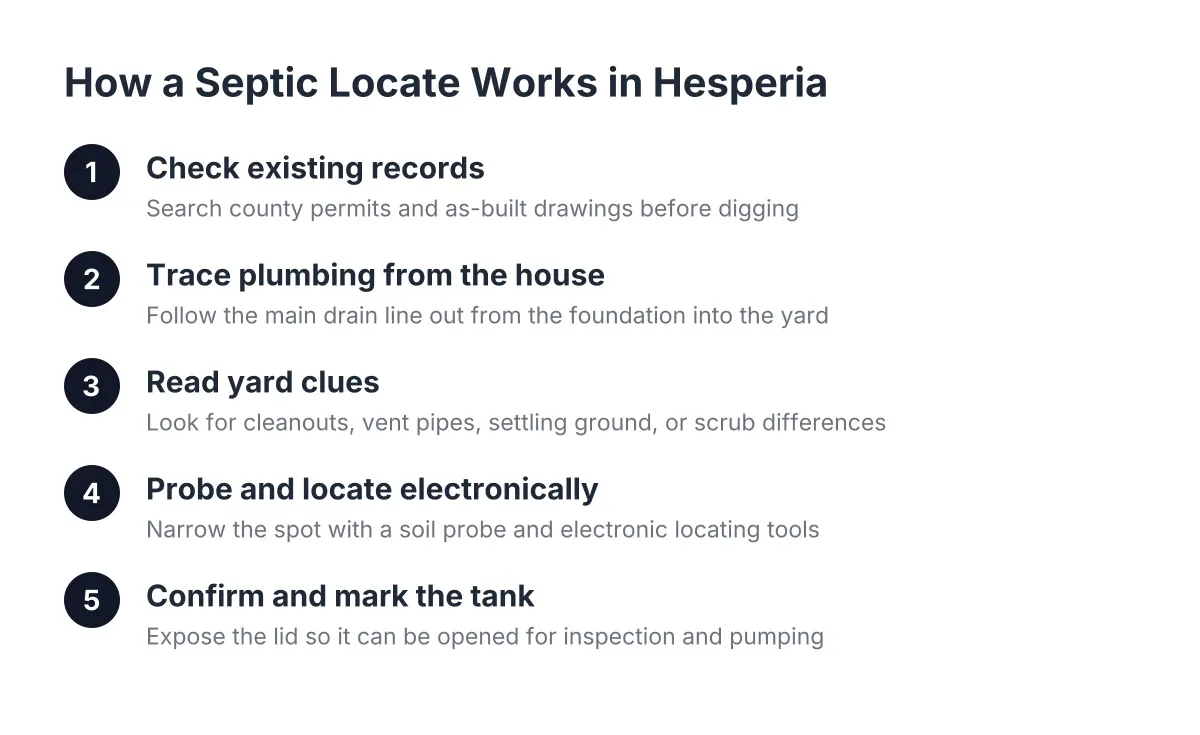
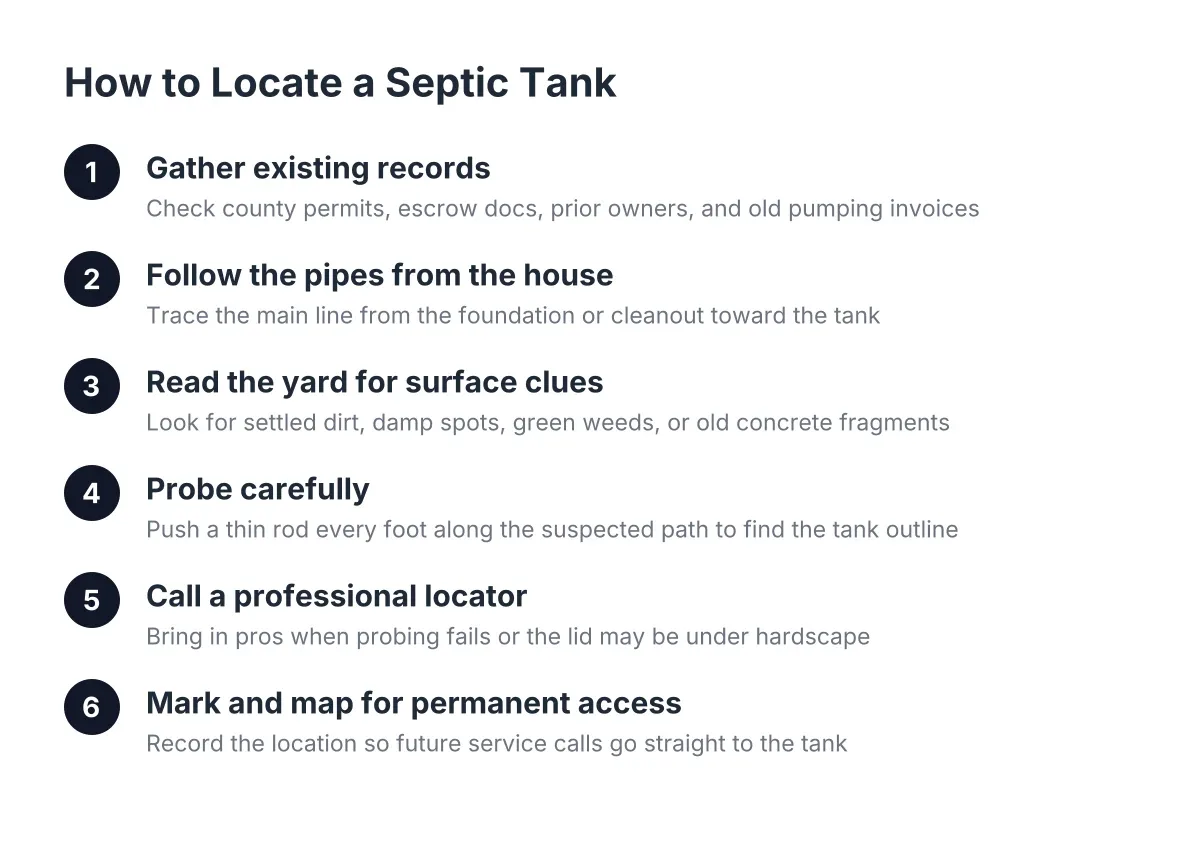
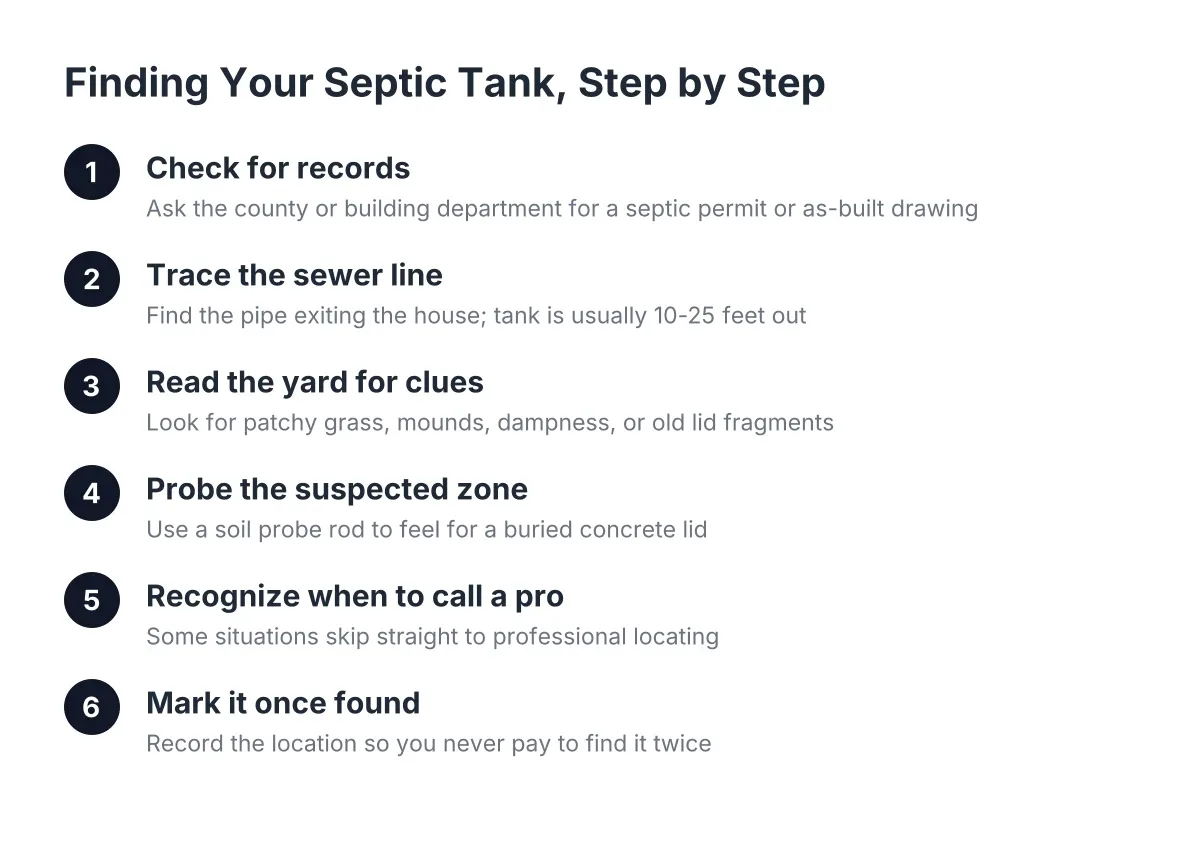
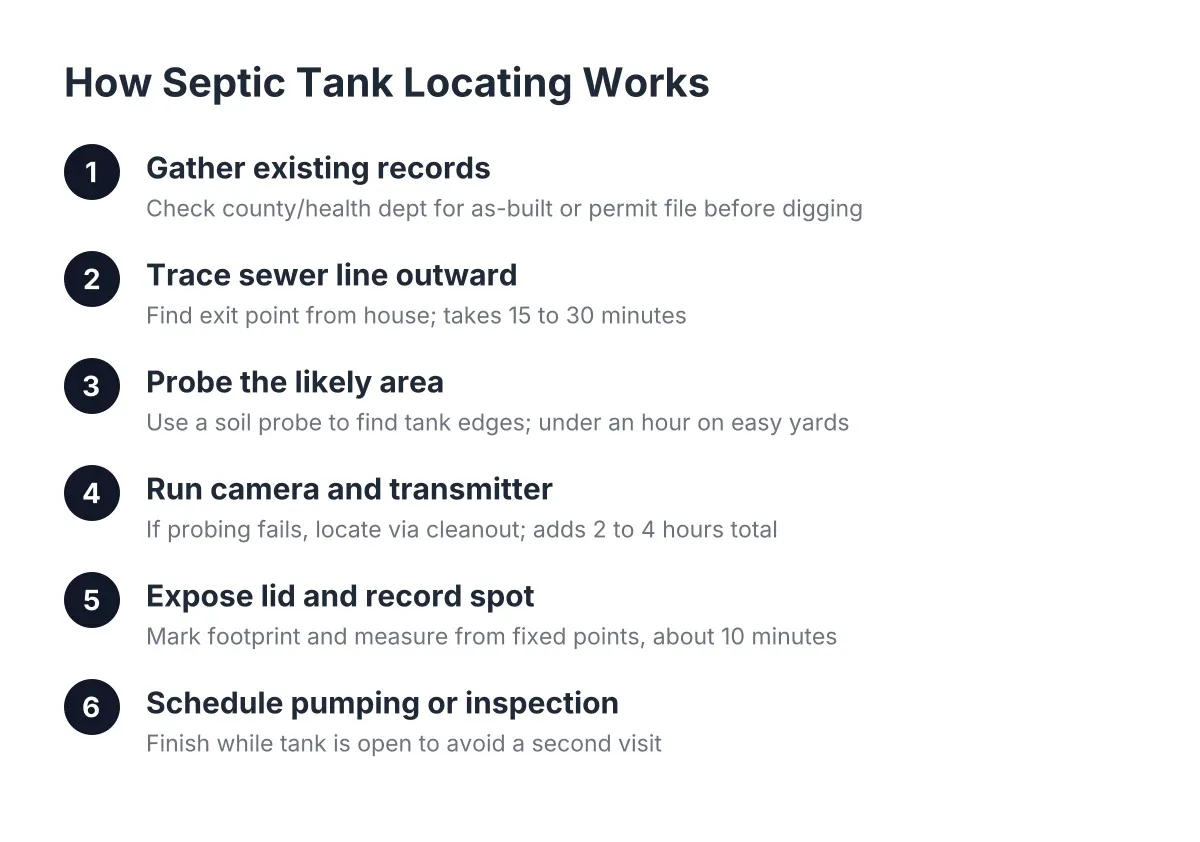
Start with paper, because paper saves hours. Call the San Bernardino County records office or the local health department and ask for the as-built drawing or permit file for your address. An as-built shows the tank's distance from the foundation, which lets a technician measure out and confirm the spot in minutes instead of probing the whole yard.
However, many Hesperia properties come up empty. Older homes, hand-dug systems, and land that changed owners several times often have no file at all. That is normal here, and it does not stop the job. It just moves you to the physical methods in the next steps, and it is the single biggest factor in how long septic locating takes on your property.
If you do find anything, set it aside for the crew:
- An as-built or permit sketch, even a rough one
- Old pumping receipts that mention lid depth or location
- Photos from past yard work that show an open hole or riser
- A home inspection report from when you bought the place
Step 2: Trace the Sewer Line from the House Outward
Next, the technician finds where the main sewer line leaves your house. In a home with a basement or crawlspace, the exit point of that pipe lines up with the tank's direction. From there, the search runs outward into the yard, not along the foundation. Tanks are set away from the house; most local rules require at least 10 feet between a septic system and the building it serves, according to the Minnesota Pollution Control Agency, and many Hesperia tanks sit farther out than that.
This step usually takes 15 to 30 minutes. A cleanout pipe in the yard is a gift here. It tells the technician the pipe's path and narrows the search area fast. If you know where your cleanout is, point it out before the crew starts.
Step 3: Probe the Likely Area and Confirm the Tank
Once the direction is set, the technician works the probable zone with a soil probe, a long steel rod pushed into the ground. Soil gives way; a concrete lid does not. An experienced tech can feel the difference and walk the probe along the tank to find its corners and lids. In Hesperia's dry, compacted desert soil this takes some muscle, but it works, and on a straightforward yard it wraps up in under an hour.
Tank shapes vary by region, which is why finding the corners matters. Some areas used rectangular concrete tanks, others circular ones, according to the International Code Council. Probing out the full outline tells the crew exactly where the access lids sit, so nobody digs a hole two feet off target.
Step 4: Run a Camera and Transmitter If Probing Comes Up Empty
Sometimes the yard fights back. Hardscape, deep fill dirt, a detached garage built over the line, or a tank buried under years of grading can defeat the probe. In that case, the technician runs a sewer camera with a built-in transmitter through the cleanout. The camera travels down the pipe, and a handheld locator above ground follows the signal to pinpoint the tank, no trenching required.
This is where the timeline stretches. The time required for septic locating when a camera is involved typically extends to two to four hours total, and expect the visit to cost more than a basic locate, since camera work is a separate service with its own fee. For a Hesperia property with zero records and a paved or landscaped yard, this is often the method that finally finds the tank.
Step 5: Expose the Lid, Mark the Spot, and Record It
Finding the tank is not the finish line; marking it is. The crew digs down to expose the access lid, flags or paints the tank's footprint, and measures its position from two fixed points, usually house corners. Write those measurements down and keep them with your home records. That ten-minute step means the next pump-out, inspection, or escrow deadline never requires a locate again.
In addition, an exposed lid saves money on every future visit. Septic tank pumping goes faster when the crew is not spending the first hour hunting, and according to Angi data, pumping averages $427, ranging from $250 to $1,250 or more depending on tank size and location. Paying for locating once, then keeping the lid accessible, keeps you at the low end of future service bills.
Step 6: Schedule the Pumping or Inspection While the Tank Is Open
With the lid exposed, finish the job in the same visit if you can. A locate followed by a pump-out or inspection on the same trip beats scheduling a second appointment after the hole gets filled back in. This matters most in two situations Hesperia homeowners know well.
First, the emergency. Say a homeowner off Main Street has sewage backing up into the tub on a Saturday, and nobody knows where the tank is because the house changed hands twice with no paperwork. In that scenario, locating is step one of the emergency septic pumping call, not a separate project, and a crew that does both keeps the whole thing to one visit instead of two.
Second, the planned purchase or sale. Buyers looking at land or an older home in Hesperia should have the system inspected and the tank's exact spot identified before closing. Skipping that step is how people end up driving equipment over a buried tank or pouring a slab above the drain line. The EPA estimates septic repair or replacement typically runs $5,000 to $15,000, so a few hours of locating is cheap insurance.
Factors That Affect the Time Required for Septic Locating
The time needed for professional septic locating varies based on these key variables:
- Records: An as-built can cut the job to under an hour; no records can push it past three.
- Cleanout access: A visible cleanout speeds up both probing and camera work.
- Soil and cover: Compacted desert soil, gravel, concrete, or deep fill slow probing.
- Tank depth: Lids buried two feet down take longer to expose than ones six inches under the lawn.
- Line length: A tank set far from the house widens the search area.
When to Call a Septic Tank Locator Near You Instead of Digging Yourself
A homeowner with a probe rod, patience, and a rough idea of the pipe's path can sometimes find a shallow tank alone. But if your searches for a septic tank locator near me started because you have no records, a paved yard, or sewage already surfacing, bring in a crew with camera and transmitter gear. Guess-digging in the wrong spot wastes a weekend and can crack an old lid, which turns a locate into a repair.
One honest limitation: locating tells you where the tank is, not whether the system is healthy. A failing drain field, a collapsed baffle, or a root-choked line needs a proper septic system inspection to diagnose, and the EPA recommends a professional inspection at least every three years for typical households. Professional septic tank locating is the first step that makes everything else possible; on most Hesperia, CA properties it takes one to three hours, and even the hard cases with no records usually wrap up in half a day.
If you need your septic tank serviced, Hesperia Septic can help.
Prefer to talk it through? Call (760) 249-7872 — a quick call is usually the fastest way to get a straight answer for your situation.