Septic Backup Overflow: When to Make the Emergency Call in Hesperia, CA
Sewage is coming up in the tub, or a wet, smelly patch just appeared over your tank, and you need to know what to do in the next ten minutes. This guide walks you through the septic backup overflow call step by step: what to stop doing right now, what to check before you dial, and how to tell whether you need a truck tonight or can wait until morning. It is written for Hesperia homeowners and small landlords who need a straight answer, not a sales pitch.
One thing to know up front. Backups are common, not a personal failure. The EPA estimates that at least 23,000 to 75,000 sanitary sewer overflow events occur annually in the United States, according to U.S. Environmental Protection Agency figures. The difference between a bad night and a ruined floor usually comes down to how fast you act in the first hour.
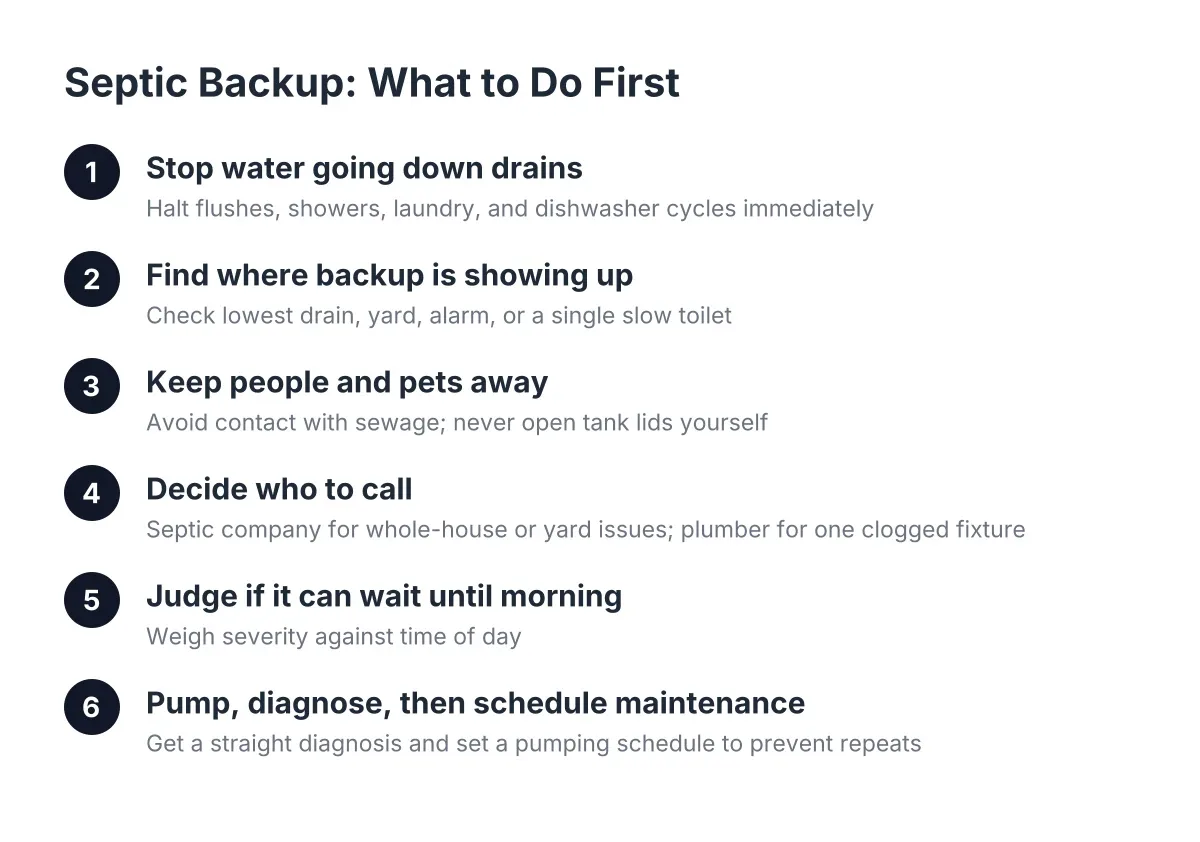
Step 1: Stop All Water Going Down the Drain
First, shut off every source of water entering your drains. Not the drinking water; the wastewater. Every flush, shower, and dishwasher cycle sends more water into a tank that has nowhere to put it. That water has to go somewhere, and right now "somewhere" is your tub, your floor drain, or your yard.
Do these right away:
- Stop flushing toilets, even for "just one more."
- Turn off the washing machine and dishwasher mid-cycle if they are running.
- Ask everyone in the house, or your tenants, to hold off on showers and sinks.
- If a toilet is actively overflowing, shut the small valve behind it at the wall.
For a rental property, call your tenants and be direct: no water down any drain until a crew clears it. Every gallon they run is a gallon that can end up on the floor you will pay to repair. As a reference for how fast water adds up, a single running toilet alone can push as much as 200 gallons of extra water per day into a septic system, according to U.S. Environmental Protection Agency data.
Step 2: Figure Out Where the Backup Is Showing Up
Next, take two minutes to note exactly where the problem is appearing. This is the single most useful thing you can tell a septic company on the phone, and it changes what kind of visit you need.
Look for these patterns:
- Sewage in the lowest drain in the house (tub, shower, or floor drain): classic sign the tank is full or the main line to the tank is blocked. Water backs up at the lowest point first.
- Wet, soggy, or smelly area in the yard over the tank or drain field: the tank may be overflowing at the lids, or the drain field is not absorbing water.
- Septic alarm going off: if you have a system with a pump, the alarm means the water level is too high. It is a warning, not yet a flood, so you have a little time.
- One slow toilet, everything else fine: this may be a simple clog in a branch line, which is plumber territory, not a septic emergency.
Only one fixture acting up usually means a clog. Everything backing up at once usually means the tank or the line to it. Write down what you see; you will use it in Step 4.
Step 3: Keep People and Pets Away From the Sewage
Before you make any calls, deal with the health side. Raw sewage carries bacteria you do not want tracked through a house. Keep kids and pets away from any wet spots inside or out. Do not try to mop up standing sewage bare-handed, and do not run a shop vac into it unless you know how you will safely dump it.
If this is a rental, tell your tenants in writing to avoid the affected area. That message protects them and shows you responded promptly, which matters if there is ever a dispute about habitability.
One caution: do not open the septic tank lids yourself to "check the level." Tanks produce gases that can knock a person out, and an open lid is a fall hazard. Leave lid work to the crew.
Step 4: Decide Who Gets the Septic Backup Overflow Call
Here is the fork in the road most people hit at 8pm: do you call a plumber or a septic company? Plenty of Hesperia homeowners search "plumbing emergency near me" or "24 hour plumber," get someone on the phone, and hear "we don't really do septic." That wasted hour hurts.
Use this rule of thumb:
- Call a septic company first if the whole house is backing up, sewage is surfacing in the yard, the alarm is sounding, or you already know the tank has not been pumped in years. A septic crew can pump the tank, which is the one thing a plumber's snake cannot do.
- Call a plumber if a single fixture is clogged and everything else drains fine. That is a pipe problem inside the house, not a tank problem.
- When in doubt, describe the symptoms to a septic company and let them tell you honestly whether it is their job. A legitimate local outfit will say so if it sounds like an interior plumbing clog.
The advantage of pumping first is that it buys immediate relief either way. An empty tank stops the backup tonight, and it lets the crew see the tank's condition, which is where the real diagnosis starts. The trade-off: if the true problem is a collapsed line between the house and the tank, pumping alone will not fix it, and you may still need a plumber or excavation afterward.
What to Say When You Make the Septic Backup Overflow Call
When you get a septic company on the phone, give them the facts from Step 2 in this order:
- Where the sewage is appearing (inside, yard, or both)
- Whether an alarm is going off
- When the tank was last pumped, if you know
- Whether you know where the tank lids are
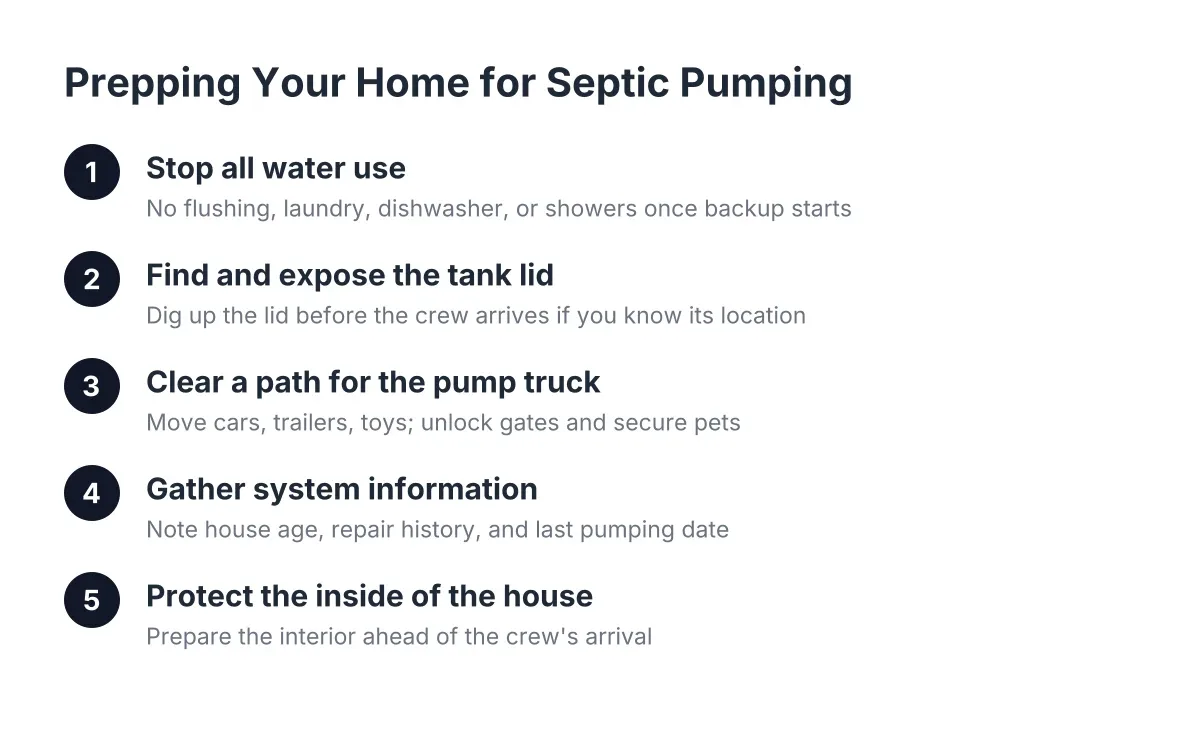
That last one matters more than people expect. If nobody has opened the tank in years, the crew may need to locate the tank and dig to the lids before they can pump, which adds time. Companies that offer septic tank locating handle this routinely, but telling them up front means they arrive with the right expectations and equipment.
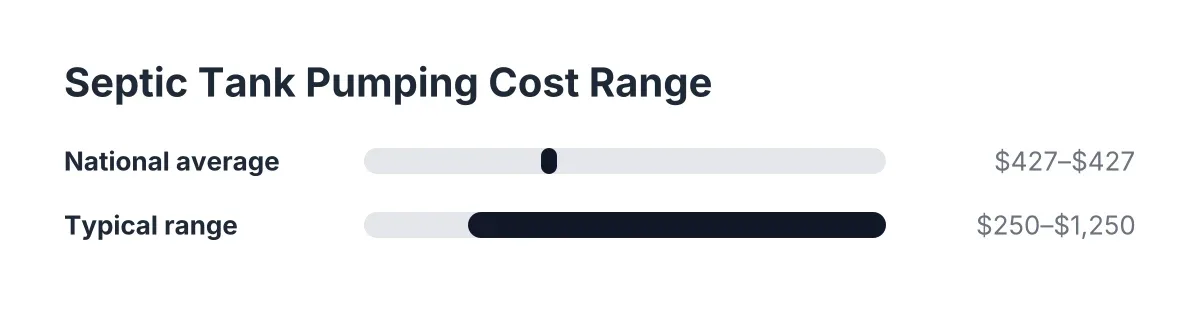
In addition, ask two direct questions before anyone rolls a truck: what does an after-hours visit run compared to a daytime visit, and what happens if pumping alone does not solve it? An honest local company will answer both plainly. Vague answers on price at night are your cue to try the next number on the list. Searching "septic tank pumping near me within 20 mi" and calling a Hesperia-based crew rather than a national dispatch line usually gets you a straighter answer, because the person quoting is the person driving.
Step 5: Judge Whether This Can Wait Until Morning
Not every backup needs a midnight truck, and after-hours emergency septic service typically costs more than a scheduled daytime visit. Sorting your situation honestly can save real money.
Call for a truck now if:
- Sewage is actively entering living space and rising
- You cannot shut off the water source feeding the backup
- The property has tenants with no usable bathroom
- Sewage is pooling where children, pets, or neighbors can reach it
You can likely wait for the first morning slot if:
- The alarm is on but nothing is backing up yet, and you can stop water use overnight
- The backup stopped once everyone quit running water
- The wet spot in the yard is stable, contained, and away from foot traffic
Suppose you own a rental on the east side of Hesperia and your tenant calls at 9pm saying the tub has two inches of gray water in it. You tell them to stop all water use, the level holds, and the tub slowly drains over the next hour. In that scenario, a first-thing-tomorrow pump often makes more sense than a night call, and your tenant keeps a working bathroom by morning. However, if the level keeps rising with all water off, the tank is likely surcharged and you should get a crew out that night.
Step 6: Have the Crew Pump, Then Get a Straight Diagnosis
When the truck arrives, the crew will locate and open the tank, pump it down, and look at what the empty tank tells them. This is where you learn whether tonight was a one-time event or the first symptom of a bigger problem.
Ask the crew to walk you through what they see:
- Tank was simply full of solids: the most common cause, and the best outcome. Regular septic tank pumping going forward usually prevents a repeat.
- Water flows back into the tank from the drain field side: the drain field may be saturated or failing. That is a bigger conversation, and pumping becomes a temporary relief valve rather than a fix.
- Inlet or outlet baffle damage, or a blocked line: a repair item, usually far cheaper than field work if caught early.
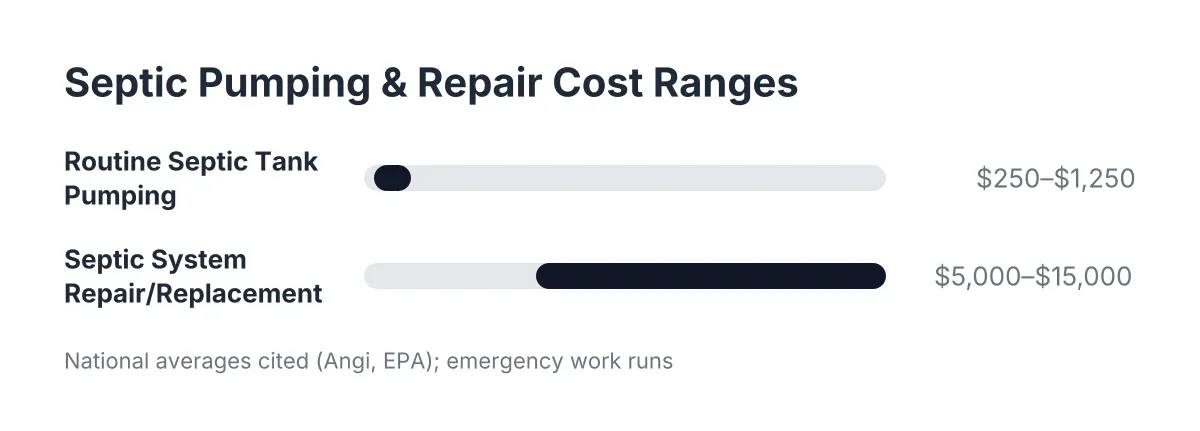
Get the findings in writing on the invoice, especially if you are a landlord. Documented condition notes help with taxes, with tenant communication, and with deciding whether a property needs a follow-up septic system inspection. Be wary of anyone who jumps straight from one backup to "you need a whole new system" without showing you evidence in the tank; a failing drain field has specific, visible signs a crew can point to. If replacement genuinely is on the table, get a second opinion, because the EPA estimates septic repair or replacement typically runs $5,000 to $15,000, far more than routine pumping, according to U.S. Environmental Protection Agency figures.
Step 7: Set Up a Schedule So the Next Overflow Call Never Happens
Finally, turn tonight's emergency into a maintenance plan. Backups almost always announce themselves in advance: slow drains, gurgling, odors, lush green stripes over the drain field. A tank pumped on schedule rarely overflows.
Two habits cover most of it. Put pumping on a recurring calendar based on what the crew recommends for your household or rental occupancy. In addition, get the system looked at periodically; the average household should have its septic system inspected at least once every three years by a professional, according to U.S. Environmental Protection Agency guidance. For landlords with multiple septic properties around the High Desert, staggering inspections across the portfolio means you catch a tired drain field during a routine visit instead of during a tenant's dinner party.
A limitation worth stating plainly: this guide covers triage, not diagnosis. Recurring backups, sewage that returns days after a pump, or standing water over the drain field all need a professional on site, because those problems live underground where no checklist can see them. The goal of the septic backup overflow call is to stop the damage tonight and get honest eyes on the system, so the next call you make is a scheduled one.
If you need your septic tank serviced, Hesperia Septic can help.