How Much Does Grease Trap Pumping Cost?
How much does grease trap pumping cost? The honest answer depends on three things: the size of your trap, how full and hardened the grease inside it is, and how easy it is for a pump truck to reach it. Anyone quoting you a firm number before knowing those three things is guessing. This guide also touches on grease trap installation cost for readers weighing a new trap against servicing an old one, since the two questions often come up together. By the end, you will know exactly what drives the price and how to get a real number for your property in Hesperia.
What Drives the Cost of Grease Trap Pumping
Grease trap pumping is priced on the work in front of the crew, not a flat menu. Here are the factors that move the number, and how to tell which side of each one you are on.
Trap Size and Capacity
Bigger traps hold more waste, and more waste means more time on site and more volume hauled away. A small under-sink trap in a home kitchen is a shorter job than a large in-ground interceptor outside a commercial kitchen. If you do not know your trap size, check any paperwork from when it was installed, or look for a capacity marking on the lid or tank. A pumping company can also measure it on the first visit, and that number stays useful for every service after.
How Full and How Hardened the Grease Is
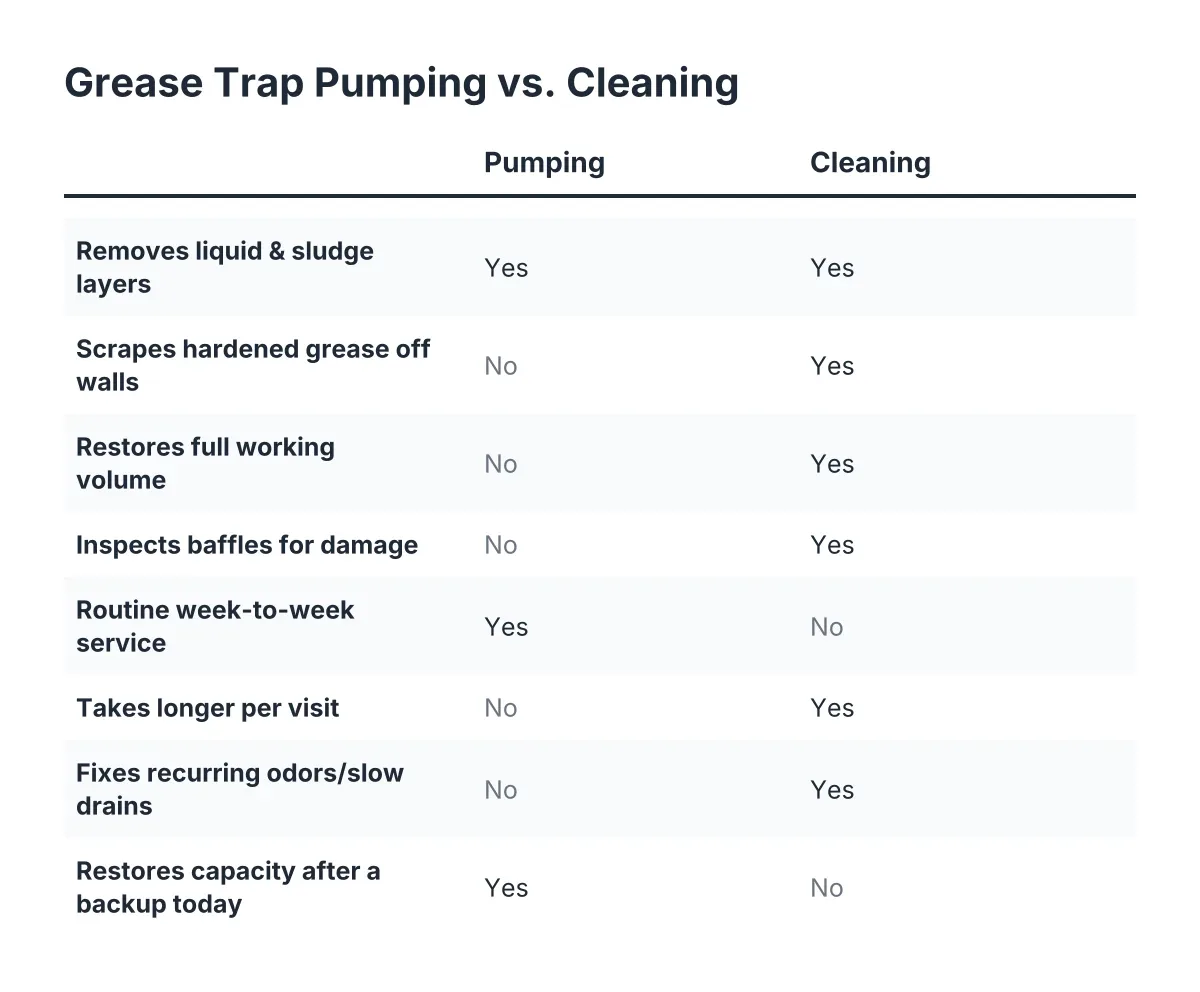
Grease that gets pumped on a regular schedule comes out as a soft layer. Grease that has sat for years hardens into a thick cap that takes extra time, water, and effort to break up and remove. The longer you wait between services, the more the pumping costs climb. If you cannot remember the last time your trap was pumped, plan on the higher end of any quote you get.
Access to the Trap
Pump trucks carry heavy hoses, and every extra foot of hose adds time. A trap with a clear lid near a driveway is a fast job. A trap buried under landscaping, behind a locked gate, or deep inside a building takes longer to reach and longer to service. Walk the path from the street to your trap. If a truck can park close and the lid opens without digging, you are on the cheap side of this factor.
Condition of the Trap Itself
Sometimes the crew opens a trap and finds a cracked baffle, a corroded lid, or a trap that was undersized from the start. Repairs and replacements are separate from pumping, and this is where grease trap installation questions enter the picture. Installing a new trap involves excavation, the trap itself, plumbing connections, and permits, so it sits in a different price bracket than routine pumping. A good pumping visit doubles as an inspection that tells you whether your trap has years left or is nearing replacement.
Disposal and Hauling
Pumped grease does not vanish. It gets hauled to an approved disposal site, and disposal fees are part of what you pay. Distance to the disposal facility and the volume hauled both matter. This is one reason quotes differ between companies: their disposal arrangements differ. You cannot control this factor directly, but you can ask each company whether disposal is included in the quote or billed separately.
Emergency Timing
A backed-up grease trap flooding a kitchen on a Saturday night costs more to handle than a scheduled weekday appointment. Emergency and after-hours work pulls a crew off their route or out of their off time, and the price reflects that. If your trap is not yet overflowing, scheduling ahead is the single easiest way to stay on the lower end of the cost range.
Cost Factor Table
| Factor | Pushes the price down when… | Pushes it up when… |
|---|---|---|
| Trap size | The trap is small, like an under-sink unit | The trap is a large in-ground interceptor |
| Grease condition | Grease is soft from regular pumping | Grease has hardened into a thick cap after years of neglect |
| Access | The lid is exposed and close to truck parking | The trap is buried, fenced off, or far from where a truck can park |
| Trap condition | The trap is sound and correctly sized | Baffles, lids, or the tank itself need repair or replacement |
| Disposal | Hauled volume is low and disposal is nearby | Volume is high or disposal fees run higher |
| Timing | You schedule the service ahead of time | You need emergency or after-hours pumping during a backup |
How to Get an Accurate Price Estimate
You can get a solid quote over the phone if you have the right details ready. Before you call, gather what you can of the following:
- The size or capacity of your trap, if you know it
- When it was last pumped, even a rough guess
- Where the trap sits and whether the lid is easy to open
- Any symptoms, like slow drains, smells, or a backup
A good quote should spell out what is included: the pumping itself, disposal fees, and any charge for extra time if the grease is hardened or the access is difficult. If a quote is one bare number with no detail, ask what happens when the crew finds a harder job than expected. That question separates honest quotes from teaser prices. The cost of grease trap installation varies widely depending on whether you need a simple replacement or extensive excavation, but understanding pumping costs first helps you make that comparison.
Estimates differ between providers because their trucks, routes, and disposal costs differ. That is normal. Two quotes that are far apart usually mean the companies made different assumptions about your trap, so give each one the same details.
The fastest way to a personalized number for your property is the Septic Tank Pumping Cost Calculator. Answer a few questions about your situation and it gives you a working figure to budget around before you ever pick up the phone.
Ways to Keep the Cost Down
You cannot change the size of your trap, but you can control plenty of what you pay. These levers are legitimate, not gimmicks.
Pump on a schedule instead of waiting for a problem. Soft grease pumps fast. Hardened grease takes extra labor, and a full trap that backs up into your kitchen turns a routine service into an emergency call plus cleanup. Regular service is the cheapest version of this job.
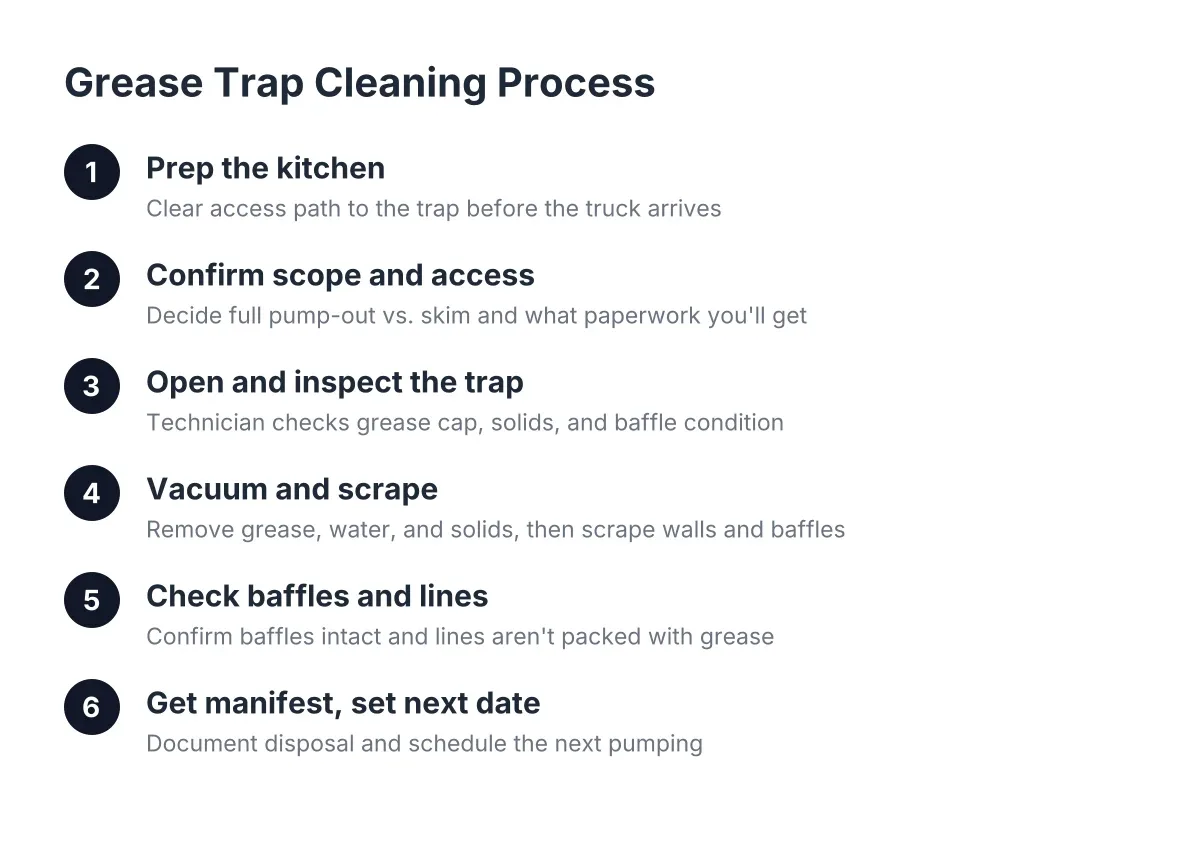
Clear the access before the truck arrives. Dig out a buried lid, unlock the gate, and move anything blocking the path. Every minute the crew does not spend hunting for your trap is a minute you are not paying for.
Scrape plates and keep grease out of the drain. Less grease going in means longer stretches between pumpings. Wipe pans before washing and never pour fryer oil down the sink.
Get two or three quotes with the same details. Give each company the same information about size, last service date, and access. Comparing quotes built on the same facts shows you the real market price for your job.
Fix small trap problems early. A cracked baffle caught during a routine pumping is a small repair. Ignored, it can push you toward a full replacement, which carries installation-level costs instead of service-level costs.
Cost Questions People Ask
How does grease trap installation cost compare to pumping?
Installation is a construction project; pumping is a maintenance service. A new trap involves excavation or plumbing work, the trap unit itself, connections, and often permits, so it costs far more than a routine pumping visit. Most property owners only face installation costs when a trap fails, was never installed, or is too small for the kitchen it serves. Regular pumping is how you push that expense as far into the future as possible.
Do I pay more if my trap has not been pumped in years?
Usually, yes. Grease that has sat for years hardens and takes more time and effort to remove, and the crew hauls away more volume. You may also learn about damage that built up while the trap was neglected. The gap between a scheduled pumping and a long-overdue one is one of the biggest swings in what this service costs.
Is emergency grease trap service more expensive?
Yes. After-hours and same-day calls cost more than scheduled service because they pull a crew outside their normal route. If your drains are slowing but nothing has backed up yet, calling now for a scheduled visit is cheaper than calling later during an overflow. Our grease trap pumping service page covers what a visit involves.
Will the quote change once the crew opens the trap?
It can, and an honest company tells you when and why up front. The two most common reasons are hardened grease that takes longer to remove and damage the crew finds inside the trap. Ask before booking how the company handles surprises, and get any add-on approved before the extra work starts.
The Bottom Line
The price of pumping a grease trap comes down to its size, the state of the grease inside it, and how hard the trap is to reach, with emergencies costing more than scheduled visits. Gather two or three quotes built on the same details about your trap, or start with the Septic Tank Pumping Cost Calculator to get a working number for your Hesperia property. Then schedule the service before the trap forces the timing on you.
If you need your septic tank serviced, Hesperia Septic can help.