DIY Septic Tank Maintenance vs. Professional Pumping: What Hesperia Homeowners Can Do
If you own a home in Hesperia on a septic system, you have probably wondered how much diy septic tank maintenance you can handle yourself and where a professional crew has to take over. The honest answer sits in the middle. You can do real, useful work between service visits. But when the tank fills with solids, no amount of do it yourself effort replaces septic tank pumping by a truck built for the job. This guide walks through the steps in order, so you know exactly what to do yourself, what to leave alone, and how to decide when to pick up the phone.
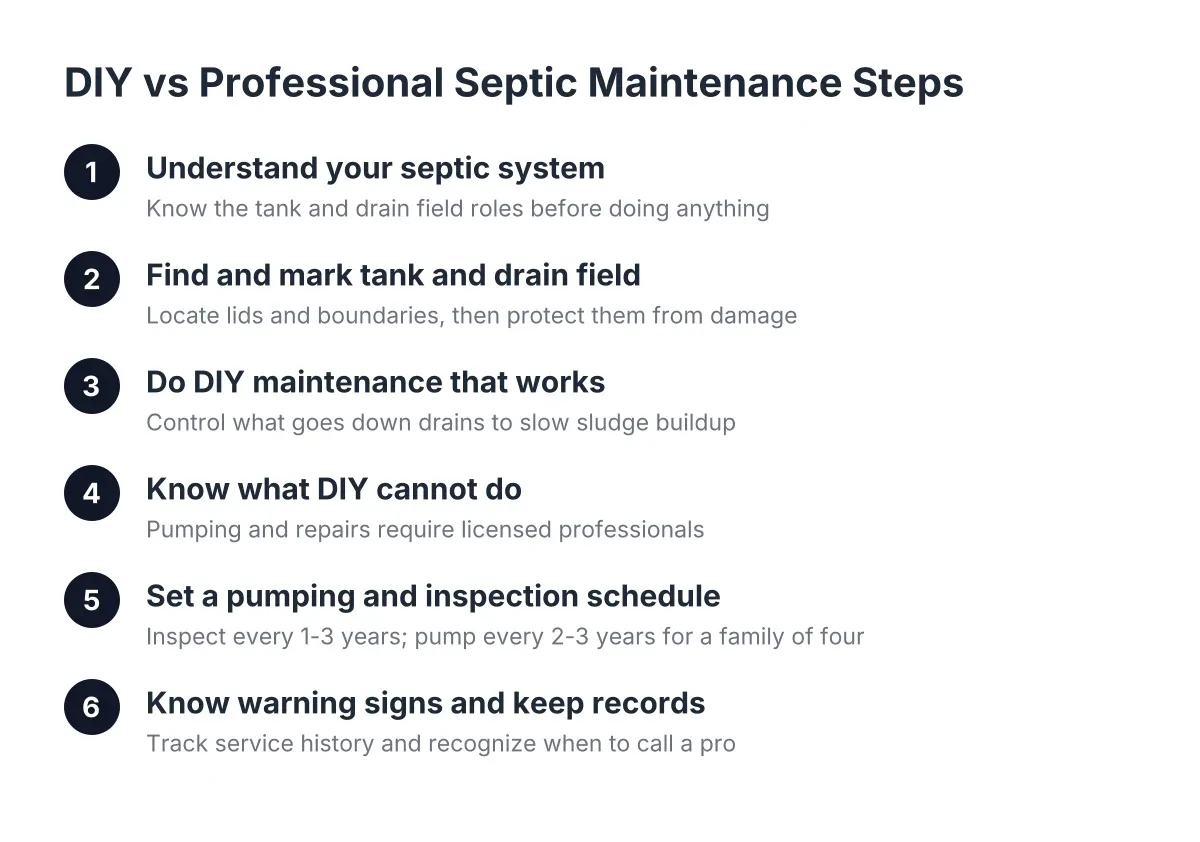
Step 1: Understand What Your Septic System Actually Does
Before you touch anything, know what you are maintaining. According to the US EPA, a typical residential septic system has two main components: a tank that clarifies wastewater and a drain field that disperses the clarified liquid into the ground. A single pipe carries everything from your household drains to the tank, where solids settle out. The liquid then flows out through perforated pipes surrounded by gravel in the drain field.
That matters for one reason. The solids that settle in the tank never leave on their own. Bacteria break some material down, but sludge builds up over time no matter what you pour in. This is why every septic system eventually needs professional pumping, and why diy septic tank maintenance is about slowing that buildup, not eliminating it.
Homes in Hesperia and the surrounding High Desert rely on septic because there is no centralized sewer line to connect to in many areas. According to the Environmental Finance Center Network, homes in cities typically connect to municipal treatment systems, while septic tanks serve areas without that service. Out here, the tank in your yard is the whole system. Treat it that way.
Step 2: Find and Mark Your Tank and Drain Field
You cannot maintain what you cannot find. Locate your septic tank lids and the boundaries of your drain field, then mark them. If you bought the home without records, check your county permit file, look for inspection risers in the yard, or have a septic tank locating service find it for you.
Once you know where everything sits, protect it:
- Keep vehicles, trailers, and RVs off the tank and drain field; the weight can crush pipes and compact soil.
- Do not build sheds, patios, or concrete pads over the tank lids.
- Keep deep-rooted trees and shrubs away from the drain field; roots seek out those perforated pipes.
- Direct roof gutters and yard drainage away from the drain field so it does not get waterlogged.
This step costs nothing and prevents some of the most expensive septic failures a homeowner can face.
Step 3: Do the DIY Septic Tank Maintenance That Actually Works
The most effective diy septic tank maintenance happens at your drains, not at your tank. Everything you flush or rinse either settles as sludge, floats as scum, or flows to your drain field. Control what goes in, and you stretch the time between pump-outs.
Follow these habits daily:
- Flush only human waste and toilet paper. Wipes, even the ones labeled flushable, do not break down.
- Keep grease, cooking oil, and coffee grounds out of the kitchen sink.
- Go easy on the garbage disposal, or skip it. The Massachusetts Department of Environmental Protection recommends annual pumping for homes with garbage disposals because they generate significantly more sludge.
- Spread laundry loads across the week instead of running five loads on Saturday. Big surges of water push solids toward the drain field.
- Avoid pouring harsh chemicals, paint, or solvents down any drain. They kill the bacteria your tank depends on.
One more thing worth saying plainly: skip the additives. Products that claim to dissolve sludge or make pumping unnecessary lack strong scientific backing, according to research from Washington State University Extension. Your money goes further on a scheduled pump-out than on a monthly packet of powder.
Step 4: Learn What DIY Septic Tank Maintenance Cannot Do
Here is the hard line. You cannot pump your own tank. Do it yourself septic tank pumping is not a realistic project, and the reasons go beyond effort. A residential tank holds hundreds of gallons of raw sewage and sludge. The gases inside, including hydrogen sulfide and methane, can knock a person unconscious in seconds. People die every year climbing into septic tanks.
Even if you could get the waste out, you have nowhere legal to put it. According to the New Hampshire Department of Environmental Services, septic waste pumped from residential tanks travels by truck to a sewage treatment plant for disposal. It is not processed on site, and it cannot go in your trash, your yard, or a storm drain. Legal disposal requires a licensed hauler with a vacuum truck.
The same limits apply to diy septic tank cleaning and repairs. Rinsing out a tank, replacing baffles, or adjusting pipes requires knowing details like outlet height. The University of Nebraska-Lincoln Extension notes that the outlet pipe must sit lower than the inlet, since solids float on the liquid and only clarified liquid should exit toward the drain field. Get that wrong and you send solids straight into your drain field, which is the most expensive part of the system to ruin.
Step 5: Set a Pumping and Inspection Schedule
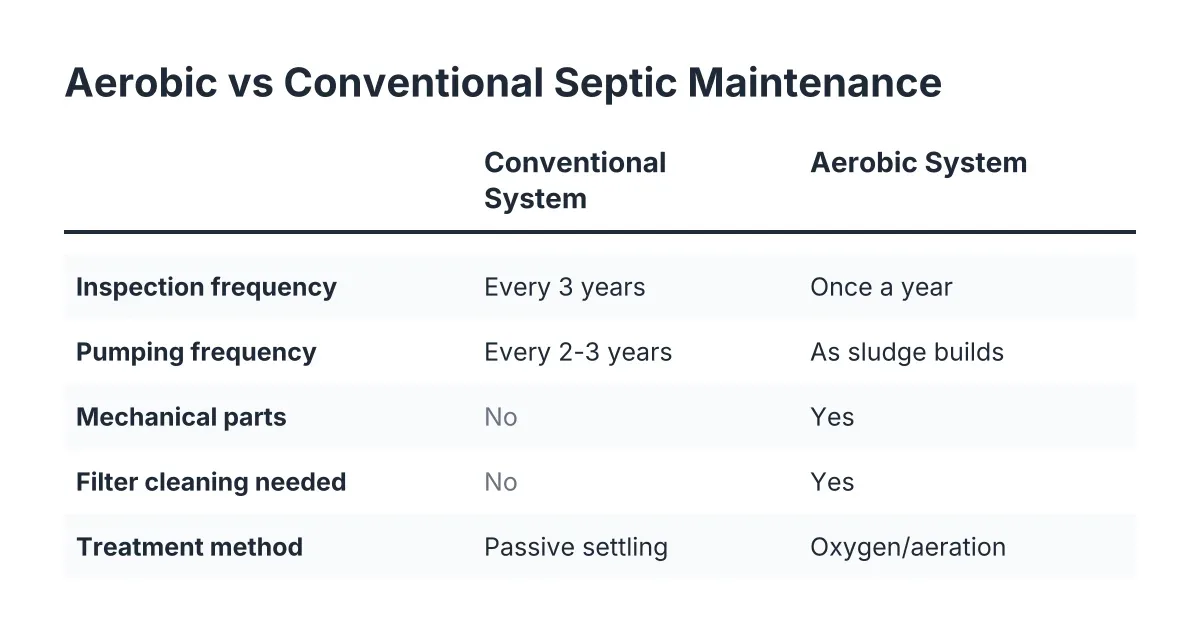
Now put the professional side on the calendar, because waiting for symptoms means waiting for damage. The U.S. Environmental Protection Agency recommends a professional inspection at least once every three years for the average household, and once a year for systems with pumps, float switches, or other mechanical parts. Penn State Extension advises that an active family of four generally benefits from pumping every two to three years.
Since an inspection often costs close to a pump-out, many Hesperia homeowners simply schedule septic tank pumping on that cycle and get the look-over as part of the visit. The crew measures sludge and scum layers, checks the baffles and lids, and tells you how your usage compares to your tank size. That reading, not a guess, sets your next pumping date.
What Does Professional Septic Pumping Cost in 2026?
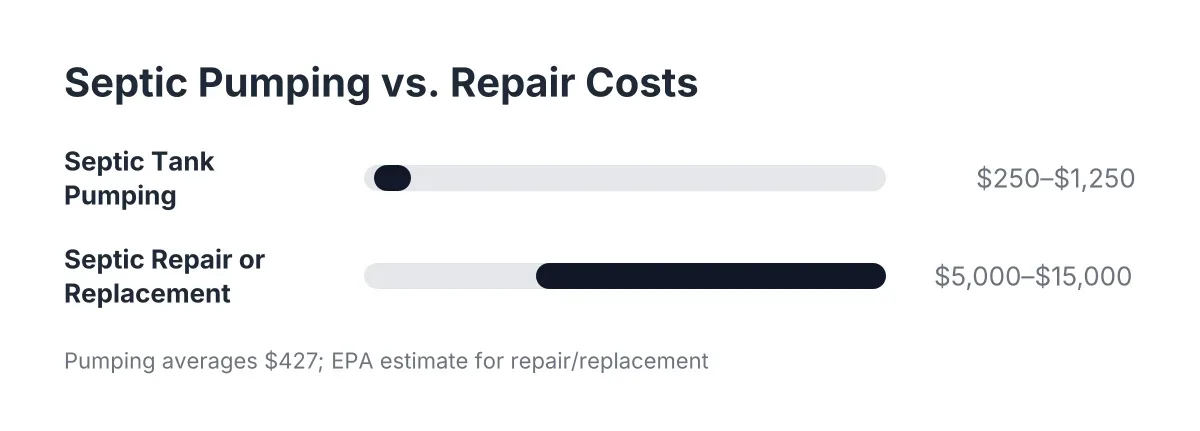
Professional septic tank pumping averages $427, with a typical range of $250 to $1,250 or more depending on tank size and location, according to Angi data. For most single-family homes on a routine schedule, that works out to a few hundred dollars every few years. Compare that to the alternative: the EPA estimates septic repair or replacement typically costs $5,000 to $15,000.
That gap is the whole argument for a schedule. Suppose a Hesperia homeowner skips pumping for a decade to save a few hundred dollars per visit. In that scenario, solids eventually pass the outlet and clog the drain field, and the repair bill can erase twenty years of pumping savings in one job. Routine pumping is the single most important thing you can do to extend the life of the system.
Step 6: Know the Warning Signs That End the DIY Conversation
Some situations skip the schedule entirely. Watch for these, and treat them as a call, not a project:
- Sewage backing up into tubs, showers, or floor drains
- Toilets that gurgle or flush slowly throughout the house
- Wet, soggy, or unusually green patches over the tank or drain field
- Sewage odor in the yard or inside the home
- A septic alarm going off, if your system has one
If sewage is already coming up in your house or yard at 8pm on a Friday, do not try to snake it or chemical-treat it yourself. A backup usually means the tank is full or the drain field is struggling, and neither responds to drain cleaner. An emergency septic pumping visit removes the immediate pressure, and a straight assessment tells you whether you had a one-time full tank or a bigger drain field problem. A crew that pumps tanks daily can usually tell you which one you are dealing with while the truck is still in your driveway.
One honest limitation: pumping does not fix a failed drain field. If your drain field is saturated or clogged, a pump-out buys time, and you will need a qualified professional to evaluate repair or replacement options. Anyone who quotes a full system replacement without inspecting the tank and field first deserves a second opinion.
Step 7: Keep Records and Split the Work Going Forward
Finish by starting a simple septic file. Note the tank location, lid depth, date of each pumping, sludge levels the crew reported, and any repairs. When you sell or refinance the home, that file answers the inspection questions before they get asked. It also keeps your schedule honest.
From here, the division of labor stays the same. You handle the daily habits, water management, and yard protection. A local crew handles the pumping, inspections, and anything involving an open tank. Do it yourself septic care and professional service are not competing options; they are two halves of the same maintenance plan, and homeowners who run both rarely end up with a truck in the driveway at midnight.
If you need your septic tank serviced, Hesperia Septic can help.